Solar Borehole Pumps in South Africa: Free Quotes from Local Suppliers
Free quotes from solar pump and borehole specialists across South Africa. One request, no obligation.
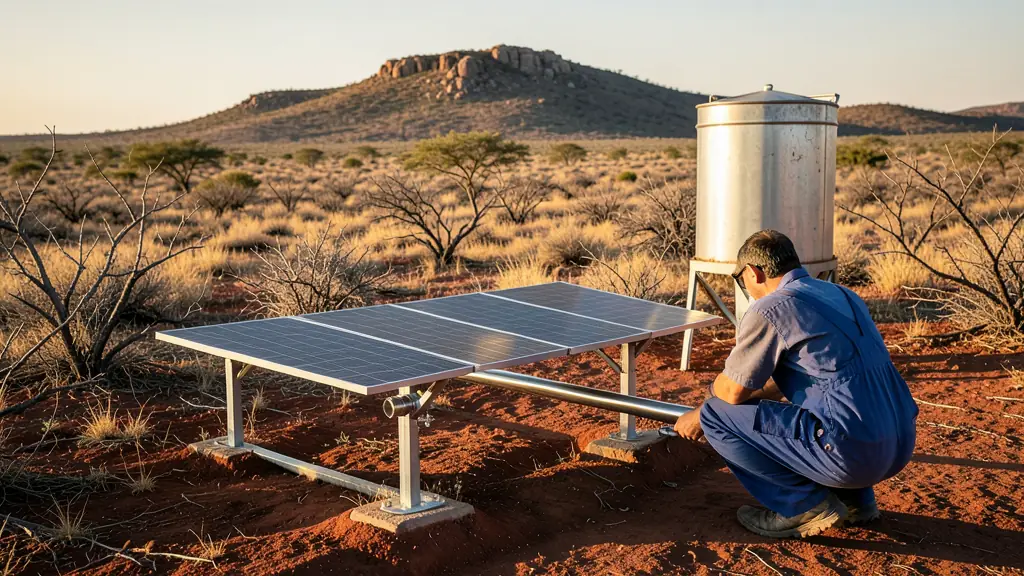
A solar pump for a borehole lifts water using the sun instead of the grid or a diesel engine, which makes it a sensible choice wherever Eskom power is unreliable or far away. SolarPanel.co.za is a free quote service. You fill in one form and we pass your request to independent pump suppliers and installers in your area, who quote you directly. We do not sell, supply or install anything ourselves, there is no fee and no obligation, and you are free to compare before you decide.
How a solar water pump works
A solar pump system is simpler than a full home solar system. Panels feed a pump controller or drive, which converts the power and runs the pump. Water is lifted into a tank or dam and then gravity-fed or pressurised to where it is needed. Storing water is usually cheaper and tougher than storing electricity, so most systems pump during the day and use the tank overnight.
- Submersible pumps: sit in the borehole and suit deeper water.
- Surface pumps: move water from dams, rivers and shallow sources.
- DC or AC pumps: DC pumps connect straight to the panels, while AC pumps run through a solar pump inverter.
Sizing a pump: flow, head and yield
A supplier needs three figures before they can size a pump. The first is the daily water volume you need, in litres or cubic metres. The second is the total dynamic head, which is the water level while pumping plus the height to the tank and the friction in the pipe. The third is the borehole yield, which a pump test or the driller's report will show. Pumping faster than the borehole recovers can burn out a pump or draw in sand.
Peak sun hours and the season also matter, because summer output is far higher than winter in most regions. If you also want lights or a home system on the same property, see off-grid solar systems.
Where solar pumps are used
Solar pumping is common for livestock water, irrigation, game lodges, school and church boreholes, and household supply on smallholdings. It also suits remote cattle camps where there is no power line at all.
- Livestock: troughs filled from a tank, with a float valve to stop overflow.
- Irrigation: drip and micro-sprinkler systems that run in daylight hours.
- Domestic: a tank with a booster pump for pressure at the house.
Larger agricultural sites often combine pumping with other loads, which is covered under solar for farms.
What affects the price of a solar pump system
The cost of a solar borehole pump depends on the depth, the flow you need, the size of the array, the pump and controller quality, the pipe and cabling, and the tank and stand. Ground mounting, trenching, and how far the panels sit from the borehole also change the total. Sending exact depth and volume to several suppliers is the only reliable way to compare, so we do not quote prices on this page.
Check that the supplier explains dry-run protection, a float or level switch for the tank, and what warranty applies to the pump and controller separately. Water use for drinking should be tested for quality before you rely on it.
What to include in your request
- Borehole depth and water level
- Test yield from the driller's report
- Daily water needed in litres
- Height and distance to the tank
- Whether you want drip or sprinkler irrigation
Solar Water Pumps at different properties
- Family homes: a small solar pump filling a garden tank from a borehole to save municipal water
- Estate homes: a solar borehole feeding common-area irrigation and water features, often with panels hidden behind landscaping
- Townhouses and flats: a shared borehole pump for communal gardens, run from panels on a carport or meter-room roof
- Farms, smallholdings and lodges: a solar borehole pump filling livestock troughs and irrigation dams far from any power line
- Shops, offices and schools: a pump supplying a nursery, lodge, car wash or school borehole during daylight working hours
- Factories and warehouses: larger solar pumping for process water, dust suppression or fire-water tanks at a plant or mine
Frequently asked questions
Do I need batteries for a solar water pump?
Usually not. Most systems pump into a tank during the day and let gravity or a small booster pump supply water afterwards. Batteries are only added when you need to pump at night or run other equipment from the same system.
Can I convert my existing borehole pump to solar?
Sometimes. A supplier can check whether your current pump can run from a solar pump inverter or whether a new solar-rated pump is the better option. Send the pump size, borehole depth and a photo of the setup with your request.
Who do I contact to get a solar pump installed?
Complete the quote form and your request goes to independent suppliers and installers near you, who quote directly. SolarPanel.co.za does not sell, supply or install pumps itself, and there is no fee or obligation to use the service.
Will a solar pump work on cloudy days?
It pumps less water on overcast days, because output follows the sunlight. Your supplier will size the array and the storage tank for the weakest season so that a cloudy spell does not leave you without water.
Solar Water Pumps by province and city
- Johannesburg
- Pretoria
- Centurion
- Midrand
- Sandton
- Randburg
- Roodepoort
- Krugersdorp
- Randfontein
- Germiston
- Boksburg
- Benoni
- Kempton Park
- Alberton
- Vanderbijlpark
- Vereeniging
- eMalahleni (Witbank)
- Middelburg
- Secunda
- Mbombela (Nelspruit)
- Rustenburg
- Brits
- Klerksdorp
- Potchefstroom
- Polokwane
- Tzaneen
- Lephalale
- Kimberley
- Kathu
- Upington
- Bloemfontein
- Welkom
- Sasolburg
- Durban
- Pinetown
- Pietermaritzburg
- Richards Bay
- Newcastle
- Ladysmith
- Gqeberha (Port Elizabeth)
- East London
- Kariega (Uitenhage)
- Cape Town
- Bellville
- Paarl
- Stellenbosch
- George
- Worcester
More solar products and services
Solar panels & mounting
Solar power systems
Inverters & batteries
Solar geysers & pool heating
Solar pumps & lights
Get free solar quotes
Tell us what you need and where. An installer or supplier who works in your area quotes you directly. Free, no obligation.
Size it roughly (optional)
Tick what must keep running when the power is off. The estimate goes into your request so installers can quote closer to what you need.
5.0 kWh per kWp a day
Tick a few loads or enter your monthly units to see a size.
A rough guide only. An installer confirms the size after looking at your bill, roof and distribution board.