A Solar System for Your Home in South Africa: Free Quotes from Local Installers
Free quotes from solar installers across South Africa. One request, no obligation.
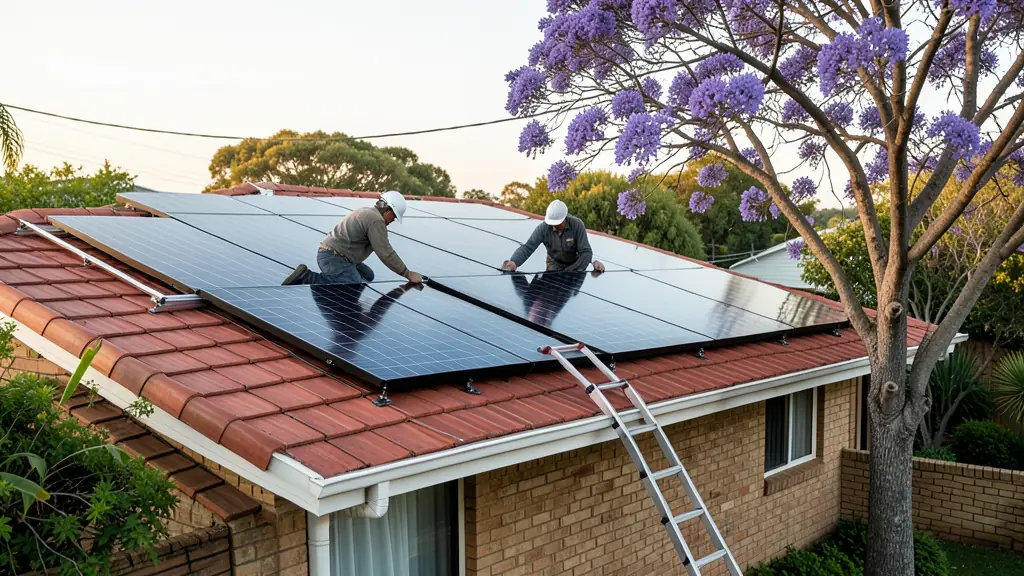
A solar system for your home turns daylight into electricity for lights, appliances and the geyser, and with the right equipment it can keep the essentials running during load-shedding. SolarPanel.co.za is a free quote service. You complete one form and we send your request to independent installers and suppliers near you, who quote you directly. We do not sell, supply or install any equipment ourselves. There is no fee and no obligation, so you can compare several quotes before you commit to anything.
What a complete home solar system includes
A home solar installation is more than panels on a roof. A complete system has several parts that must suit each other:
- Solar panels: rated in watts, and added together as kWp. See our page on solar panels.
- Inverter: converts the direct current from the panels into the alternating current your house uses, rated in kVA.
- Batteries: optional, and store energy for the evening or for outages.
- Mounting, cabling and protection: rails, isolators, surge protection and an earthed, properly labelled distribution board.
Many homes start with a smaller system and add panels or batteries later, so ask installers whether the inverter can grow with you.
Sizing a system to your household
Good sizing starts with how you use electricity, not with the roof. Look at your municipal bill or prepaid purchases to see your monthly kWh, then note when the household is home. A family that is out during the day will use less of the solar output directly, which makes batteries more valuable.
Installers also consider roof direction, tilt, shading from trees or neighbouring buildings, and peak sun hours in your area. North-facing roofs generally give the best yield in South Africa, but east and west faces can work well too. Try our solar calculator for a first estimate, then let installers confirm it on site.
If outages are your main worry, say which circuits you want to keep powered, such as the fridge, lights, Wi-Fi, TV and a gate motor, and whether you also want the stove, borehole pump or geyser.
Rules, certificates and approvals
A legal installation protects your family and your insurance. The wiring must meet SANS 10142-1, and PV installations also fall under SANS 10142-1-2. A registered electrician must issue an Electrical Certificate of Compliance (CoC) when the work is done.
If the system will connect to the grid, your municipality or Eskom requires small-scale embedded generation (SSEG) registration or approval before it is switched on, and the inverter must be on their approved list. Some municipalities also offer feed-in credits. Installers on the SAPVIA PV GreenCard programme are trained in good practice. Estates and sectional title schemes may need approval from the homeowners' association or body corporate first. Tell your insurer about the new system. Our page on solar compliance and registration explains more.
What affects the cost of a home solar system
Searches such as "complete solar system for home price" are common, but the cost depends on your house, so no honest figure can be given without a site visit. Installers look at:
- The size of the array and the inverter rating.
- Whether you want batteries, how much storage, and the battery chemistry.
- The roof type and how hard it is to access.
- Distance from the array to the distribution board.
- Changes needed to the board, plus the CoC and municipal paperwork.
- Warranties on panels, inverter and workmanship.
Compare quotes line by line, not just by the total. Our page on solar panel prices explains the drivers in more detail.
What to include in your request
- Share a recent electricity bill or your monthly kWh.
- Say what you want to power during load-shedding.
- Mention your roof type, direction and any shading.
- State whether you want batteries now or later.
- Add your suburb and whether you live in an estate.
Home Solar Systems at different properties
- Family homes: rooftop arrays of a few kWp with a hybrid inverter keeping lights, fridge and Wi-Fi on
- Estate homes: neat roof arrays that follow design rules, often with larger hybrid systems and lithium storage
- Townhouses and flats: small systems or shared arrays, usually needing body corporate approval and careful cable routes
- Farms, smallholdings and lodges: farmhouse systems with generous battery banks, often paired with a borehole pump or workshop load
- Shops, offices and schools: daytime-focused arrays for a shop or office, with backup for tills, alarms and computers
- Factories and warehouses: larger roof systems that cut daytime grid use at a factory, warehouse or cold store
Frequently asked questions
Does SolarPanel.co.za install home solar systems?
Will a home solar system work during load-shedding?
How long does a home solar installation take?
Can I add batteries or panels later?
Home Solar Systems by province and city
- Johannesburg
- Pretoria
- Centurion
- Midrand
- Sandton
- Randburg
- Roodepoort
- Krugersdorp
- Randfontein
- Germiston
- Boksburg
- Benoni
- Kempton Park
- Alberton
- Vanderbijlpark
- Vereeniging
- eMalahleni (Witbank)
- Middelburg
- Secunda
- Mbombela (Nelspruit)
- Rustenburg
- Brits
- Klerksdorp
- Potchefstroom
- Polokwane
- Tzaneen
- Lephalale
- Kimberley
- Kathu
- Upington
- Bloemfontein
- Welkom
- Sasolburg
- Durban
- Pinetown
- Pietermaritzburg
- Richards Bay
- Newcastle
- Ladysmith
- Gqeberha (Port Elizabeth)
- East London
- Kariega (Uitenhage)
- Cape Town
- Bellville
- Paarl
- Stellenbosch
- George
- Worcester
More solar products and services
Solar panels & mounting
Solar power systems
Inverters & batteries
Solar geysers & pool heating
Solar pumps & lights
Get free solar quotes
Tell us what you need and where. An installer or supplier who works in your area quotes you directly. Free, no obligation.
Size it roughly (optional)
Tick what must keep running when the power is off. The estimate goes into your request so installers can quote closer to what you need.
5.0 kWh per kWp a day
Tick a few loads or enter your monthly units to see a size.
A rough guide only. An installer confirms the size after looking at your bill, roof and distribution board.