Lithium Solar Battery Options: Free Quotes from Suppliers Near You
Free quotes from solar suppliers and installers across South Africa. One request, no obligation.
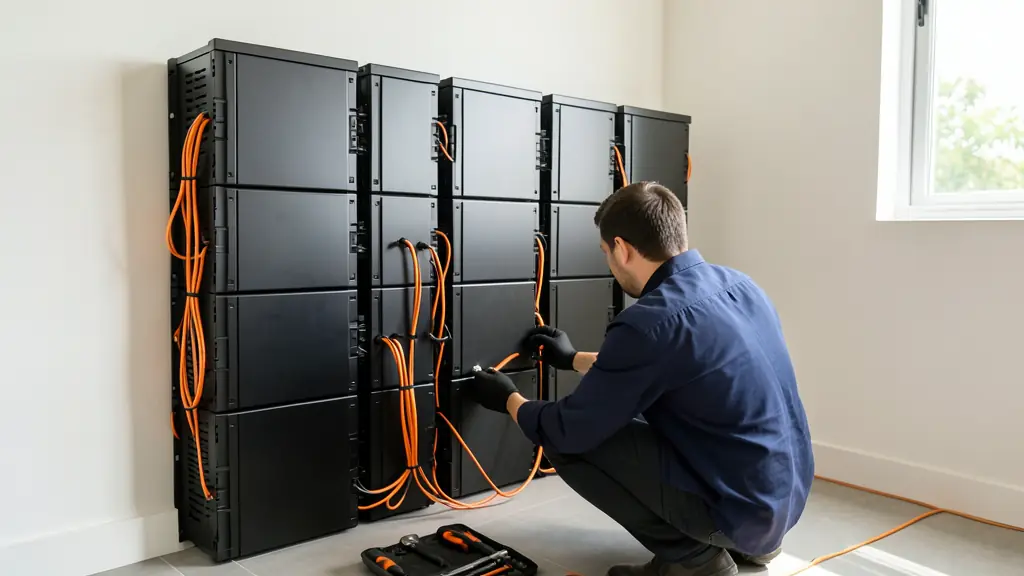
A lithium solar battery holds more usable energy in less space than lead-acid, and most modern home systems use lithium iron phosphate (LiFePO4). SolarPanel.co.za is a free quote service. You fill in one form and we send it to independent battery suppliers and installers in your area, who quote you directly. We do not sell, supply or install anything ourselves. There is no fee and no obligation, which makes it easy to compare lithium options side by side.
What makes lithium different
Lithium iron phosphate is the chemistry most South African suppliers use for solar storage. It is stable, tolerates deep discharge and has a built-in battery management system (BMS) that guards against over-charge, over-discharge and overheating.
Compared with gel and lead-acid batteries, lithium is lighter, charges faster, loses less energy as heat and is rated for many more charge cycles. Searches for li-ion solar batteries usually mean this same family, although other lithium chemistries exist and are less common in home storage.
Sizes and formats: 48 V racks, wall units and 200Ah batteries
Lithium batteries are sold in a few common formats.
- Rack-mounted 48 V modules: typically 5 kWh to 10 kWh each, stacked or racked to add capacity as you need it.
- Wall-mounted units: slim batteries for garages and passages where floor space is tight.
- 12 V and 24 V batteries (such as 200Ah): used in smaller inverter systems, caravans and some off-grid setups.
The battery must be compatible with your inverter. Check the communication protocol between them, because a hybrid inverter that talks to the BMS controls charging more safely. A hybrid inverter that lists approved batteries is a good starting point.
Lithium solar battery price: what changes the quote
A lithium battery usually costs more upfront than lead-acid, but you buy more usable capacity and a longer life. Quotes differ because of:
- Usable kWh, not just the label capacity
- Rated cycles and depth of discharge
- Warranty period, and whether it is backed by a local supplier
- Compatibility with your inverter and any extra communication cables
- Racks, breakers, isolators and installation labour
When you compare quotes, ask what usable capacity you get and what the warranty covers. Do not compare on the headline size alone.
Safety, certification and installing lithium
Choose batteries that carry test certification such as UN 38.3 and IEC 62619, and ask for the NRCS letter of authority (LOA) where it applies. Installation should follow SANS 10142-1 and SANS 10142-1-2, be done by a registered electrician or SAPVIA PV GreenCard installer, and end with an Electrical Certificate of Compliance.
Mount the battery in a cool, ventilated spot, off a damp floor and away from direct sun. For batteries linked to larger off-grid solar systems, correct fusing matters. Tell your insurer about the installation.
What to include in your request
- State your inverter make, model and battery voltage.
- Say the usable kWh you are aiming for.
- Mention how often you expect to cycle the battery.
- Ask about warranty terms and local support.
- Add your town and whether the unit should be installed.
Lithium Solar Batteries at different properties
- Family homes: a wall or rack-mounted lithium battery replacing gel and cutting weight in a garage
- Estate homes: stackable lithium modules paired with larger hybrid inverters, installed neatly out of sight
- Townhouses and flats: slim wall-mounted lithium units that fit small spaces, subject to body corporate approval
- Farms, smallholdings and lodges: lithium banks for off-grid homesteads and lodges, with enough storage to run pumps overnight
- Shops, offices and schools: rack-mounted lithium storage that keeps tills, servers and alarms going through outages
- Factories and warehouses: large lithium racks used for critical loads and peak shaving beside rooftop solar arrays
Frequently asked questions
Is a lithium solar battery worth it compared with gel?
For daily cycling it often is, because lithium gives more usable energy per rand spent over its life and weighs far less. For a rarely used backup, a cheaper gel battery can be adequate. Ask suppliers to quote both.
What does 5 kWh or 10 kWh actually mean?
It is the energy stored. A 5 kWh battery can supply 1 kW for about five hours, less allowing for losses and the discharge limit. Bigger loads drain it faster, so match the size to your appliances.
Can I mix old and new lithium batteries?
This is generally not recommended. Different ages, capacities and brands can unbalance the bank and may void warranties. Installers will tell you whether a unit can be added safely.
Who supplies the batteries once I request a quote?
Independent suppliers and installers near you respond directly. We only pass on your request and do not stock or fit batteries. The service is free, and you decide whether to accept anything.
Lithium Solar Batteries by province and city
- Johannesburg
- Pretoria
- Centurion
- Midrand
- Sandton
- Randburg
- Roodepoort
- Krugersdorp
- Randfontein
- Germiston
- Boksburg
- Benoni
- Kempton Park
- Alberton
- Vanderbijlpark
- Vereeniging
- eMalahleni (Witbank)
- Middelburg
- Secunda
- Mbombela (Nelspruit)
- Rustenburg
- Brits
- Klerksdorp
- Potchefstroom
- Polokwane
- Tzaneen
- Lephalale
- Kimberley
- Kathu
- Upington
- Bloemfontein
- Welkom
- Sasolburg
- Durban
- Pinetown
- Pietermaritzburg
- Richards Bay
- Newcastle
- Ladysmith
- Gqeberha (Port Elizabeth)
- East London
- Kariega (Uitenhage)
- Cape Town
- Bellville
- Paarl
- Stellenbosch
- George
- Worcester
More solar products and services
Solar panels & mounting
Solar power systems
Inverters & batteries
Solar geysers & pool heating
Solar pumps & lights
Get free solar quotes
Tell us what you need and where. An installer or supplier who works in your area quotes you directly. Free, no obligation.
Size it roughly (optional)
Tick what must keep running when the power is off. The estimate goes into your request so installers can quote closer to what you need.
5.0 kWh per kWp a day
Tick a few loads or enter your monthly units to see a size.
A rough guide only. An installer confirms the size after looking at your bill, roof and distribution board.