Charge Controllers for Solar Panels: Compare Free Supplier Quotes
Free quotes from solar suppliers and installers across South Africa. One request, no obligation.
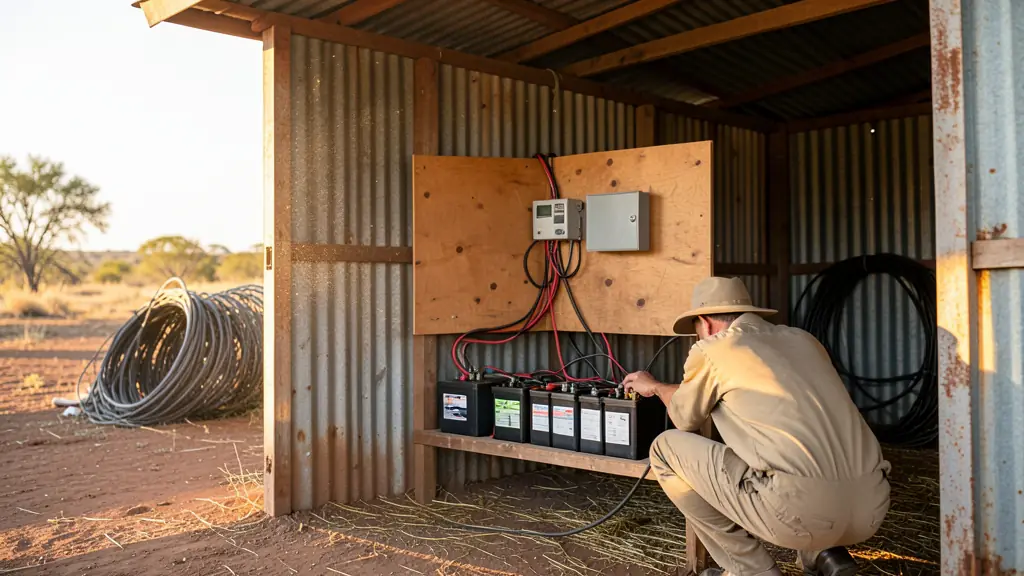
A solar charge controller, sometimes called a solar regulator, sits between your panels and your batteries and stops them being overcharged or damaged. Pick the wrong one and you can lose battery life or panel output. SolarPanel.co.za is a free quote service. Send one request and we pass it to independent suppliers and installers near you, who quote directly. We do not sell, supply or install anything ourselves, and there is no fee or obligation.
What a charge controller does, and where you need one
Panels produce a changing voltage that is not safe for batteries. The charge controller steps it to the right level, follows the battery's charging stages and protects against reverse current at night. You need a separate controller for off-grid and 12 V, 24 V or 48 V battery systems, caravans, boats, gate motors, lights and borehole setups.
Many hybrid inverters and off-grid solar inverters already include a built-in controller, so check before buying a second one.
MPPT or PWM: which type to choose
The two main types differ in how they handle panel voltage.
- PWM controllers: simple and low-cost. The panel voltage is pulled down to the battery voltage, so panel and battery must closely match. They suit small 12 V systems such as lights and caravans.
- MPPT controllers: track the panel's best operating point and convert extra voltage into charging current. They work with higher-voltage strings, are more efficient in cold or low light, and suit larger systems.
For most home or farm systems, MPPT is the usual choice. PWM is fine where the system is small and kept simple.
Sizing a controller: volts, amps and batteries
A controller is rated by maximum charge current in amps and maximum panel input voltage. Ask the supplier to check:
- Battery voltage: 12 V, 24 V or 48 V, and the chemistry, whether lithium (LiFePO4), AGM or gel.
- Panel string voltage, including a safety margin for cold mornings.
- Total panel power in watts, and the charge current this gives.
- Temperature sensing, load outputs and any display or Bluetooth monitoring.
Leave room to grow: if you may add panels or batteries later, choose a controller with spare current and voltage capacity so you do not have to replace it. Panels also need to be fixed properly, and our page on solar panel mounting covers that side.
Charge controller price: what affects it
We do not list prices because they differ a lot between models. Suppliers weigh up:
- PWM or MPPT, and the maximum amps.
- Maximum input voltage and number of inputs.
- Display, Bluetooth, app monitoring or remote sensors.
- Brand, warranty length and local support.
- Cables, fuses, breakers, surge protection and enclosures.
- Installation time if you want it fitted and tested.
Fitting must meet SANS 10142-1, and larger systems should come with a Certificate of Compliance from a registered electrician. Compare the full list of what is included, including cable lengths, fuses and any warranty on the unit and the installation.
What to include in your request
- State battery voltage and chemistry
- Give panel wattage and string layout
- Say what the system powers
- Mention any existing inverter or controller
- Ask whether fuses and cables are included
Solar Charge Controllers at different properties
- Family homes: a controller in a small backup system for gate motors, lights or a garden pump
- Estate homes: a controller inside a neat battery cabinet for security lights, gates or a guard house
- Townhouses and flats: a small controller powering communal lighting or a gate from a few panels, with approval
- Farms, smallholdings and lodges: MPPT controllers charging battery banks for borehole pumps, fences, cold rooms and remote sheds
- Shops, offices and schools: a controller in a small off-grid setup for signage, security systems or a remote site
- Factories and warehouses: high-current controllers on remote monitoring, lighting or pumping systems away from the grid
Frequently asked questions
Do you sell charge controllers?
Is an MPPT controller worth it over PWM?
Do I need a charge controller if I have a hybrid inverter?
How do I size a charge controller?
Solar Charge Controllers by province and city
- Johannesburg
- Pretoria
- Centurion
- Midrand
- Sandton
- Randburg
- Roodepoort
- Krugersdorp
- Randfontein
- Germiston
- Boksburg
- Benoni
- Kempton Park
- Alberton
- Vanderbijlpark
- Vereeniging
- eMalahleni (Witbank)
- Middelburg
- Secunda
- Mbombela (Nelspruit)
- Rustenburg
- Brits
- Klerksdorp
- Potchefstroom
- Polokwane
- Tzaneen
- Lephalale
- Kimberley
- Kathu
- Upington
- Bloemfontein
- Welkom
- Sasolburg
- Durban
- Pinetown
- Pietermaritzburg
- Richards Bay
- Newcastle
- Ladysmith
- Gqeberha (Port Elizabeth)
- East London
- Kariega (Uitenhage)
- Cape Town
- Bellville
- Paarl
- Stellenbosch
- George
- Worcester
More solar products and services
Solar panels & mounting
Solar power systems
Inverters & batteries
Solar geysers & pool heating
Solar pumps & lights
Get free solar quotes
Tell us what you need and where. An installer or supplier who works in your area quotes you directly. Free, no obligation.
Size it roughly (optional)
Tick what must keep running when the power is off. The estimate goes into your request so installers can quote closer to what you need.
5.0 kWh per kWp a day
Tick a few loads or enter your monthly units to see a size.
A rough guide only. An installer confirms the size after looking at your bill, roof and distribution board.