Solar Batteries in South Africa: Free Quotes from Local Suppliers
Free quotes from solar suppliers and installers across South Africa. One request, no obligation.
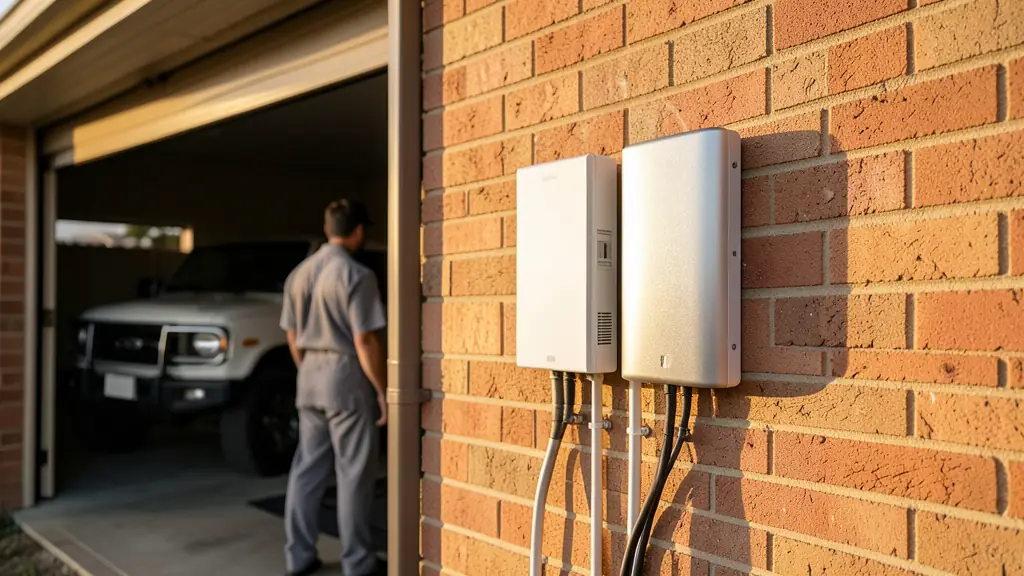
A solar battery stores electricity from your panels, or from the grid, so you can keep the lights, fridge and wifi on during load-shedding and use daytime power at night. SolarPanel.co.za is a free quote service. You fill in one form and we pass it to independent battery suppliers and installers in your area, who quote you directly. We do not sell, supply or install batteries ourselves. There is no fee and no obligation, so you can compare quotes at your own pace before choosing anything.
How a battery for solar panels works
A battery stores energy as direct current. Your inverter charges it when there is spare solar power or grid power, and draws from it when the grid goes down or the sun sets. Capacity is measured in kilowatt-hours (kWh), and the inverter's kVA rating decides how many appliances can run at the same moment.
Batteries are normally paired with a hybrid inverter, and the voltage of the battery bank has to match what that inverter expects. Many homes choose a battery together with a full backup power system, while others add one to existing panels later.
Types of solar battery: lithium, gel and lead-acid
Three chemistries are common in South Africa, and each has a place.
- Lithium iron phosphate (LiFePO4): light, compact, deeply dischargeable and long-lived. See our page on lithium solar batteries.
- Gel and AGM lead-acid: sealed, familiar and usually cheaper to buy, but heavier and shorter-lived when cycled daily.
- Flooded lead-acid: found in older and large off-grid banks, and they need regular topping up with water and good ventilation.
Lead-acid batteries should normally be discharged only part of the way to last, while lithium can use most of its rated capacity. That difference matters when you compare quotes.
Sizing a solar battery and battery cost drivers
Start with what you want to run and for how long. A fridge, lights, router and television need far less storage than a pool pump, kettle and oven. Add up the watts, multiply by the hours of outage you expect, then allow for usable capacity and inverter losses.
People search for the cost of a solar battery, but there is no single figure, because the price depends on:
- Chemistry, usable capacity and rated cycle life
- Warranty length and what it covers
- The size of the inverter and the battery voltage
- Racks, breakers, cabling and a fire-rated enclosure where needed
- Installation, travel distance and any extra wiring
Suppliers quote on your actual load, so the quickest way to see real numbers is to request quotes.
Installation, safety and compliance
Battery wiring carries high currents, so installation should be done by a registered electrician or an installer with an SAPVIA PV GreenCard. The finished work needs an Electrical Certificate of Compliance (CoC) under SANS 10142-1, and PV and battery installations also fall under SANS 10142-1-2.
Place batteries in a cool, dry, ventilated spot away from direct sun, not in a bedroom or an exposed outdoor location. If the battery system can feed power back, your municipality or Eskom may require registration of the embedded generation. Tell your insurer about the batteries as well.
What to include in your request
- List the appliances you want to run during an outage.
- State your inverter make and model, if you already have one.
- Say how many hours of backup you want.
- Mention where the battery will be mounted.
- Add your town and whether you want it installed.
Solar Batteries at different properties
- Family homes: a wall-mounted battery in the garage keeping lights, fridge and wifi running through load-shedding
- Estate homes: neat, enclosed battery storage paired with a larger hybrid inverter, often within estate design rules
- Townhouses and flats: compact battery units for small backup loads, installed with body corporate approval
- Farms, smallholdings and lodges: larger battery banks for pumps, cold rooms and lodges where the grid is unreliable
- Shops, offices and schools: batteries that keep tills, servers, alarms and lights running when the power drops
- Factories and warehouses: rack-mounted storage that carries critical loads and smooths peaks alongside a large solar array
Frequently asked questions
How long will a solar battery last during load-shedding?
It depends on the battery's usable capacity and what you run. A few lights, a router and a fridge can last through several outage stages, while geysers, stoves and heaters drain it quickly. Send your appliance list with your request and suppliers will size it for you.
Do I need solar panels to use a battery?
No. A battery and inverter can charge from the grid between outages, which works as a quiet backup. Panels add the ability to recharge during the day and cut how much you buy from the grid.
Can I add a battery to my existing solar system?
Often, yes, but it depends on your inverter. A hybrid inverter accepts batteries directly, while a grid-tied inverter may need an AC-coupled battery inverter. The installer will check this on site.
Does SolarPanel.co.za sell the batteries?
No. We only connect you with independent suppliers and installers in your area, and they quote you directly. Using the service costs nothing and you are under no obligation to accept a quote.
Solar Batteries by province and city
- Johannesburg
- Pretoria
- Centurion
- Midrand
- Sandton
- Randburg
- Roodepoort
- Krugersdorp
- Randfontein
- Germiston
- Boksburg
- Benoni
- Kempton Park
- Alberton
- Vanderbijlpark
- Vereeniging
- eMalahleni (Witbank)
- Middelburg
- Secunda
- Mbombela (Nelspruit)
- Rustenburg
- Brits
- Klerksdorp
- Potchefstroom
- Polokwane
- Tzaneen
- Lephalale
- Kimberley
- Kathu
- Upington
- Bloemfontein
- Welkom
- Sasolburg
- Durban
- Pinetown
- Pietermaritzburg
- Richards Bay
- Newcastle
- Ladysmith
- Gqeberha (Port Elizabeth)
- East London
- Kariega (Uitenhage)
- Cape Town
- Bellville
- Paarl
- Stellenbosch
- George
- Worcester
More solar products and services
Solar panels & mounting
Solar power systems
Inverters & batteries
Solar geysers & pool heating
Solar pumps & lights
Get free solar quotes
Tell us what you need and where. An installer or supplier who works in your area quotes you directly. Free, no obligation.
Size it roughly (optional)
Tick what must keep running when the power is off. The estimate goes into your request so installers can quote closer to what you need.
5.0 kWh per kWp a day
Tick a few loads or enter your monthly units to see a size.
A rough guide only. An installer confirms the size after looking at your bill, roof and distribution board.