Hybrid Solar Systems with Battery Backup: Free Quotes Across South Africa
Free quotes from solar installers across South Africa. One request, no obligation.
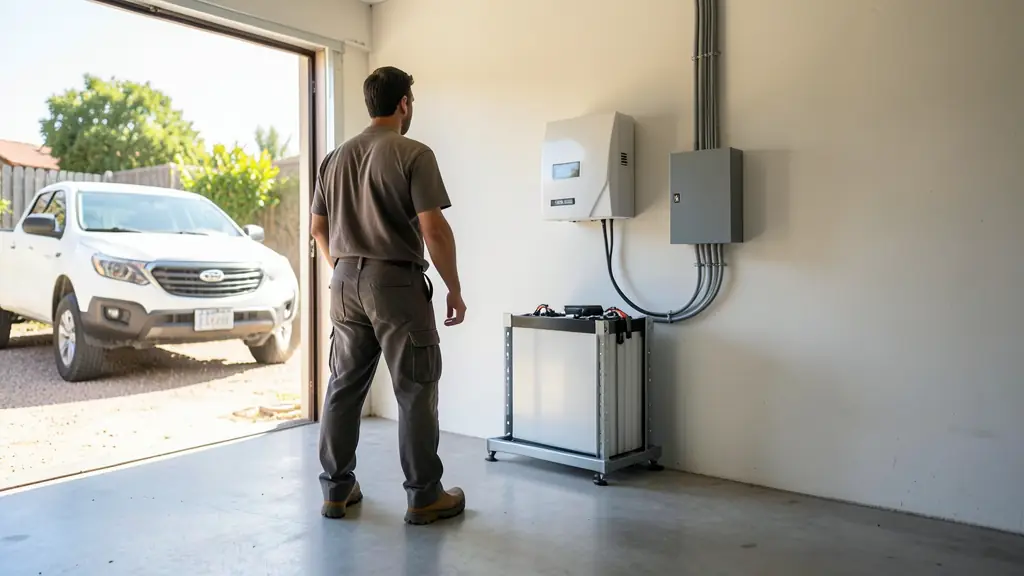
A hybrid solar system uses panels, a hybrid inverter and batteries together with the grid, so your home runs on sunlight first, stored power next, and the grid last. It is the most common choice for households that want to ride through load-shedding. SolarPanel.co.za is a free quote service. One form reaches independent installers and suppliers in your area, who quote you directly. We do not install or supply anything ourselves, and there is no fee or obligation.
How a hybrid solar system works
The panels produce direct current. The hybrid inverter does three jobs in one box: it converts that power for your home, charges the batteries, and manages the connection to the grid. During the day your appliances use solar power first, any surplus charges the batteries, and the grid tops up only if needed. In the evening the batteries take over. When Eskom or the municipality fails, the inverter isolates your home from the grid and keeps your chosen circuits running.
This is the main difference from a plain grid-tied system, which shuts down in an outage. Read our page on grid-tied solar systems for the comparison, and on hybrid inverters for the equipment itself.
Batteries, essential loads and backup time
Batteries are where the design choices matter most. Most new hybrid systems use lithium iron phosphate (LiFePO4) batteries, rated in kWh. How long they last in an outage depends on what is connected.
- Essential loads: lights, fridge, router, TV and phone chargers use little power and last long.
- Heavy loads: stoves, kettles, geysers, heaters and pool pumps drain batteries quickly and are often left on the grid side.
- Inverter rating: a 5 kVA unit can start fewer motors at once than a 10 kVA unit.
Ask installers to explain which circuits are backed up and how long they expect the battery to last on a typical evening. See lithium solar batteries for more.
Approvals, safety and grid connection
A hybrid system that stays connected to the grid counts as embedded generation. Your municipality or Eskom requires SSEG registration or approval before you switch it on, and the inverter must meet NRS 097-2-1 and be on the approved list. Some areas offer feed-in credits for exported power, others do not, so ask what applies to your account.
The installation must follow SANS 10142-1 and SANS 10142-1-2, and a registered electrician issues the Electrical Certificate of Compliance. Batteries should sit in a ventilated, protected spot away from direct sun, damp and flammable material. Tell your insurer once the system is in. Our page on solar compliance and registration covers the paperwork.
What affects the price of a hybrid system
A hybrid system costs more than a grid-tied one because of the batteries and the larger inverter, but the final figure depends on your choices. Quotes vary with:
- The inverter size, single or three phase, and the number of units.
- The battery capacity in kWh and the battery type.
- The number of panels and the roof layout.
- How much of your wiring needs to be split into backed-up and non-backed-up circuits.
- Extra items such as a generator input, smart metering or monitoring.
- Warranty terms and after-sales support.
Ask installers to list each component and its warranty so quotes can be compared fairly.
What to include in your request
- List the appliances that must run during an outage.
- Say whether you have single or three phase supply.
- State how many hours of backup you would like.
- Mention any existing panels or inverter you want to reuse.
- Add your municipality or Eskom area.
Hybrid Solar Systems at different properties
- Family homes: a 5 to 8 kVA inverter and lithium battery keeping essentials running through load-shedding
- Estate homes: larger hybrid systems for bigger homes, installed neatly and approved by the estate's design committee
- Townhouses and flats: compact hybrid units backing up lights and Wi-Fi, mounted where the body corporate allows
- Farms, smallholdings and lodges: hybrid systems that ride out long rural outages and run pumps, cold rooms and workshop tools
- Shops, offices and schools: hybrid systems keeping tills, card machines, alarms and servers running when the grid drops
- Factories and warehouses: three-phase hybrid or battery-backed systems that protect critical machines and cold chain equipment
Frequently asked questions
Does SolarPanel.co.za sell or fit hybrid systems?
What is the difference between a hybrid and an off-grid system?
Can a hybrid system run my whole house?
Do I need to register a hybrid system?
Hybrid Solar Systems by province and city
- Johannesburg
- Pretoria
- Centurion
- Midrand
- Sandton
- Randburg
- Roodepoort
- Krugersdorp
- Randfontein
- Germiston
- Boksburg
- Benoni
- Kempton Park
- Alberton
- Vanderbijlpark
- Vereeniging
- eMalahleni (Witbank)
- Middelburg
- Secunda
- Mbombela (Nelspruit)
- Rustenburg
- Brits
- Klerksdorp
- Potchefstroom
- Polokwane
- Tzaneen
- Lephalale
- Kimberley
- Kathu
- Upington
- Bloemfontein
- Welkom
- Sasolburg
- Durban
- Pinetown
- Pietermaritzburg
- Richards Bay
- Newcastle
- Ladysmith
- Gqeberha (Port Elizabeth)
- East London
- Kariega (Uitenhage)
- Cape Town
- Bellville
- Paarl
- Stellenbosch
- George
- Worcester
More solar products and services
Solar panels & mounting
Solar power systems
Inverters & batteries
Solar geysers & pool heating
Solar pumps & lights
Get free solar quotes
Tell us what you need and where. An installer or supplier who works in your area quotes you directly. Free, no obligation.
Size it roughly (optional)
Tick what must keep running when the power is off. The estimate goes into your request so installers can quote closer to what you need.
5.0 kWh per kWp a day
Tick a few loads or enter your monthly units to see a size.
A rough guide only. An installer confirms the size after looking at your bill, roof and distribution board.