Portable Power Stations with Solar Panels: Free Quotes in South Africa
Free quotes from solar and outdoor power suppliers across South Africa. One request, no obligation.
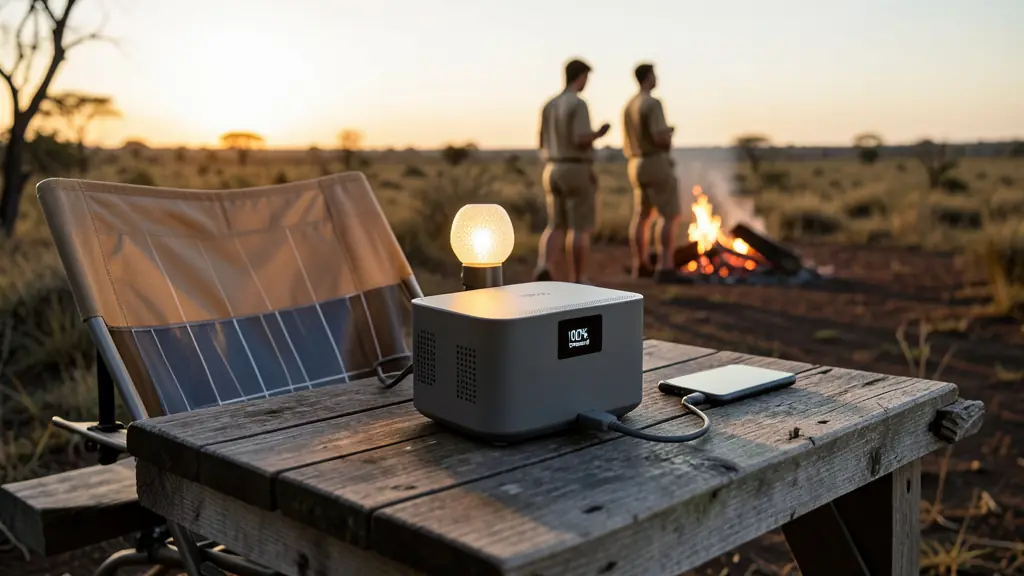
A portable power station is a battery, inverter and charge controller in one carry-handle box, and it can be charged from the wall, a car or solar panels. SolarPanel.co.za is a free quote service. You fill in one form and we pass it to independent suppliers in your area, who quote you directly. We do not sell or supply anything ourselves. There is no fee and no obligation, so you can compare power stations and panel bundles before deciding.
What a portable solar generator does
A power station is often called a solar generator, though it has no engine, no fuel and no fumes. It stores energy in a built-in battery and offers AC sockets, USB ports and 12 V outputs. You plug in a lamp, router, laptop, fan or small fridge and it runs silently.
It suits camping, bakkie trips, work sites and short load-shedding stretches. For bigger loads such as whole-house backup, a fixed backup power system is the better fit.
Capacity, output and what it will run
Two numbers matter. Capacity, in watt-hours (Wh), says how much energy is stored. Output, in watts (W), says how much it can supply at once.
- Small, 300 to 600 Wh: phones, lights, laptops, a router and a small fan.
- Medium, 1,000 to 1,500 Wh: a bar fridge, television, projector or power tools for short periods.
- Large, 2,000 Wh and up: a full-size fridge, a coffee machine, and sometimes a short run of a microwave.
Heating appliances such as kettles, geysers and heaters use a lot of power and drain a unit fast. Check each appliance's wattage against the unit's rated output.
Solar input, panels and charging time
Solar charging depends on the panel wattage, the sunshine and how well the panel is angled. Most stations list a maximum solar input in watts and a voltage window, so the panel's voltage has to fit. Folding suitcase-style units from our portable solar panels page are the usual partners. Rigid roof panels work too for a fixed spot.
On a clear day in South Africa, a 200 W panel can add a meaningful charge in a few peak sun hours, but cloud, shade and dust cut that. Charging from the wall or car is a useful backup. Look for a pass-through feature if you want to use the unit while it charges.
Price drivers and what to look for
Price depends on battery capacity, battery chemistry, output rating and extras such as bundled panels. Lithium iron phosphate cells last longer than older lithium-ion types and tend to appear in better units. Compare the following when you get quotes:
- Usable Wh, rated cycles and warranty
- Continuous and surge output
- Solar input rating and included cables
- Number and type of sockets, and the plug style for South African outlets
- Weight, noise and expansion options
Ask whether the unit is covered by a local warranty and whether it complies with South African electrical product rules.
What to include in your request
- List the appliances you want to run and their watts.
- Say how long you need them to run.
- State whether you want solar panels included.
- Mention if it is for camping, work or home backup.
- Add your town and whether you want delivery.
Portable Power Stations at different properties
- Family homes: a plug-in unit that keeps the router, lights and laptop going during short outages
- Estate homes: a quiet, fumeless alternative to a petrol generator for braais, gatherings and short outages
- Townhouses and flats: a movable backup that needs no wiring changes, handy where body corporate rules limit fixed systems
- Farms, smallholdings and lodges: power for fencing, tools and camp lighting in the field, charged by folding panels
- Shops, offices and schools: backup for card machines, laptops and lights at a market stall, site office or small shop
- Factories and warehouses: portable power for site tools, inspections and remote work where no socket is nearby
Frequently asked questions
How big a power station do I need for load-shedding?
Add up the watts of the items you want to run and the hours you need them. A router and lights suit a small unit, while a fridge or television calls for something larger. Suppliers can recommend a size if you list your appliances.
Can a power station run my whole house?
Generally no. They are designed for essential or portable loads. A hybrid inverter and fixed battery bank handle whole-house demand much better.
Do I need an electrician to install one?
Not for plug-in use. You simply connect it to the wall, panels or car. If you want it wired into your distribution board as a changeover, that needs a registered electrician and a Certificate of Compliance.
Do you sell the power stations?
No, we do not. SolarPanel.co.za passes your request to independent local suppliers, and they send quotes directly. There is no fee for using the service and no obligation to buy.
Portable Power Stations by province and city
- Johannesburg
- Pretoria
- Centurion
- Midrand
- Sandton
- Randburg
- Roodepoort
- Krugersdorp
- Randfontein
- Germiston
- Boksburg
- Benoni
- Kempton Park
- Alberton
- Vanderbijlpark
- Vereeniging
- eMalahleni (Witbank)
- Middelburg
- Secunda
- Mbombela (Nelspruit)
- Rustenburg
- Brits
- Klerksdorp
- Potchefstroom
- Polokwane
- Tzaneen
- Lephalale
- Kimberley
- Kathu
- Upington
- Bloemfontein
- Welkom
- Sasolburg
- Durban
- Pinetown
- Pietermaritzburg
- Richards Bay
- Newcastle
- Ladysmith
- Gqeberha (Port Elizabeth)
- East London
- Kariega (Uitenhage)
- Cape Town
- Bellville
- Paarl
- Stellenbosch
- George
- Worcester
More solar products and services
Solar panels & mounting
Solar power systems
Inverters & batteries
Solar geysers & pool heating
Solar pumps & lights
Get free solar quotes
Tell us what you need and where. An installer or supplier who works in your area quotes you directly. Free, no obligation.
Size it roughly (optional)
Tick what must keep running when the power is off. The estimate goes into your request so installers can quote closer to what you need.
5.0 kWh per kWp a day
Tick a few loads or enter your monthly units to see a size.
A rough guide only. An installer confirms the size after looking at your bill, roof and distribution board.