Solar for Farms in South Africa: Free Quotes from Agricultural Installers
Free quotes from solar installers who work on farms across South Africa. One request, no obligation.
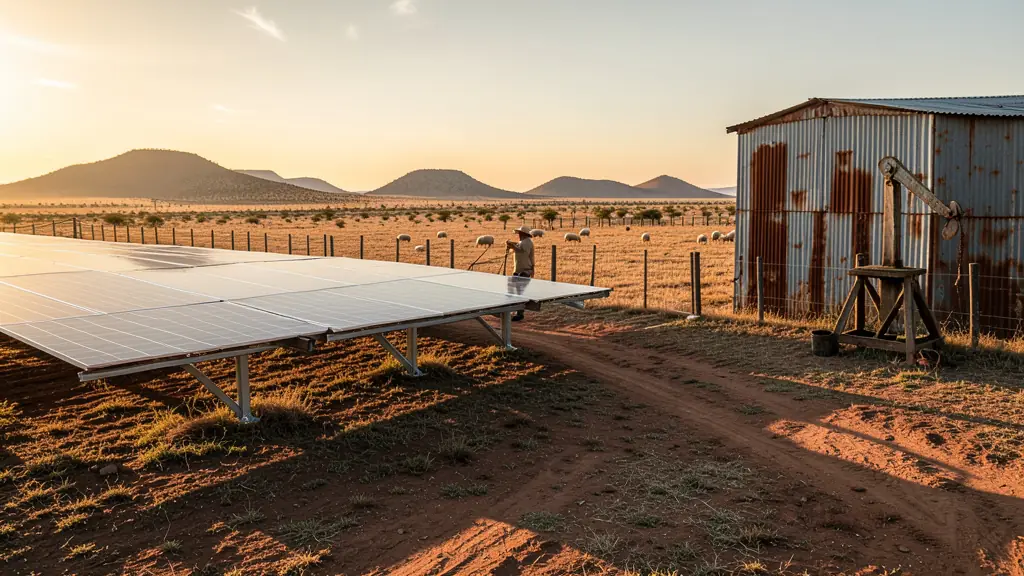
Solar for farms covers the panels, inverters and batteries that run irrigation, borehole pumps, dairies, cold rooms, packing sheds, workshops and farm lodges. Many farms sit at the end of long, unreliable power lines, so sun and storage often make good sense. SolarPanel.co.za is a free quote service. Send one request and independent agricultural and solar installers near you will quote directly. We do not supply or fit equipment ourselves, and you are under no obligation to accept any quote.
What farms use solar power for
Farm loads are different from house loads, and the best system follows the work. Typical uses include:
- Water: borehole and irrigation pumps that run in daylight, when the sun is strongest. See solar water pumps.
- Cooling: milk tanks, cold rooms and packhouse refrigeration.
- Buildings: homesteads, worker housing, workshops, guest lodges and farm stalls.
- Security and lighting: perimeter lights, gate motors and electric fencing energisers.
Because pumping and cooling are heavy loads, a farm system is often sized differently from a household one. Say clearly when each load runs and how many hours a day.
Grid-tied, hybrid or off-grid on a farm
A farm with a reliable connection can use a grid-tied or hybrid system to cut daytime use. Where the supply is faulty or the line is very long, a hybrid system with batteries rides through outages. Remote pumps, cabins and outbuildings with no grid at all use an off-grid system with batteries, or a direct-drive solar pump with no batteries.
Many farms combine them: a hybrid system at the homestead, a direct solar pump at the dam, and a generator kept as backup for long cloudy spells. Eskom or the municipality must still approve any grid-connected system, and a registered electrician issues the Certificate of Compliance.
Mounting, climate and protection
Farm roofs are often large, but sheds may be old or weak, so ground mounts are common and keep panels easy to clean in dusty conditions. Galvanised frames, anchored for wind, last well. Ask about livestock fencing around arrays, lightning and surge protection, and cable routes that avoid vehicle and stock damage.
- Dust and bird droppings cut output, so access for cleaning matters.
- Hail on the Highveld and in the Eastern Cape calls for tougher modules and sensible tilt angles.
- Heat and sun in the Northern Cape and Limpopo make good use of the high peak sun hours, but batteries need shade and ventilation.
- Theft is a real risk, so ask about anti-theft clamps and fencing.
What affects farm solar prices
We do not give prices, because a farm system depends on too many things. Installers look at:
- The size and type of pumps and motors, including starting current.
- Daily hours of use and seasonal peaks, such as harvest or milking.
- Distance between panels, batteries and the loads.
- Battery capacity if you need night or outage cover.
- Ground or roof mounting, site access and cable length.
- Whether you add monitoring, remote switching or a generator controller.
Include a list of your equipment, with motor ratings, and you will get quotes that can be compared fairly.
What to include in your request
- List pumps and motors with their kW ratings
- Say when loads run and for how many hours
- Mention whether the farm is grid-connected
- Give borehole depth and daily water need
- Note distances between panels, pumps and buildings
Farm Solar Systems at different properties
- Family homes: small plots and home-based farm stalls running a modest hybrid system and a borehole pump
- Estate homes: equestrian and wine estates powering stables, cellars and gate motors with roof and ground arrays
- Townhouses and flats: lifestyle farm cottages and complexes using small shared systems for lighting and water pumps
- Farms, smallholdings and lodges: irrigation, boreholes, dairies and cold rooms running on ground-mounted arrays with battery or generator backup
- Shops, offices and schools: farm shops, packhouses and guest lodges using daytime solar and batteries for tills and refrigeration
- Factories and warehouses: processing plants, grain silos and large cold stores with big roof or ground arrays tied to the grid
Frequently asked questions
Does SolarPanel.co.za supply or install farm solar equipment?
Can solar run my irrigation and borehole pumps?
Will a farm solar system work when the grid is down?
Do I need Eskom approval for solar on a farm?
Farm Solar Systems by province and city
- Johannesburg
- Pretoria
- Centurion
- Midrand
- Sandton
- Randburg
- Roodepoort
- Krugersdorp
- Randfontein
- Germiston
- Boksburg
- Benoni
- Kempton Park
- Alberton
- Vanderbijlpark
- Vereeniging
- eMalahleni (Witbank)
- Middelburg
- Secunda
- Mbombela (Nelspruit)
- Rustenburg
- Brits
- Klerksdorp
- Potchefstroom
- Polokwane
- Tzaneen
- Lephalale
- Kimberley
- Kathu
- Upington
- Bloemfontein
- Welkom
- Sasolburg
- Durban
- Pinetown
- Pietermaritzburg
- Richards Bay
- Newcastle
- Ladysmith
- Gqeberha (Port Elizabeth)
- East London
- Kariega (Uitenhage)
- Cape Town
- Bellville
- Paarl
- Stellenbosch
- George
- Worcester
More solar products and services
Solar panels & mounting
Solar power systems
Inverters & batteries
Solar geysers & pool heating
Solar pumps & lights
Get free solar quotes
Tell us what you need and where. An installer or supplier who works in your area quotes you directly. Free, no obligation.
Size it roughly (optional)
Tick what must keep running when the power is off. The estimate goes into your request so installers can quote closer to what you need.
5.0 kWh per kWp a day
Tick a few loads or enter your monthly units to see a size.
A rough guide only. An installer confirms the size after looking at your bill, roof and distribution board.