Understanding the Concept of Solar Panels with Integrated Fans
What is a solar panel with fan and how it works
Sunlight is abundant in South Africa, and solar technology keeps getting smarter. Global solar costs have fallen by about 70% in the last decade, making practical cooling options for homes, farms, and workshops. Heat meets its match.
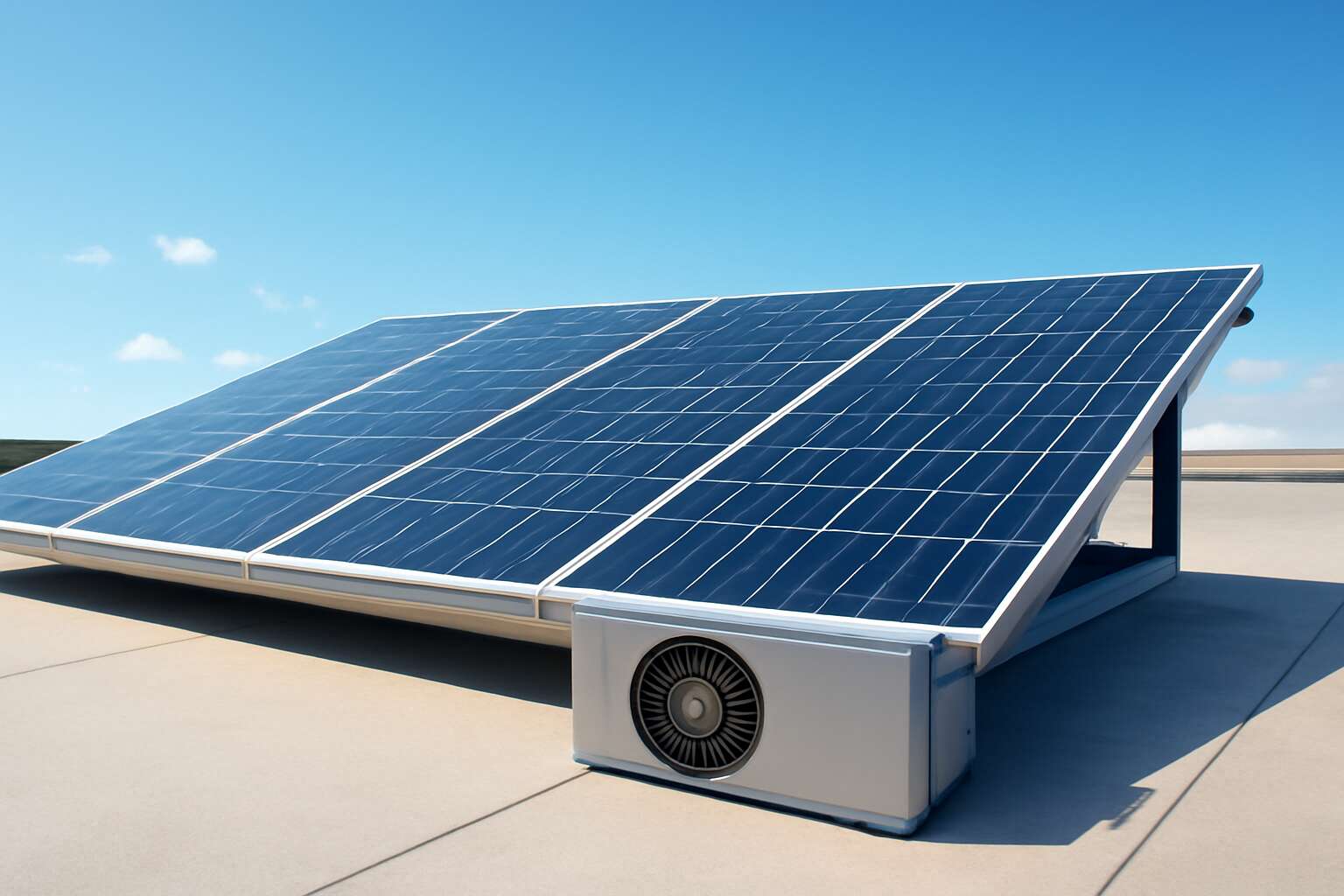
A solar panel with fan blends simple solar collection with a compact fan. When sun shines, the panel creates electricity that powers the fan, moving hot air away from equipment and spaces—often with direct, battery-supported operation for off-grid setups.
- Low maintenance cooling
- Fits off-grid installations
- Protects sensitive electronics from heat
In choosing a setup, consider sun exposure, space, and airflow needs. This option delivers simple, effective cooling that complements South Africa’s sunny climate and energy landscape.
Key components of a solar panel with fan system
South Africa’s relentless sun makes cooling electronics a daily concern. A solar panel with fan blends photovoltaic action with a compact fan, turning daylight into direct airflow that protects equipment from heat and keeps performance steady.
Key components work in concert to keep you productive in warm climates:
- Photovoltaic cell array that harvests daylight
- DC fan that provides brisk, direct cooling
- Simple wiring and mounting hardware for easy setup
- A basic controller or battery for off-grid reliability
Together they form a simple, scalable cooling option for sheds, farms, and workshops. In off-grid setups, the fan can run directly from the panel or from a small battery, keeping equipment safer when grid power is unreliable.
Sun-powered cooling aligns with South Africa’s practical energy outlook.
Differences between solar panel with fan setups and standard panels
In sun-scorched South Africa, roughly 2,500 hours of sunshine light up our days each year, a wealth that invites smarter cooling. A solar panel with fan quietly marries daylight harvesting with a whisper of breeze, turning heat into movement. It’s a subtle shift: power generation paired with active air management.
Here’s how it differs from standard panels:
- Heat is redirected by a small DC fan, cooling the panel and preserving efficiency.
- Wiring is simplified, often panel-to-fan direct, with a tiny controller or battery option.
- Off-grid use grows, running on daylight or a small reserve battery.
Viewed this way, this setup redefines standard panels: more than energy, it’s a portable climate ally for sheds and workshops under South Africa’s blazing sun.
Benefits of passive cooling and active fan support
South Africa’s sun smolders for roughly 2,500 hours a year, a meteorically generous gift demanding smart cooling. The concept of the solar panel with fan fuses daylight harvesting with a whisper of breeze, turning heat into steady, usable energy. It’s less about gadgets and more about climate stewardship.
Consider these advantages:
- Passive cooling lowers panel surface temperatures, preserving efficiency during peak sun.
- Active fan support removes excess heat with minimal energy cost and noise.
- Compact wiring and off-grid compatibility enable flexible installation for workshops and sheds.
Heat management becomes a careful choreography: let the environment do the heavy lifting for most hours, and bring in the tiny motor only when temperatures threaten performance. This solar panel with fan maintains performance closer to its ideal curve, even when SA skies blaze and the air grows heavy.
Under such conditions, the sun isn’t an antagonist but a collaborator—a partner in a portable climate solution for homes, farms, and business spaces.
Benefits and Use Cases
Energy savings with solar panel cooling
Applications in hotspots and off-grid locations
On the sun-scorched roofs of South Africa, the quiet partner beside every solar installation matters more than it seems. I have seen how a well-placed solar panel with fan turns a furnace-like roof into a steadier, cooler workshop for power. It isn’t merely a gadget; it’s resilience, pulling heat from the heart of the array and letting electrons flow more freely. With cooler panels, performance holds through blaze hours, and components last longer, even in dusty winds of the Highveld.
Applications in hotspots and off-grid locations reveal its poetry in motion. In SA’s radiant corridors, you’ll find it guarding accuracy, uptime, and the quiet dignity of a system that refuses to bow to heat.
- Hotspots in urban heat islands where exposed equipment risks throttling
- Off-grid clinics, schools, and community centers that must rely on steady PV output
- Agricultural operations, irrigation pumps, and remote sensor networks that demand reliability
Reliability improvements and longer panel life
Across South Africa’s sun-scorched rooftops, a small advantage matters: cooler panels, steadier power. The reality behind every solar panel with fan is simple and stark—shave a few degrees, and electrons flow more freely. That quiet cooling protects performance through the noon furnace and lengthens the life of components. In a land where heat tests a system daily, resilience becomes the quiet powerhouse behind every harvest.
Benefits and use cases crystallize in three notes.
- Reliability: steadier output during scorching hours
- Longevity: reduced thermal stress extends panel life
- Maintenance: fewer dust-related issues in windy Highveld climates
From hotspots to off-grid stations, the calm efficiency delivers consistent energy where it matters most.
Cost considerations and maintenance needs
On South Africa’s blistering rooftops, a small fan can turn a heat spike into steadier generation. The solar panel with fan quietly wrings watts from the blaze, letting electrons breathe easier as noon roars. This cooling isn’t vanity—it’s resilience captured in silicon and breeze.
Benefits and use cases span off-grid homesteads, clinics, and remote pumping stations, where heat and dust collide. The result is steadier output during scorching hours and reduced thermal stress that extends panel life, even when winds from the Highveld brush dust across the glass. In the field, the solar panel with fan proves its worth.
Cost considerations balance upfront investment against long-term savings, and maintenance remains a familiar, manageable duty.
- Upfront cost versus lifetime savings
- Projected reductions in daytime energy costs
- Maintenance needs and component durability in windy regions
Technical Specifications and Performance
Efficiency, wattage, and cooling impact
Sunlight is a stubborn artist, and in South Africa we enjoy roughly 2,500 hours of its gaze each year. A solar panel with fan doesn’t merely harvest energy; it guards it, keeping output steady as the shade retreats and the panels face the furnace of noon.
Technical specifications declare how gracefully the system breathes. Wattage, voltage, current—and the fan’s own power draw—are tuned to maximize performance efficiency, tempering thermal drift that saps the cells’ zeal.
- Wattage range: typical integrated units span roughly 120–350 W per panel.
- Fan power draw: a few watts—enough to cool without stealing energy.
- Temperature coefficient: lower is better for maintaining output in SA’s heat.
Performance efficiency benefits from cooling: lower operating temperatures maintain voltage, reduce mismatch losses, and extend panel life in harsh climates. The cooling impact is a quiet ally in off-grid and rooftop deployments alike.
Thermal management strategies for solar panels with fans
In the sun-drenched corners of South Africa, where rooftops enjoy roughly 2,500 bright hours each year, a tiny breath matters. A solar panel with fan blends elegance with endurance, turning heat into harmony and keeping output steadier as the shade retreats and noon pressed upon the glass.
Technical specifications matter, but the real art lies in thermal management strategies. Think airflow channels, strategically placed intakes and exhausts, and sensor-guided fan control that swells and retreats with the temperature. A solar panel with fan speaks in the language of watts and watts saved by cooler cells.
- Active PWM control for gentle, continuous cooling
- Low-impedance mounts to reduce conduction heat
- Dynamic temperature sensing for predictive operation
In harsh climates, these strategies translate to longer panel life and steadier performance when the mercury climbs.
Noise, vibration, and durability considerations
Technical specifications breathe life into a solar panel with fan. The unit wears a weather-hardened enclosure and a compact DC fan tuned for gentle, continuous cooling. A sensor-driven PWM control responds to heat, keeping output steadier as the sun climbs. In SA terms, expect a 12 V arrangement drawing roughly 0.2 A, with quiet operation under 40 dB and vibration-damping mounts that suppress shudder in gusty afternoons. UV-stable housing and tempered front glass seal the entire scene.
Performance and durability go hand in hand. The focus is a near-silent cadence that respects the desert winds and coastal humidity; rigid frames and isolation pads chase micro-vibrations away. Durability credentials include UV resilience, salt spray endurance, and wind-load ratings, so the solar panel with fan stands up to South Africa’s harsh climate and years of sun.
Voltage, current, and safety features for integrated cooling
Heat is the enemy of efficiency, especially under South Africa’s sun. A solar panel with fan keeps output steady when temperatures spike, protecting power delivery and extending panel life.
Technical specifications target reliability. A 12 V arrangement draws roughly 0.2 A, about 2.4 W for the cooling loop. This solar panel with fan integrates a sensor-driven PWM control that modulates the fan to match heat, while safety features guard against voltage spikes and overcurrent.
- Nominal voltage: 12 V
- Current draw: ~0.2 A
- Cooling power: ~2.4 W
- Safety features: PWM temperature sensing, overcurrent protection, reverse polarity protection, thermal cutoff
- Durability: IP-rated enclosure, UV-stable housing
On tough roofs across SA, the unit stays resilient, tuned to desert winds and coastal humidity.
Installation, Maintenance, and ROI
Site selection and mounting for solar panel with fan
South Africa enjoys roughly 2,000 hours of sun annually, turning a well-planned installation of a solar panel with fan into a smart investment. On rooftops, opt for a sturdy mounting, weatherproof wiring, and a tilt that keeps the fan’s airflow unimpeded while maximizing shade-free exposure.
Maintenance is simple and often tongue-in-cheek: wipe dust from the panels, inspect seals for the occasional South African dust storm, and listen for the fan’s cadence rather than ignore it. A seasonal rinse helps keep efficiency high and noise low.
ROI hinges on site selection and mounting that embrace sun, wind, and practicality for a solar panel with fan. Choose a north-facing, unobstructed patch, and secure a wind-rated frame so returns aren’t blown away with the weather.
- North-facing exposure for maximum sun
- Wind-rated, durable mounting for local fronts
- Accessible layout for routine checks
Wiring, control modules, and safety precautions
Installation for a solar panel with fan marries precision to practicality. Corrosion-resistant hardware, weatherproof wiring, and a carefully chosen tilt safeguard airflow while maximizing sun, all housed in a compact, ventilated enclosure for the control module.
Maintenance is a quiet ritual: vigilance over dust, the subtle integrity of seals after dust storms, and listening for the fan’s cadence to reveal anomalies before downtime. Regular checks on wiring, switches, and safety interlocks keep the system resilient.
- Weatherproof wiring and seals
- Accessible control modules and safety interlocks
ROI hinges on reliability and longevity: sturdy mounting, clean wiring, and well-tuned safeguards turn sun into measurable gains. In South Africa’s climate, a well-maintained solar panel with fan offers enduring value.
Maintenance tips and lifespan expectations
Installation is where intention meets infrastructure. In South Africa, midday heat can shave up to 15% off sun-powered output unless cooling is built in. For a solar panel with fan, alignment, secure mounting, and thoughtful ventilation decisions matter as much as sun exposure. Choose a tilt that favors steady airflow and easy access for tweaks and inspections.
Maintenance keeps the promise intact. Dust, seal wear after storms, and listening to the fan’s cadence reveal subtle shifts before downtime. Regular checks on wiring and safety interlocks ensure resilience.
- Dust and debris removal from panels
- Seals and enclosure integrity checks
- Fan operation test and cadence check
- Interlock and wiring continuity
ROI and lifespan expectations. Reliability compounds over years; sturdy mounting, clean wiring, and tuned safeguards convert sun into dependable gains. In South Africa’s climate, a well-kept solar panel with fan offers enduring value, with a lifespan that rewards regular attention.
ROI and payback analysis
South Africa’s midday sun is generous, but heat can steal power without smart cooling. Installation must align intention with infrastructure. A solar panel with fan relies on precise mounting and thoughtful ventilation to keep output steady as temperatures rise. Tilt and access become design choices, not afterthoughts.
Maintenance preserves the promise of performance in a harsh climate. Dust and seals deserve attention, and the fan’s cadence can drift before a fault surfaces. Sustained checks on wiring and interlocks keep resilience intact.
ROI and payback unfold across years, driven by steady cooling and stable output. A well-made system translates sunny days into dependable gains in South Africa’s grid landscape.
- Upfront cost and financing terms
- Local tariffs and net metering rules
- Expected energy savings from cooling-enabled output
- Maintenance and component replacement outlook

0 Comments