
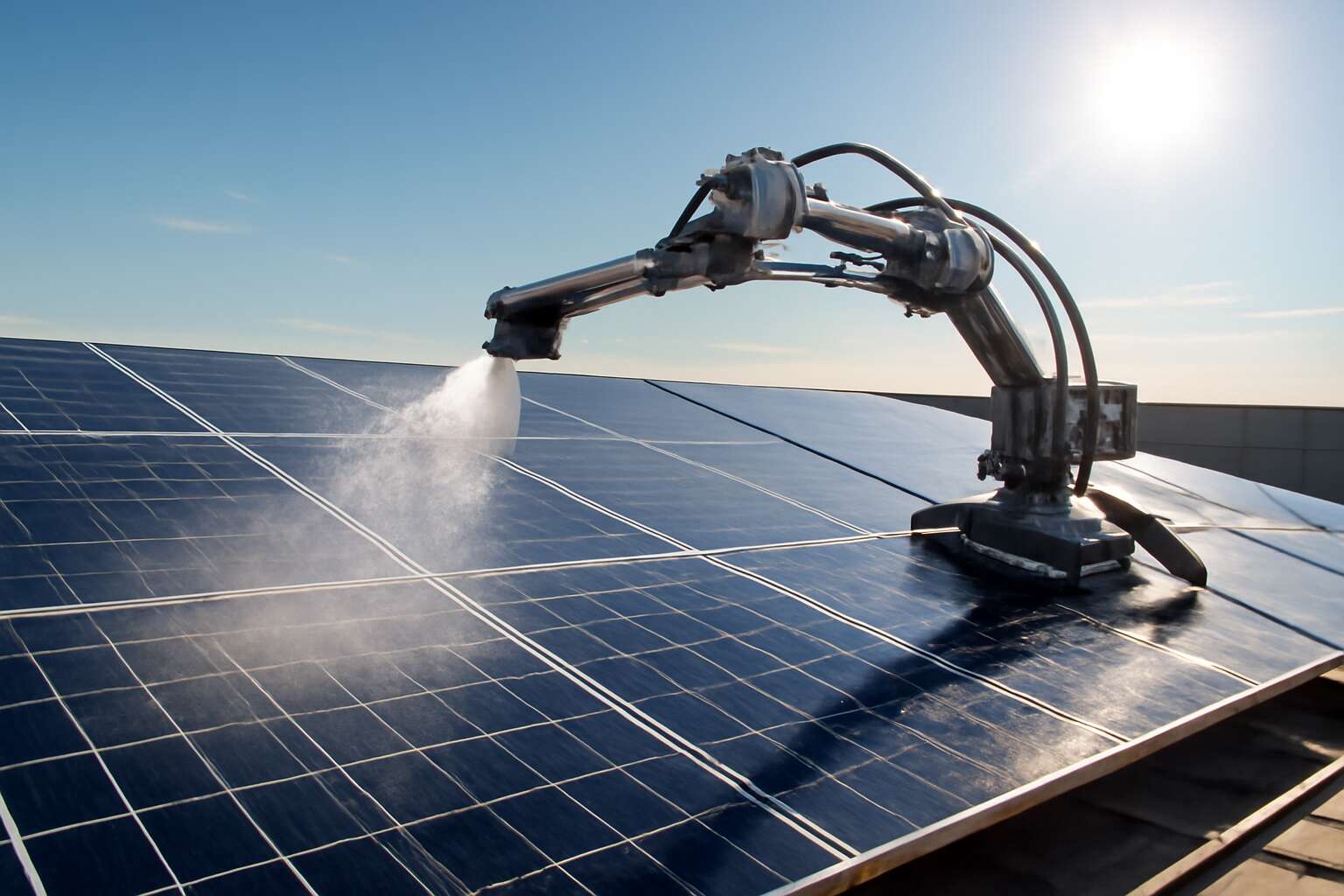
Solar panel washing equipment overview
Why choose solar panel washing equipment
Sun-scorched horizons over South Africa test every rooftop system, and I’ve learned that clean panels translate sunlight into real power. Solar panel washing equipment acts as a quiet multiplier of performance, turning a dusty ribbon into a clear mirror of efficiency. When grime retreats, outputs rise, and the day’s harvest grows more predictable for farmers and facility managers alike.
What features anchor this equipment’s value in practice?
- Low-water cleansing technology that minimizes waste
- Rugged, climate-ready construction for SA conditions
- Flexible mounting options for rooftop and ground arrays
- Gentle brushes and sensors that protect delicate surfaces
Together, these traits make the equipment a reliable companion for diverse SA installations.
From remote farms to city rooftops, solar panel washing equipment embodies a balance of performance and stewardship, a vital companion for SA’s ambitious clean-energy agendas.
Impact of dirt on solar efficiency and ROI
Sunlight is abundant across South Africa, but grime is a thief. In dusty SA conditions, panels can lose up to 12% of possible output when dirt builds up. Solar panel washing equipment steps in as a quiet multiplier, restoring glass clarity and letting sun power do the hard work. It’s not flashy, just reliable science at work on rooftop and field alike.
Dirt reduces efficiency, increasing the cost of energy produced and squeezing ROI. When surfaces shine, electricity flows more cleanly and predictably. Clean panels mean steadier generation during peak hours, lower downtime, and a longer asset life. The right solar panel washing equipment turns a dusty ribbon into a clear mirror of performance, a practical ally for SA’s growing clean-energy agenda.
Manual vs automated washing considerations
In South Africa’s sun-drenched landscapes, a dusting can trim up to 12% from a solar array’s potential, a quiet thief of kilowatts. Solar panel washing equipment stands as a careful guardian, restoring glass clarity so sunlight can perform its daily rite in full voice!
Manual washing offers intimate control and low upfront costs, yet it demands labour, time, and safety vigilance. Automated systems promise repeatable cleanliness, scalable throughput, and safer operation, though the investment and upkeep are higher and water and power compatibility must be weighed.
- Labour intensity and safety in remote fields
- Consistency of cleanliness across changing dust and weather
- Water use, power needs, and maintenance cycles for long-term reliability
The choice hinges on site specifics and maintenance tolerance; the right solar panel washing equipment harmonizes performance with South Africa’s growing clean-energy agenda.
Key features to look for in washing equipment
South Africa’s dusty sun can trim up to 12% from a solar farm’s daily yield, a quiet thief of kilowatts. solar panel washing equipment stands as a vigilant guardian, restoring glass clarity so sunlight can perform its daily rite in full voice.
Key features to look for include:
- Gentle, glass-friendly cleaning action to avoid micro-scratches
- Robust, corrosion-resistant materials for South Africa’s climate
- Water-use efficiency and options for reclaimed water
- Modular, easy-to-service design for downtime minimization
- Remote monitoring or simple diagnostics for reliability
With the right solar panel washing equipment, sites balance performance with reliability while fitting the realities of South Africa’s climate and water constraints.
Common myths about solar panel cleaning
Dust clings to every panel like a stubborn sunbird, and in South Africa that cling can shave harvests. Across dusty sites, daily yield can dip by up to 12% when grime blurs the glass. Myths about cleaning drift in the heat, but the truth stands: the right solar panel washing equipment keeps sunlight singing across the cells.
Common myths about solar panel cleaning:
- Myth: Cleaning is never needed in dusty conditions; truth: grime dims light capture even on cloudy days.
- Myth: Any water will do; truth: water quality and efficiency matter, and reclaimed water helps conserve resources.
- Myth: High-pressure washing is safest; truth: gentle cleaning preserves glass while removing dust.
- Myth: Automation eliminates monitoring; truth: remote diagnostics keep reliability high.
This is the chorus of reality: robust, adaptable equipment that respects water and climate keeps performance steady without drama.
Types and configurations of solar panel washing equipment
Manual cleaning tools and accessories
On South Africa’s sun-drenched rooftops, clean panels behave like tuned instruments. Dusty surfaces can shave a meaningful slice off daily output, turning bright rays into hesitant yields.
Types and configurations of solar panel washing equipment lean toward manual cleaning tools and accessories. Handheld wands, telescopic poles, and soft brushes keep panels pristine without harsh contact; microfiber cloths lift stubborn grime with gentle care.
- Telescopic pole with soft brush
- Microfiber cloths
- Squeegee for edge drying
- Non-abrasive cleaning solution
- Lightweight spray nozzle
Configurations vary from compact, standalone sets to modular kits that adapt for rooftop or ground installs. A basic setup can blend a wand, hose, and a small water reservoir to suit SA sites.
In solar panel washing equipment choices, the right manual toolkit supports steady performance while keeping safety and efficiency at the fore.
Automated cleaning robots for solar farms
On South Africa’s sun-scorched roofs, automated cleaning robots stand watch, turning sunlight into steady output. Solar panel washing equipment has evolved from heavy hoses to purpose-built custodians that glide between rows with quiet efficiency. Rail-mounted units ride tracks, while agile ground bots negotiate roofs and terrain, delivering a gentle spray and soft brushes that respect delicate coatings. A quiet revolution is underway!
Key configurations balance efficiency and scale.
- Rail-mounted robots
- Autonomous ground bots
- Modular, water-recycling kits
- Hybrid spray drones
Ground-based wash systems and boom arms
South Africa’s sun-drenched landscapes demand relentless clarity; even a thin dust veil can dull a day’s harvest. Solar panel washing equipment now moves with quiet precision, turning the hard work of cleaning into a streamlined routine. Ground-based concepts and boom arms are a cornerstone of scalable maintenance.
Ground-based wash systems and telescoping boom arms offer reach and control on verandas and large arrays. They can be configured as:
- Fixed-ground frame with overhead booms
- Mobile trailer-mounted units
- Telescoping arms for variable reach
Each configuration is tuned to terrain—roofs, open fields, and shade-downs—balancing water use and downtime. The right ground-based wash system or boom arm becomes a quiet partner in the equipment lineup, preserving coatings and maximizing uptime.
Waterless or low-water cleaning options
In South Africa, up to 15% of daily solar yield can vanish under a thin dust veil, turning radiant mornings into slower harvests. Types and configurations of solar panel washing equipment span from fixed frames to mobile rigs, and some are designed for waterwise cleaning.
Waterless or low-water options include:
- Microfiber dry-cleaning pads that lift dust without moisture
- Air-assisted blow-off heads to sweep away loose particles
- Low-flow spray systems with recycled water and optimized nozzle patterns
When selecting, operators weigh terrain, wind patterns, and water reuse to understand how solar panel washing equipment can fit a South African operation.
Configuration for rooftop vs ground-mounted installations
Rooftop skylines demand a different choreography of care than sprawling ground mounts. The right solar panel washing equipment begins with recognizing how rooftop arrays differ from ground-mounted layouts and imagining wind, shade, and access guiding every choice.
Configurations split neatly into fixed-frame rooftop systems and mobile rigs designed for rows of panels.
- Fixed-frame rooftop systems with integrated nozzles
- Mobile, trailer-based rigs for ground-mounted fields
- Boom-arm and rail-guided units that traverse aisles
For rooftops, compact, light-touch frames that ride the ridge of a gabled heaven keep damage at bay; for ground sites, rugged, track-driven machines reach between rows without trampling precious soil.
Performance features and specifications
Water efficiency and spray patterns for panel surfaces
In dusty South Africa, dirty panels can trim output by as much as 20% during dry spells. When performance matters, solar panel washing equipment unlocks reliable cleaning with consistent flow and adjustable pressure that hits every panel face without streaks.
Key specs include a max flow rate of 15–25 L/min and an operating pressure of 2–6 bar, with corrosion-resistant materials and smart water control to limit waste. The right solar panel washing equipment also supports varied spray patterns for panel surfaces: a fine mist for delicate coatings, a wide fan for quick coverage, and rotating jets for even distribution.
- Fine mist for delicate panels
- Wide fan for bulk washing
- Rotating jets for even coverage
Brushes, nozzles, and material durability
Dusty South African rooftops steal energy, and panels pay the price. In dry spells, dirty surfaces cut output by up to 20%. When performance matters, solar panel washing equipment delivers steady flow and adjustable pressure that hits panels without streaks.
Performance features keep setups predictable: max flow 15–25 L/min, 2–6 bar, corrosion-resistant materials. Smart water control minimizes waste and guards coatings.
- Brushes: soft for coatings, stiff for grime
- Nozzles: interchangeable patterns
- Material durability: anti-corrosion housings
To match SA realities, the system delivers varied spray patterns—fine mist, wide fan, rotating jets—for even coverage without over-wetting. Rugged construction and thoughtful design separate good gear from average.
Power options and portability for field use
Rooftops bake under SA sun, and the right gear refuses to buckle. This solar panel washing equipment is built for repeat performance when dust and heat test every seal. It delivers a steady flow—15 to 25 L/min—and a regulated 2 to 6 bar, with corrosion-resistant housings that shrug off coastal spray as if it had a will of its own. Smart water control trims waste and shields coatings, so nothing gets wasted on a scorchingly long day.
Power options cover the field: plug-in mains for fixed sites, rechargeable battery packs for rooftop sorties, and compatibility with compact petrol generators where outages bite. The unit’s footprint is deliberately lean, with ergonomic grips, balanced weight, and hose-and-nozzle integration that slips easily into a kit for SA tours and site visits.
Scalability for large solar farms
Across SA’s sun-drenched fields, clean panels translate to steady revenue and fewer shutdowns. In South Africa, dust and heat can shave up to 8% of annual yield from exposed arrays, turning a bright morning into a maintenance headache. Performance features lock in uptime: modular pumps, adaptive spray patterns, and maintenance-friendly layouts designed to endure marathon cleaning cycles under scorching heat!
This solar panel washing equipment is built to scale for large solar farms, weaving capacity into every rung of the system. I’ve watched fleets deploy multi-unit arrays along long rows, with remote diagnostics and staggered cycles that respect water limits while protecting coatings.
- Modular pump banks scale from hundreds to thousands of panels
- Remote monitoring and fault alerts streamline field ops
- Flexible water sourcing to suit semi-arid sites
Maintenance indicators and sensors
Clean panels can boost output by up to 8% in SA’s blazing sun—and that gain isn’t accidental. solar panel washing equipment acts as the quiet engine behind steady harvests, keeping throughput high even on the hottest days!
Performance features translate uptime into every component: modular pump banks that scale, adaptable spray patterns for varying panel angles, and a chassis designed for long cleaning cycles in harsh, semi-arid environments. Expect precise flow control and durable, corrosion-resistant materials.
Maintenance indicators keep crews on track with real-time signals:
- Inline flow and pressure sensors ensure steady cleaning
- Coating wear indicators flag surface degradation early
- Temperature and vibration sensors preemptively flag motor health
This is why solar panel washing equipment remains essential for uptime on SA farms.
Safety, maintenance, and compliance
Operator safety protocols and PPE
Preventive maintenance schedules
Heavy Saharan dust and scorching sun in South Africa reduce PV output; studies show soiling can trim annual yield by up to 15% in agricultural and desert-adjacent zones, a punch to your ROI. In this landscape, solar panel washing equipment becomes more than gear—it’s a shield for performance and a pledge to uptime.
Safety and compliance are inseparable from routine maintenance. With strong safety protocols, teams treat inspection as a ritual—checking hoses, fittings, and seals on the equipment, logging wear, and ensuring anti-slip surfaces and fall-arrest readiness. Preventive maintenance schedules align with manufacturer guidance and climate realities, ensuring sensors alert on drips or delays and that hardware remains corrosion-free.
Compliance with South African OH&S norms and environmental considerations underpins every service schedule; meticulous record-keeping, routine calibrations, and third-party audits ensure longevity and reliability while protecting the workforce and local ecosystem.
Regulatory and environmental compliance
In dusty SA regions, studies show soiling can trim annual yield by up to 15%—a punch to ROI. Solar panel washing equipment isn’t just gear; it’s a shield for performance and uptime, turning brutal glare into reliable production and calmer maintenance cycles.
- Strict OH&S adherence with documented training
- Regular inspection of hoses, fittings, seals, and anti-slip surfaces
- Environmentally responsible water use and waste controls
- Meticulous record-keeping and third-party safety audits
Safety and compliance are inseparable from routine maintenance. When solar panel washing equipment is in service, South Africa’s OH&S norms shape inspections, calibrations, and environmental safeguards—logging wear on components, ensuring fall-arrest readiness, and protecting waterways. The result is longevity, reliability, and a workforce that moves with confidence.
Warranty, training, and after-sales support
Safety is the compass guiding field teams through South Africa’s grit and glare. With strict OH&S norms, every inspection, calibration, and environmental safeguard becomes routine—protecting waterways and workers alike. Our solar panel washing equipment is designed to log wear, support fall-arrest readiness, and keep downtime to a minimum.
- Warranty coverage, parts availability, and service levels
- Structured operator training and refresher courses
- Responsive after-sales support with on-site and remote options
Long-term reliability comes from proactive maintenance scheduling and transparent documentation. When teams know what to expect and whom to contact, performance stays high and the workforce moves with confidence.
Data logging and performance tracking for audits
Across South Africa, dust and grime can shave up to 10% off output on hot, dry days. In that unforgiving grit, safety and performance fuse when teams operate with reliable solar panel washing equipment!
Maintenance and compliance hinge on logging every inspection, calibration, and wear indicator. Data trails support audits and protect workers by documenting fall-arrest readiness, environmental safeguards, and minimized downtime.
- Timestamped inspections and calibration records
- Wear indicators for brushes and seals
- Fall-arrest and PPE checks
- Water usage and spill controls
Audits demand transparent dashboards and traceable performance metrics. With robust data logging, teams demonstrate compliance, optimize maintenance cycles, and keep operations aligned with safety standards and environmental safeguards. The result is steadier uptime and trustworthy, field-hardened performance.

0 Comments