Understanding the 460-Watt Solar Panel: What It Is and Why It Matters
What is a 460-Watt Solar Panel?
South Africa basks in more than 2,000 hours of sunlight each year, a gift that turns every rooftop into a quiet power plant. Understanding the 460 watt solar panel is how we translate that light into steady, practical energy for homes and businesses.
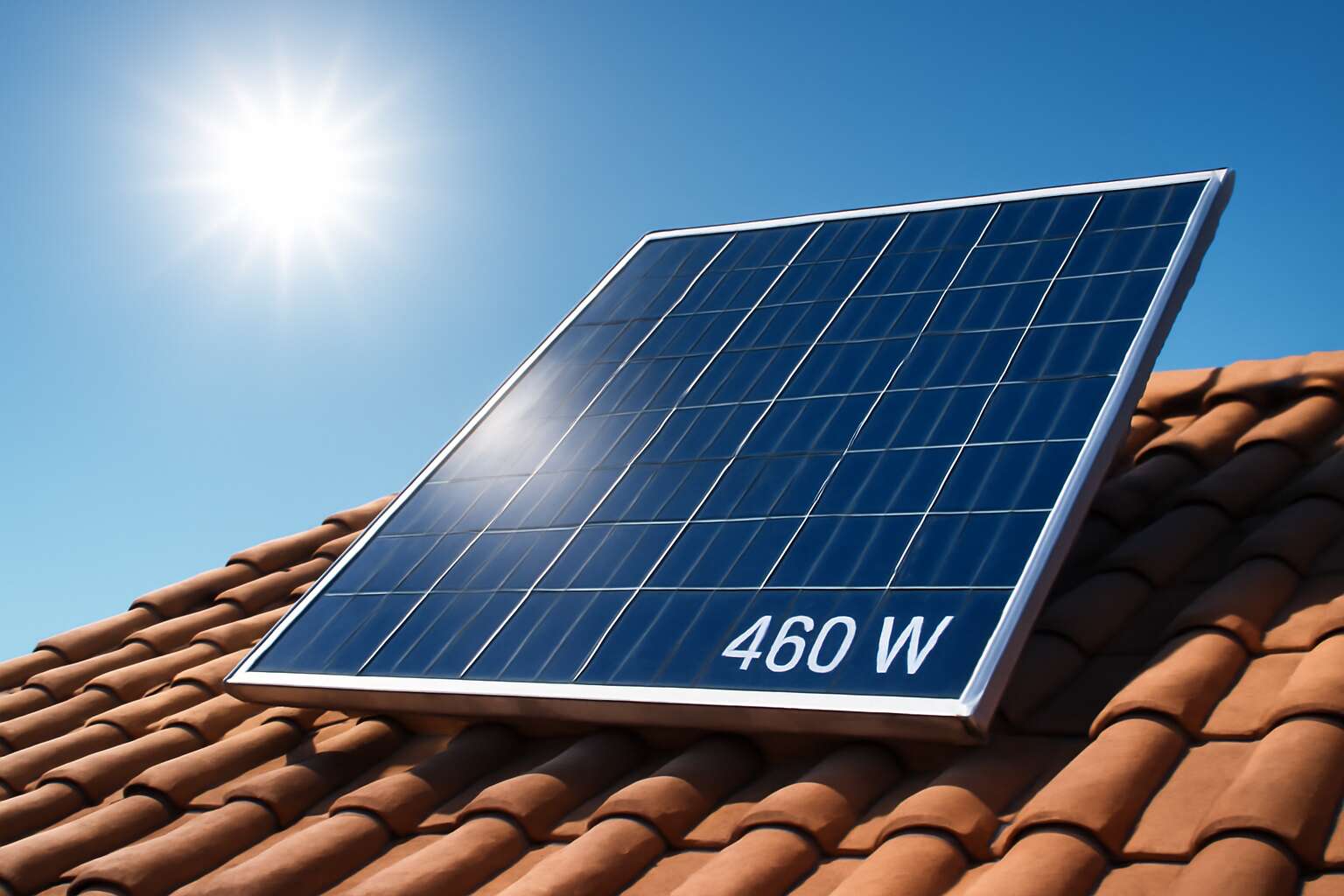
A 460 watt solar panel is a high-output photovoltaic module whose rating marks peak power under ideal tests. In practical terms, it means substantial daily generation with fewer panels, a tidy footprint, and a clearer path to energy independence—perfect for SA rooftops that balance modest space with audacious energy goals.
- Boosts daily energy yield
- Fewer panels, simpler design
- Inverter sizing becomes straightforward
With its blend of performance and practicality, the 460 watt solar panel becomes a cornerstone in modern solar solutions across South Africa, marrying reliability with elegant efficiency.
Key Specifications and Electrical Ratings (W, Voc, Isc, Vmp, Imp)
In rooftop finance, the sun is your silent partner—and the 460 watt solar panel makes it a generous one. “The sun pays in kilowatts if you do the math,” quips the SA solar crowd, and this module delivers predictable daytime energy with a compact footprint. Understanding its key specifications and electrical ratings turns daylight into reliable power rather than a dice roll.
Key specifications at a glance, with the numbers that shape inverter and wiring choices:
- W — Peak power output; the nominal 460 W rating under standard test conditions.
- Voc — Open-circuit voltage; typically around 46–50 V depending on model and temperature.
- Isc — Short-circuit current; usually in the 10–14 A range for this class.
- Vmp — Voltage at maximum power; commonly 37–40 V.
- Imp — Current at maximum power; roughly 11–13 A.
These figures guide inverter sizing and system layout, shaping how a single 460 watt solar panel contributes to a broader sun-powered story for SA rooftops.
Ideal Use Cases and Applications
Sunlight is South Africa’s most dependable daytime asset, and a 460 watt solar panel makes those rays count. The sun pays in kilowatts if you do the math, and this module converts predictable daylight into usable power with a compact footprint for rooftops or even well-placed balcony mounts.
Ideal use cases and applications include:
- Residential rooftops aiming to offset daily daytime consumption
- Small businesses and clinics with peak daytime loads
- Remote or grid-challenged sites where reliable power matters
When paired with the right inverter and wiring, a 460 watt solar panel becomes a practical cornerstone of a South African rooftop installation.
How 460-Watt Modules Impact System Design
Understanding the 460 watt solar panel isn’t simply about watts; it’s about a quiet alchemy where daylight becomes daily power. This high-output module sits compact yet mighty on a South African rooftop, turning generous sun into steady energy with a footprint that respects space and aesthetics. A 460 watt solar panel channels the sun’s generosity into usable energy, a reminder that ambition can be contained yet expansive.
How these modules shape system design is a dance of balance. Pairing with the right inverter, careful wiring, and thoughtful placement, the panel contributes to a tapestry of reliability during peak sun hours. In grid-tied or remote installations, that rooftop asset can redefine what a rooftop can bear, influencing array sizing, shading considerations, and overall efficiency without shouting for attention.
Certifications, Safety, and Quality Standards
Power isn’t only about watts; it’s about the trust a 460 watt solar panel promises when the sun climbs over a South African roof. Certifications are the quiet guardrails that translate daylight into dependable daily power. In this land of bright skies, quality standards guard against cheap shortcuts and ensure safety for families and installers alike. The right certifications speak in a language of tests and real-world performance, not marketing hype. I’ve learned that behind every label lies a decision to protect what we build and who uses it.
- IEC 61215 and IEC 61730 for design and safety
- SABS certification for local compliance
- UL listings or equivalents for cross-border assurance
Certifications, Safety, and Quality Standards mean more than labels; they shape how a panel behaves in heat, shade, and wind. South African installers rely on international as well as local benchmarks to guarantee resilience. Consider these pillars:
Placed rightly, they translate daylight into daily life—quiet, dependable, and unmistakably yours.
Performance and Specifications of the 460-Watt Solar Panel
Electrical Ratings and Performance at Standard Conditions
South Africa sits under some of the world’s highest solar irradiance, turning daylight into power with a 460 watt solar panel and a quiet swagger. Under Standard Test Conditions, this module delivers steady performance you can trust, translating bright days into tangible savings rather than theater.
Electrical ratings at STC anchor expectations. The panel maintains its output with a predictable Vmp and Imp, while Isc and Voc hold to a tight band. The result is inverter-friendly power that slots into system design with the ease of a well-timed handshake.
- Near-rated power under STC
- Stable Vmp and Imp for reliable energy flow
- Good tolerance to temperature shifts in SA climates
Temperature Coefficients and Real-World Output
South Africa basks in some of the world’s most intense solar irradiance, and the 460 watt solar panel answers with a patient, cathedral-like certainty. In the glare, it yields steady power you can rely on, turning daylight into tangible savings rather than theater. I watch it answer the dawn.
Temperature coefficients sketch the limits of this calm power. As temperatures rise, Pmax typically falls by about 0.4–0.5% per degree Celsius, while Vmp drifts downward by 0.2–0.3% per °C and Isc nudges upward by a small margin. Real-world output breathes with the air you breathe.
In practice, a few realities shape day-to-day performance:
- Irradiance peaks drive Pmax but heat erodes efficiency.
- Vmp and Voc shift with temperature, yet the design stays inverter-ready.
- Shading and soiling remain the quiet saboteurs of real-world output.
Comparisons with Other Wattage Panels (e.g., 400W, 500W)
South Africa’s sun is a relentless judge, and the 460 watt solar panel answers with patient certainty. On bright days it sits between the 400W class and the bolder 500W models, delivering dependable energy with a restraint that respects roof space and inverter budgets.
- Output density: more watts per roof area than 400W, yet without the diminishing returns of some 500W kits.
- System fit: inverter and wiring layouts remain straightforward, easing installation in typical South African homes.
- Shade and dirt tolerance: steady performance in real-world conditions, reducing surprises during afternoon fade and light soiling.
In this middle ground, the 460 watt solar panel is a pragmatic choice for those who seek reliable daily yield without overreaching the system’s limits. It anchors performance between the extremes, providing tangible energy with quiet, almost existential steadiness.
Panel Efficiency and Cell Technology Used
South Africa’s rooftops catch roughly 2,200 kWh of sun per square metre each year, turning ordinary tiles into quiet power plants. The 460 watt solar panel translates that intensity into meaningful daily yield, offering robust performance without sprinting past system limits.
Efficiency sits in a practical range for South African conditions, thanks to high-grade mono-crystalline cells and PERC technology that push power without overheating. The use of low-iron glass and a durable anti-reflective coating preserves light capture through clouds and glare.
- Monocrystalline cell architecture optimized for dense packing
- PERC (Passivated Emitter and Rear Cell) technology for better low-light performance
- Anti-reflective coating and tempered glass to minimize reflective losses
Real-world performance is steady across heat and dust; the 460 watt solar panel maintains output with stable Voc and Vmp characteristics, ensuring predictable integration with inverters and wiring plans in typical SA homes.
Reliability and Degradation over Time
Across South Africa, rooftop energy is more than sunlight—it’s resilience. The 460 watt solar panel is built to translate SA’s roughly 2,200 kWh per square metre each year into dependable daily yield, standing up to heat, dust and fickle clouds with quiet confidence!
In real-world conditions, long-term reliability matters as much as peak capacity. Expected degradation sits in the modest range of about 0.3–0.5% per year, preserving most of its initial power output over two decades while keeping Voc and Vmp stable enough for predictable inverter matching.
Several design choices support durability in SA environments:
- Robust junction box and corrosion-resistant frame for coastal or dusty inland scenarios
- Encapsulants and tempered glass that resist humidity and thermal cycling
- Monocrystalline PERC cells with effective thermal management to minimize performance loss
Together, these elements help the module retain a steady curve under sun, wind and heat, turning every rooftop into a power station.
Installation and System Design for 460-Watt Panels
Mounting, Racking, and Orientation Best Practices
South Africa basks in prodigious sun, roughly 2,000 hours annually, a fact that makes a 460 watt solar panel look like a sun-powered MVP. Mounting and racking choices hinge on roof type, wind loads, and corrosion resistance. Orientation toward the northern sky, with a tilt tuned to latitude, typically yields the steadiest daily output and keeps shade from stealing the show.
- Racking materials that resist SA’s coastal corrosion and dust
- Orientation and tilt tuned to latitude for maximum daily yield
- Cable management and accessible maintenance pathways
Key considerations sit quietly at the intersection of practicality and good taste. The following quick list fits the flow.
A well-balanced installation harmonizes aesthetics, performance, and wind resilience while obeying local codes.
Wiring Configurations: Series vs Parallel for 460-Watt Modules
In installation and system design, a 460 watt solar panel array demands a precise balance of voltage, current, and inverter headroom. South Africa’s sun makes long, efficient runs common, so wiring strategies must protect against shading and mismatches while staying within safety margins. A 460 watt solar panel setup often leans toward series strings to raise voltage and reduce conductor losses, provided the inverter and maximum system voltage are respected, a deliberate act of engineering hope!
Think of these wiring configurations as tools for resilience and efficiency:
- Series: higher string voltage, fewer cables, tighter control of current.
- Parallel: lower voltage, more parallel strings, greater shading tolerance.
- Hybrid approaches: carefully mixed strings with proper protection and balancing to optimize both voltage and current.
In a practical SA install, choose a configuration that harmonizes with roof layout, distance to the inverter, and local codes.
Inverter Compatibility and MPPT Strategies
South Africa enjoys about 2,300 sun hours annually, a brutal truth that makes rooftops into powerhouses. A 460 watt solar panel demands an inverter that can hear its voltage heartbeat and an MPPT that refuses to miss a whisper of irradiance.
Inverter compatibility means honoring maximum system voltage and giving the array headroom for surge. A carefully chosen MPPT strategy keeps Vmp within the tracker’s sweet spot across the day, from dawn to dusk, so the glow of SA’s sun becomes a measured triumph rather than a gamble.
- Align Vmp with the inverter’s MPPT window to capture peak real-world output.
- Account for temperature coefficients and shading so the current remains balanced across strings.
- Provide adequate headroom and protection devices to guard startup transients and thermal derating.
On a practical SA installation, the 460 watt solar panel must harmonize with roof geometry and run distance to the inverter, ensuring safe, efficient operation in the sunlit theatre of the nation.
System Sizing and Layout with 460-Watt Panels
South Africa averages about 2,300 sun hours a year, turning rooftops into quiet powerhouses, and a 460 watt solar panel sits at the center of that transformation. A carefully tuned layout converts daylight into dependable energy with understated elegance, a fluent blend of engineering and aspiration. In this realm, system sizing and thoughtful arrangement define the performance that follows every sunrise.
- Roof geometry and tilt speak softly to harvest without glare
- Cable paths and string organization minimize losses while honoring safety
- Shading analysis and routing protect aesthetics and reliability
When design respects real-world constraints, yield meets spirit in a living, sunlit narrative powered by a 460 watt solar panel.
Protection, Monitoring, and Safety Considerations
South Africa basks in roughly 2,300 sun hours each year, turning rooftops into quiet powerhouses. The 460 watt solar panel sits at the center of this sunlit choreography, demanding installation and system design that respect both performance and safety—because protection, monitoring, and sensible layout are not afterthoughts but the compass of dependable energy.
Protection, monitoring, and safety considerations shape every connection, enclosure, and route.
- DC isolator and fusing for quick isolation
- Weatherproof enclosures with proper IP rating
- Secure cable routing to minimize strain and glare
Monitoring emerges as the quiet sentinel—simple dashboards and remote alerts that whisper when a fault lurks. Safety culture, PPE, and clear labeling keep teams respectful of live DC voltages and the sun’s relentless energy. The result is a lifecycle that honors the 460 watt solar panel as a trusted partner rather than a daredevil gadget.
Cost, ROI, and Market Considerations for 460-Watt Solar Panels
Pricing Trends and Availability for 460-Watt Panels
Shopping for panels reveals a cost spectrum shaped by brand pedigree, certification marks, and import duties. In South Africa, budget for mounting hardware and an inverter, with VAT and roof geometry nudging the total. Competition has kept prices reasonably in check, which is good news for penny-pinching plot twists.
- Upfront cost clarity
- Warranty and service
- Brand credibility
ROI hinges on tariffs and net-metering credits; sunny 460 watt solar panel hours matter more as prices rise. I watch the numbers the way a sommelier follows a vintage—carefully, and with a hint of skepticism.
Market considerations include supply dynamics and local distributors; availability remains robust in South Africa, but watch for counterfeit specs and ensure solid warranties.
Financing Options, Incentives, and Rebates
Cost for a 460 watt solar panel setup in South Africa blends the sticker price, VAT, shipping, mounting hardware, and an inverter. Roof geometry and installation drama nudge totals higher or lower, but reputable installers keep things honest—and that sanity check saves sleepless nights.
ROI hinges on tariffs and net-metering credits; sunny hours matter as prices rise. When the 460 watt solar panel graces your roof, the payback clock starts, and policy twists can shorten or stretch the cycle.
Market considerations include supply dynamics and trusted distributors; counterfeit specs and weak warranties lurk. Availability remains robust in South Africa, but vet warranties and service commitments before committing.
- Bank financing with fixed terms
- Supplier credit or instalment plans
- Government rebates and utility incentives
Total Cost of Ownership and Payback Period
Total cost of ownership for a high-output rooftop setup in South Africa stacks up sticker price, VAT, shipping, mounting hardware, and an inverter. Roof geometry and installation drama can push the bill up or down, but reputable installers keep it honest, turning ‘surprise!’ into ‘amen’.
ROI hinges on tariffs and net-metering credits; sunny hours matter as prices rise. When the system graces your roof, the payback clock starts, and policy twists can shorten or stretch the cycle. The 460 watt solar panel enters the conversation with a predictable output profile, helping quants and homeowners alike model the payoff over 5 to 7 years depending on usage.
Market considerations include supply dynamics and trusted distributors; counterfeit specs and weak warranties lurk. Availability remains robust in SA, but vet warranties and service commitments before committing.
- Distribution reliability and after-sales support
- Warranty terms and local service coverage
- Certification and seller credibility
Warranty, Durability, and Maintenance
South Africa’s sun is a stubborn ally, turning every roof into a potential lifeline. A 460 watt solar panel sits at the heart of that promise, delivering a steady, predictable output profile that helps families and farmers forecast energy over the year. When the heat of summer tests panels and the dust coats frames, reliability becomes more than a number—it becomes peace of mind.
Cost and maintenance shape the true game. Warranties and regional service coverage matter as much as the sticker price, because durability in SA’s climate means fewer surprises and lower maintenance spend over time. A robust warranty reduces lifecycle risk and makes the 460 watt solar panel a safer bet for households and rural businesses alike.
Market considerations include supply dynamics and trusted distributors; counterfeit specs and weak warranties lurk, so vet the seller. Availability remains solid in SA, but assess warranty terms, local support, and the distributor’s credibility before committing.
Choosing a Reputable Supplier and After-Sales Support
“The sun never negotiates,” a South African installer likes to remind us, and the math backs it up. Cost today anchors decisions, but ROI tomorrow frames the real value. A 460 watt solar panel integrated into a well-supported system turns upfront spend into predictable savings, especially when the supplier offers transparent warranty terms and solid local service coverage. The peace of mind matters as much as the sticker price in SA’s volatile energy landscape.
When selecting a partner, weigh these elements:
- Transparent pricing with no hidden fees
- Local stock and dependable after-sales service
- Certified installers and genuine components
- Warranty fulfilment through regional support
Market considerations in South Africa—supply dynamics, distributor credibility, and a robust distribution network—play into long-term performance of any solar installation.


0 Comments