Overview of Photovoltaic Solar Technology
How solar panels generate electricity
One hour of sunlight delivers more energy than humanity uses in a year. This striking truth anchors solar panel technology, turning radiant beams into usable power for rooftops, schools, and commercial spaces across South Africa. When photons meet a photovoltaic cell, a quiet transformation begins—no flames, no moving parts, just electrons ready to be freed.
Inside the cell, photons knock electrons free from silicon, creating a flow of electricity. The built-in electric field nudges these charges into a direct current, which an inverter then converts into alternating current that can power lights, pumps, and devices throughout homes and workplaces. This is the essence of solar panel technology.
To see the sequence at a glance, consider this pared-down flow:
- Photons strike the PV cell, freeing electrons
- Charges travel through an electrical circuit as DC current
- An inverter converts DC to usable AC power for the grid or a site
Key components of a solar system
Sirens of sunlight whisper across South Africa’s roofs, turning glass into gold with solar panel technology. Behind the shimmer lie a careful choreography of parts that translate photons into usable energy, quietly shaping homes, schools, and businesses into solar futures!
Think of the system as a small, patient ecosystem.
- Photovoltaic modules (the panels) harvesting sunlight
- An inverter translating DC to AC power
- Racking and wiring forming the physical and electrical spine
- Battery storage and monitoring for resilience
In practice, a small dance unfolds: PV modules capture sun, wires carry current to the inverter, which sings into ready-to-use AC, with storage or the grid as a partner; smart monitoring keeps rhythms in check.
History and evolution of PV technology
Photovoltaic history reads like a quiet revolution. Global efficiency marches from single digits to the low twenties, and solar panel technology sits at the heart of the shift. In South Africa, sunlit rooftops are quietly writing a story of resilience and energy independence.
From the first practical silicon cell in the 1950s to today’s multi-junction and perovskite contenders, PV technology has evolved through manufacturing leaps and smarter designs. Each era pushed modules higher, longer, and more affordable, reshaping how communities access clean power.
The journey folds into milestones you can spot on roofs and in factories.
- Crystalline silicon legacy
- Thin-film flexibility
- Perovskite and tandem frontiers
Current market landscape and adoption trends
South Africa’s sun has become the continent’s most persuasive salesperson. The shift from curiosity to common sight is undeniable, and solar panel technology sits at the heart of it. Rooftops, carports, and even industrious factories now flirt with reliability, price declines, and faster deployment timelines, turning bold forecasts into practical realities.
Market dynamics today blend residential demand with corporate appetite and utility-scale buildouts. Financing has matured—from pay-as-you-go schemes to power purchase agreements—making projects feasible where they once seemed fanciful. Storage partnerships and smarter inverters smooth grid constraints, while local procurement sustains jobs in an industry that quietly outshines its skeptics.
Current landscape features three primary streams:
- Residential rooftop and carport installations
- Commercial and industrial deployments
- Utility-scale solar and hybrid projects
In SA, adoption trends lean toward resilience, independence, and smarter grids powered by enduring sunshine.
Types of Solar Cells and Materials
Monocrystalline vs polycrystalline cells
Rooftops glow with a patient harvest, the sun keeping the ledger in gold. ‘The future is written in photons,’ a South African installer murmured, and solar panel technology makes that prophecy tangible—quiet, relentless, intimate.
Monocrystalline cells, carved from a single silicon crystal, wear a velvet-black cloak and offer the highest efficiency in a compact footprint. Polycrystalline cells, forged from a mosaic of silicon fragments, shimmer with a blue-speckled hue and are kinder to the wallet.
- Monocrystalline cells: highest efficiency, uniform appearance, higher cost.
- Polycrystalline cells: lower efficiency, lower cost, speckled blue hue.
- Notes: PERC and passivation techniques boost performance across both types.
In the South African climate, choosing between mono and poly is a dance of space and sun. Mono shines brighter per square meter; poly stretches savings across larger installations. Both styles share a future where light becomes power, and roofs become engines of day and night alike.
Thin-film and emerging PV materials
Rooftops in Cape Town glitter like a constellation, and solar panel technology keeps the ledger in gold—a quiet revolution where daylight becomes currency and every kilowatt matters. The city, the Karoo, and the coast share a single rhythm: sunlit hours traded for power, roofs turning into patient banks of photons and promise.
Thin-film and emerging PV materials offer a different rhythm: light, flexible sheets that drape façades and promise future leaps in efficiency through novel compounds.
- Thin-film families: amorphous silicon (a-Si), cadmium telluride (CdTe), copper indium gallium selenide (CIGS)
- Emerging PV materials: perovskites and organic photovoltaics
- Architectures: tandem cells, bifacial designs, and lightweight substrates
These options widen South Africa’s practical canvas for solar, letting rooftops, farms, and rural installations harvest daylight with new grace and resilience.
Perovskites and tandem cell technologies
South Africa averages about 2,300 sunshine hours a year, a headline incentive for any grid-savvy nation. That’s where solar panel technology earns its keep—efficient, adaptable, and quietly rewriting the rules of daytime economics.
Perovskites promise high efficiency with printable, low-cost processing, while tandem configurations stack absorber layers to extract more energy from the same photons.
- Perovskites: high absorption, potential for low-cost, printable layers
- Tandem cells: stacked materials push efficiency beyond single-junction limits
- Scalability: stability and manufacturing need maturation
For South Africa’s rooftops and farms, these options widen the practical canvas without drenching budgets, promising resilience for rural installations and urban façades alike.
Durability, environmental considerations, and recyclability
Sunlight pours across South Africa’s roofs, and the choice of solar panel technology shapes every bill and every quiet afternoon. For me, durability, efficiency, and local support matter as much as price, especially in rural towns where a single failure can ripple through a family’s day.
Types of cells and materials durability matter for South Africa’s climate. Consider:
- Moisture and heat tolerance for coastal and inland environments
- Robust encapsulation and glass for dusty, high-UV conditions
- End-of-life strategies that prioritize recyclability and local processing
Recyclability and environmental stewardship are integral to modern solar panel technology. Local programs in SA recover silicon, glass, and aluminum; refurbishing and reusing components keeps costs down and waste out of landfills.
System Design, Installation, and Sizing
System sizing and load analysis
Across rural South Africa, the sun never clocks out, and a well-designed system can trim monthly bills by up to 40% in the first year. System design anchors performance, turning shade, roof orientation, and daily usage into a reliable flow of power. When these choices sing in harmony, outages fade and everyday life gains a quiet resilience.
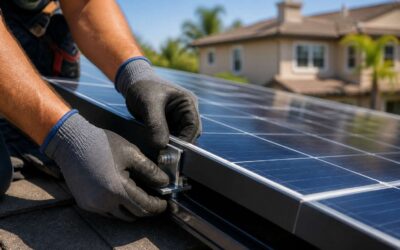
Installation is the bridge between plan and practice. Safe mounting, weatherproof wiring, and code-compliant connections matter as much as the panels themselves. This is where solar panel technology meets practical design, translating sunlight into steady energy that supports farms, clinics, and homes alike.
- Site shading analysis
- Secure mounting and safe wiring
- Testing and commissioning for reliability
System sizing and load analysis ensures the setup matches daily needs and seasonal shifts. By mapping fridge cycles, irrigation, lights, and charging, designers tailor panel counts and storage to a realistic, respectful footprint.
Roof siting, shading, and mounting considerations
System design anchors performance, turning roof space and sun into dependable power. In rural South Africa, roof siting, shading, and daily usage decide panel counts and storage needs. When those choices harmonize, outages fade and bills drop—this is solar panel technology at work, delivering steady energy for homes and farms.
Installation is the bridge between plan and practice. Safe mounting, weatherproof wiring, and code-compliant connections matter as much as the panels themselves. A concise checklist fits naturally here:
- Site shading analysis
- Secure mounting and safe wiring
- Testing and commissioning for reliability
Sizing and roof siting shading mounting considerations ensure the system aligns with seasonal demand. By mapping fridge cycles, irrigation, lights, and charging, the panel count and storage are set to a realistic footprint.
Inverter selection and string design
In a country where outages shape daily routines, the quiet math of system design decides whether the sun powers your home or leaves you in the dark. A thoughtful layout turns roof space and capacity into reliable energy from panel to plug with minimal drama!
Key design considerations that influence balance include:
- Inverter capacity and string length aligned to peak load
- Voltage windows, safety clearances, weatherproof wiring
- Storage compatibility and grid interaction for seasonal demand
Installation acts as the bridge between plan and practice, demanding safe mounting, weatherproof wiring, and code-compliant connections. In rural South Africa, reliable wiring and secure mounting reduce faults and help systems weather storms while costs stay predictable.
Sizing, inverter selection, and string design shape how much energy you harvest. By pairing topology with seasonality, you optimize performance without waste—a core demand of solar panel technology that powers homes and farms with quiet confidence.
Performance monitoring, warranties, and maintenance
System design is a quiet overture where shade, tilt, and load compose a durable symphony. In South Africa’s generous sun, a prudent plan turns roof real estate into steady energy from panel to plug, with sizing leaning toward the rhythms of peak and lull. This is solar panel technology in living color, daylight serving reliability.
Installation is the bridge between plan and practice: mounts that endure storms, weatherproof wiring, and code-compliant connections. Performance monitoring becomes a daily vigil, tracking output, spotting anomalies, and steering maintenance before trouble lands!
- Regular checks and data reviews
- Seasonal inspections for wiring and fasteners
Warranties and maintenance anchor long-lived energy, turning risk into reassurance. Routine service keeps the system singing through outages, storms, and the quiet drag of seasons.
Performance, Efficiency, and Optimization
Efficiency metrics and key factors influencing output
Across sun-drenched South Africa, peak sun hours often exceed 5.5 per day, turning daylight into dependable power. Solar panel technology weaves daylight into life with quiet efficiency and enduring reliability.
Performance is measured by metrics like performance ratio, capacity factor, and energy yield—gauges of how well the sun’s bounty becomes usable electricity. In pristine conditions, high PR reduces losses from wiring, inverters, and thermal stress.
Efficiency and optimization balance the equation. Module efficiency sits at the heart of output, while optimization efficiency examines how techniques such as MPPT coax every watt from a sunlit surface and a well-tuned array.
Key factors influencing output include:
- Irradiance and sun angle
- Temperature effects and the temperature coefficient
- Shading and soiling
- Wiring losses and inverter efficiency
- System orientation, tilt, and mounting accuracy
Tracking systems versus fixed-tilt installations
Performance in solar arrays is a dance with light. In the sun-drenched landscapes of South Africa, tracking systems lift energy yield when peak sun hours exceed 5.5, turning bright days into power. I’ve found that tracking versus fixed-tilt decisions hinge on site, wind, and maintenance rhythms, shaping how efficiently light becomes usable electricity!
- Tracking systems maximize exposure, often boosting annual yield on clear days and longer days.
- Fixed-tilt installations rely on gravity and engineering simplicity, offering lower maintenance and wind resilience.
- Hybrid strategies and seasonal adjustments can bridge gaps where weather varies across the year.
Efficiency hinges on how we harvest and shepherd each watt. In this realm of solar panel technology, MPPT and tuned inverters compress losses from wiring and temperature, while module arrangement and string design govern performance. Whether in motion or still, smart optimization remains at the heart of solar panel technology, turning sunlight into dependable power.
Energy storage integration and grid interaction
On a sun-drenched morning in South Africa, a single beam can awaken a field of panels and push usable power into the grid. The day’s light becomes a measured chorus, and I feel the balance between ambition and restraint as daylight meets capacity.
Performance in solar energy hinges on how we harvest, convert, and store every watt. This is the promise of solar panel technology—efficient harvesting, intelligent storage, and a respectful handshake with the grid. MPPT-driven inverters and neatly arranged strings minimize loss, while storage captures peak brilliance for evening.
- Energy storage integration for peak shifting
- Smart inverters that respond to grid signals
- Demand-side and grid-ancillary services
Optimization is the art of balancing weather, load, and cost. When the sun wanes, the system adapts—safely, efficiently, and invisibly—so that every lumen translates into dependable power and every rand spent returns in quiet, enduring resilience.
Maintenance, cleaning, and reliability considerations
Performance in solar energy is a quiet weather dance: capture, conversion, and the artful refinement of every photon. In solar panel technology, efficiency is a living chorus—cells scrubbed clean, mirrors of inverters, and a calm tolerance for heat. When South Africa’s sun-drenched mornings pour over panels, MPPT-driven systems nudge toward peak flux, turning daylight into steady current. Optimization feels like a hinge between ambition and restraint, where each watt earns its quiet, enduring place in the grid!
- Debris and soiling effects on radiant capture
- Shading dynamics and seasonal drift
- Structural integrity and connection resilience
Maintenance and cleaning become rituals that guard performance, not chores. Gentle, regular care dispels dust and pollen that dulls the cells’ gaze; occasional inspections catch microcracks and corrosion before they betray the day’s brightness. Reliability thrives where design meets diligent upkeep—weathering hail, heat, and dust with quiet, enduring grace.

0 Comments