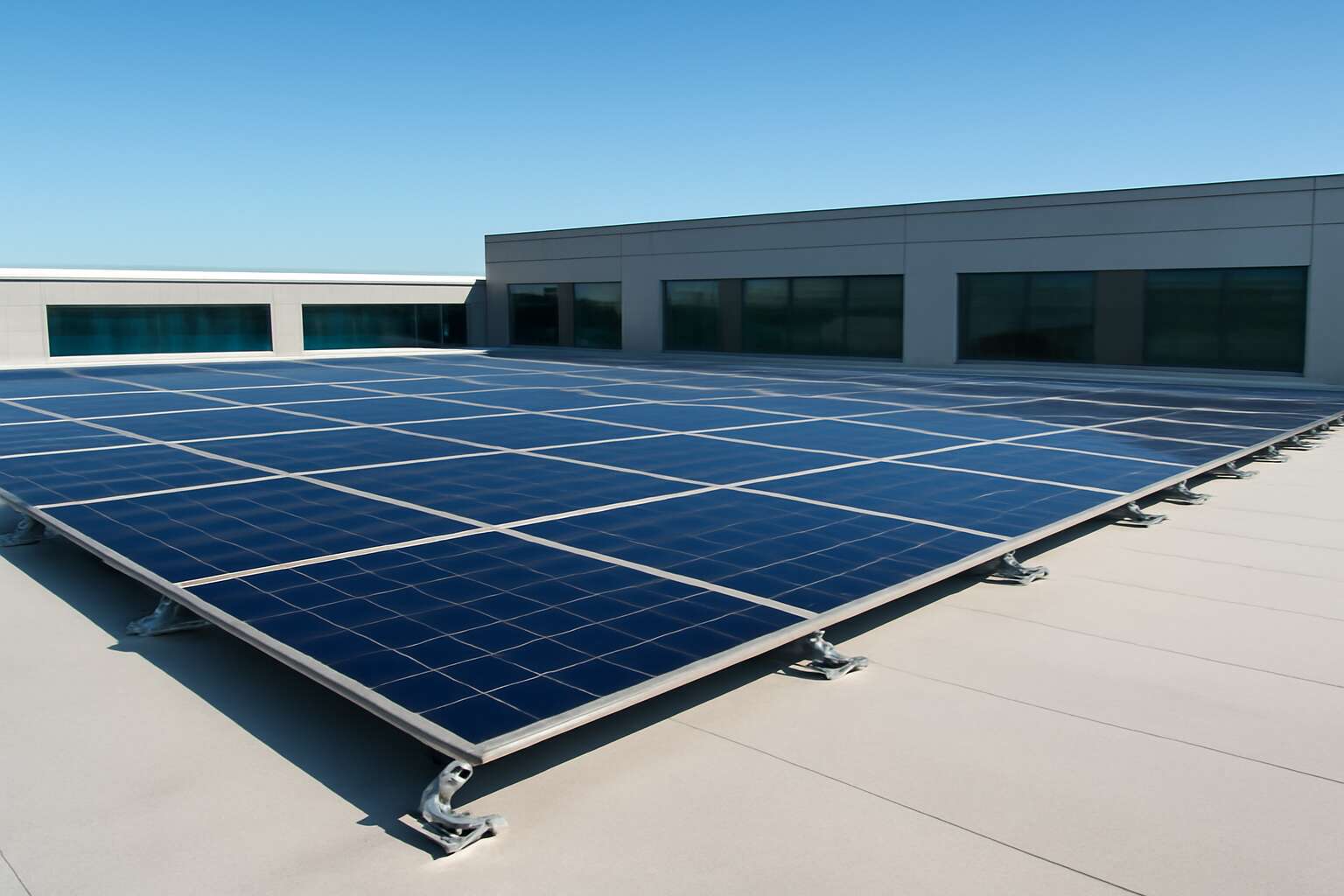
Foundations of flat roof solar panel mounting
Key concepts and definitions
Foundations of flat roof solar panel mounting blend science with imagination. The racking system is more than hardware—it is a quiet conductor guiding sunbeams into steady power. In South Africa, rooftops often harvest around 5 kWh per square meter per day, and the right mounting turns that daylight into dependable electricity!
Key concepts include ballast versus direct attachment, tilt, and waterproofing. Ballast weights keep panels from shifting; direct attachment fastens to the deck. Tilt optimizes sun exposure, while waterproofing flashings seal every corner.
Every choice echoes across a roof’s horizon; I listen for the whisper of compatibility between panels and the roof itself. When foundations are chosen with care, mounting feels less like hardware and more like a pact with light.
Why mounting matters for system performance
Foundations are the quiet drumbeat behind every successful flat roof solar panel mounting. On South African rooftops, where late afternoon winds bite and the sun keeps a steely promise, a solid base translates daylight into reliable power. The foundation sets weight, alignment, and resilience, turning mounting from hardware into a trusted partner for the roof. When the deck and the mounts sing in harmony, system performance stays crisp through heat waves and seasonal shifts.
Beyond bolts, foundations shape longevity and serviceability. Considerations include wind loads, deck integrity, corrosion resistance, and drainage compatibility—kinds of checks that keep cables tidy and panels upright.
- Wind loads and movement on exposed SA roofs
- Deck condition and corrosion resistance for long-term support
- Maintenance access and drainage compatibility for reliable operation
These choices stay hidden up there, but they regulate every kilowatt reaching your meter.
Common terminology beginners should know
South Africa averages roughly 2,500 hours of sunshine a year—the kind of light that makes a rooftop feel like a stage. In flat roof solar panel mounting, the foundation is more than steel and screws; it’s the quiet engine that aligns weight, posture, and resilience so panels endure heat and gusts. When deck and mounts harmonize, daylight becomes dependable power!
Beginners gain confidence by speaking a shared vocabulary. This language is the map that prevents missteps. Here are common terms you’ll encounter with foundations on flat roofs:
- deck
- ballast
- fasteners
- corrosion resistance
- drainage clearance
Understanding flat roof solar panel mounting means watching how these words shape longevity and tidy operation. Seen together, they reveal why alignment, wind response, and easy access matter more than the hardware itself.
Mounting system types and configurations
Ballasted vs penetrating mounting
Sunlight is a patient alchemist, and on a flat roof it becomes a quiet chorus of power. With flat roof solar panel mounting, a humble roof surface turns into a vigilant energy stage—functional, yet poetic—where each panel drinks the day and threads it into your building’s story.
Two configurations guide the craft: ballasted mounting, which uses ballast to press panels down without piercing the roof, and penetrating mounting, which fastens through the surface for wind resilience and long-term security. In South Africa’s wind-prone coastlines and sun-scorched interiors, the decision hinges on roof integrity, drainage, and local codes.
Here are quick contrasts to consider:
- Ballasted mounting: non-penetrative, quick to install, ideal for well-sealed decks, but heavy ballast requires careful roof membrane compatibility.
- Penetrating mounting: high wind uplift resistance, ideal for challenging sites, but penetrations demand meticulous sealing and corrosion protection.
Low-slope vs flat roof installations
Rail-based versus rail-free solutions
Across South Africa’s sun-drenched roofs, mounting choices shape performance as surely as the sun itself. Rail-based systems offer sturdy rails and predictable spacing, ideal for larger, unbroken runs. Rail-free designs skip the rails, reducing weight and speeding up installation. This is at the heart of flat roof solar panel mounting.
Here’s how they stack up in practice:
- Rail-based: easy to service, precise alignment, and scalable for big arrays.
- Rail-free: lighter footprint, fewer penetration points, and a cleaner roof line.
For South Africa’s varied climates—from coastal winds to inland heat—both approaches offer durability and serviceability, with the choice driven by roof size, retrofit plans, and aesthetic preferences.
Grid-tied and off-grid configurations
South Africa basks in roughly 2,500 sun-soaked hours each year, turning every rooftop into potential revenue. When evaluating mounting system types and configurations for flat roof solar panel mounting, the choice between grid-tied and off-grid setups frames the entire performance narrative. Grid-tied configurations sing with the grid’s rhythm, feeding excess energy back to the network and courting lower upfront costs. Off-grid arrangements lean on storage and resilience, trading convenience for independence and continuous comfort during outages.
Consider these configurations:
- Grid-tied: synchronized with the utility, net-metered, maximizing sunny-day yield.
- Off-grid: standalone power with storage, providing resilience and independence—hybrid options bridge occasional gaps.
Both align with roof size and wind exposure, delivering a clean profile atop South Africa’s commercial and residential skylines.
Engineering and installation considerations
Roof assessment and structural loads
South Africa enjoys roughly 2,500 hours of sunshine annually, a statistic that makes flat roof solar panel mounting feel less like a gamble and more like a civic duty. Engineering and installation considerations begin with roof assessment and structural loads, because an array is only as good as the ceiling it clings to. A verdict rests on whether the deck can bear added weight and the wind’s appetite for uplift.
- Deck condition and waterproofing adhesion
- Vertical and lateral load capacity
- Wind exposure and mounting edge clearances
- Drainage, debris, and maintenance access
On the installation front, corrosion resistance, seal integrity, and fastener selection matter as much as aesthetics. Even in SA’s coastal belts, salt can be a sly adversary for hardware. The goal is durable, serviceable alignment that supports sustainable performance—yes, even under late afternoon glare and the occasional thunderstorm—facilitating efficient flat roof solar panel mounting.
Wind, snow, and seismic design factors
South Africa basks in about 2,500 hours of sunshine each year, a glow that makes flat roof solar panel mounting feel almost predestined. Yet wind is the quiet critic that tests every system, bending minds as easily as metal. In the design ballet, uplift pressure, deck stiffness, and edge geometry conspire to keep performance honest and secure.
Here are the factors that sculpt reliability in real-world climes:
- Wind exposure and uplifts
- Snow loading considerations (even if rare)
- Seismic design factors and dynamic response
I’ve seen how a coastal gust can write a different sentence on a panel’s face, so resilience matters. Material resilience, corrosion resistance, and fastening integrity round out the equation, ensuring that the mountings endure salt spray on coastal belts and the afterglow of late thunderstorms.
Waterproofing and membrane compatibility
South Africa’s rooftop ambitions sparkle under a relentless sun, yet water intrusion and movement remain the quiet adversaries. In the realm of flat roof solar panel mounting, engineering precision translates to enduring performance and leak-free service. Every seam, fastener, and edge detail must harmonize with the roof’s membrane and deck behavior!
- Flashing details and edge geometry considerations
- Sealant and membrane compatibility at penetrations
- Drainage continuity to avoid ponding around mounts
Whether coastal or inland, corrosion-resistant hardware and compatible coatings keep the system resilient through salt spray and sudden storms.
Code compliance and permitting
South Africa’s sun is generous, turning rooftops into quiet power plants. With some of the world’s highest solar irradiance, flat roof spaces are prime real estate for energy harvest. A well-executed flat roof solar panel mounting blends performance with restraint, letting systems endure decades of sun and weather.
Engineering and installation considerations demand a precise dance between structure and seal. Each mounting point must respect the roof deck’s movement, edge geometry, and seam integrity, while resisting wind uplift and corrosion. Compliance means choosing durable hardware and detailing penetrations to keep the membrane intact and the system serviceable.
Code compliance and permitting follow a clear path in South Africa:
- Professional engineer’s stamped drawings and mounting layout
- Municipal building and electrical permits aligned with local regulations and standards
- Structured inspection and as-built documentation for future maintenance
When these elements align, the project breathes with the roof—robust, compliant, and quietly powerful.
Safety planning and fall protection
South Africa basks in some of the world’s highest solar irradiance, turning flat roof spaces into efficient power plants. For flat roof solar panel mounting, my experience says the true test sits in the details of engineering and installation—ensuring structure, seal, and service life align under sun and storm alike.
Safety planning and fall protection sit at the core of the work. Good plans anticipate access, edge danger, and ongoing protection, keeping crews and equipment safe without compromising performance on the roof.
- Edge protection and fall zones
- Certified anchor points and lifelines
- Clear training and site discipline
Together, these considerations anchor the project in practicality, balancing ambition with restraint to deliver a robust, compliant installation for years of quiet, productive power.
Materials, hardware, and durability
Mounting rails, brackets, and fasteners
Across South Africa, rooftop solar is booming, turning flat roofs into quiet power plants. The right flat roof solar panel mounting acts as the backbone between sun and savings, with materials built to endure heat, wind, and coastal air alike!
Key materials and hardware underpin reliability when passion meets practicality on the roof:
- Rails: anodized aluminum or stainless steel for long-term corrosion resistance
- Brackets: stainless or zinc-coated steel that distribute load without flexing
- Fasteners: high-grade stainless steel with seals to guard membrane edges
Durability hinges on sealing, membrane compatibility, and thoughtful spacing to prevent wear from sun and weather, ensuring the system stays watertight for years of service.
Corrosion resistance and material choices
South Africa enjoys roughly 2,500 to 3,000 hours of sunshine a year, turning rooftops into power stations. That sun is a friend until hardware rusts away. For flat roof solar panel mounting, materials and coatings decide how long the investment pays off.
- Rails: anodized aluminium or stainless steel for long-term corrosion resistance
- Brackets: stainless or zinc-coated steel that distribute load without flexing
- Fasteners: high-grade stainless steel with seals to guard membrane edges
In SA settings, corrosion resistance and material choices are the quiet drivers of value. Choose materials that resist heat and salt spray—aluminium or stainless rails, stainless or zinc-coated brackets, and stainless fasteners—because the right flat roof solar panel mounting translates to years of dependable service.
Sealing, flashing, and membrane protection
Sealing and flashing are the quiet guardians of flat roof solar panel mounting. The success of waterproofing hinges on meticulous detailing around penetrations, edge flashing, and transitions. When these seams breathe easy, heat and wind become manageable instead of damaging intruders on the roof!
- Edge flashing that matches the membrane
- Sealants compatible with SA roofing membranes
- Load-distributing backing around penetrations
Flashing must accommodate thermal movement; membranes need protection during fastening; use isolation sleeves or grommets to keep edges clean. Properly selected hardware accelerates durability without sacrificing the roof warranty; missteps in sealing can undo years of work as quickly as hail after a storm.
In South Africa, the membrane and sealing strategy becomes as crucial as the mounting framework itself. The right combination keeps flat roof solar panel mounting performing across seasons, resisting sun, wind, and temperature swing.
Electrical bonding and grounding basics
“Hardware is the handshake between sun and roof,” a veteran installer told me. For flat roof solar panel mounting, the choice of materials and fasteners determines whether a system ages gracefully or sags under SA’s sun and storms. Stainless steel, corrosion-resistant coatings, and anodized aluminum promise durability, while compatible sealing underpins long-term performance.
Core hardware categories you’ll encounter include:
- Rails, brackets, and clamps designed for low-profile mounting
- Corrosion-resistant fasteners and washers
- Edge gaskets and isolation sleeves to protect membranes
Electrical bonding and grounding basics: In SA, all metalwork should be bonded to the building grounding system to equalize potentials and minimize arcing during lightning transients. Use a continuous bonding conductor, route in a protected path, and verify compatibility with the roof’s membrane and mounting framework, preserving safety and warranty.
Lifecycle and warranty considerations
Materials chosen for flat roof solar panel mounting determine whether the system ages gracefully or sags under SA’s sun and storms. Stainless steel hardware, corrosion-resistant coatings, and anodized aluminum rails promise durability, while compatible sealing underpins long-term performance. Edge gaskets and isolation sleeves protect membranes and keep the assembly tucked neatly against the roof.
- Stainless steel fasteners and clamps
- Corrosion-resistant coatings
- Anodized aluminum rails
- Edge gaskets and isolation sleeves
Lifecycle and warranty considerations: In South Africa, the climate is unforgiving; warranties should cover corrosion, UV exposure, and membrane compatibility. A heavy-duty mount that ages gracefully seems like a quiet negotiation with the sun. Choose components with guaranteed load ratings and documented maintenance windows. A robust mounting system reduces sag and preserves roof integrity over decades.
Cost optimization and performance considerations
Initial investment vs long-term value
South Africa basks in abundant sun, and the math is simple: upfront spend on flat roof solar panel mounting can unlock strong long-term value as electricity tariffs rise. In many installations, a realistic payback sits in the 5–7 year window, depending on roof exposure and energy use.
Cost optimization goes beyond price tags. The long game depends on how the system performs year after year. A thoughtful approach to flat roof solar panel mounting, robust hardware, and efficient modules minimize losses and maximize energy yield, while preserving roof integrity and ease of maintenance on busy rooftops. That balance is where value shows!
- System sizing aligned with actual consumption and weather patterns
- Durable, corrosion-resistant hardware to extend life in SA climates
- Warranty coverage and service plans that reduce unexpected costs
Ultimately, the benefit is a predictable energy supply and lower operating costs over the life of the system.
System tilt, orientation, and shading impact
South Africa’s sun is relentless, turning even a modest roof into opportunity. With flat roof solar panel mounting, the decision shifts from a price tag to year-after-year performance, where tilt and shading quietly govern the payoff. A roof in steady sun delivers power; a shadowed edge erodes value.
System tilt and orientation aren’t abstract levers; they shape real output. On flat roofs, a modest tilt and a north-facing direction in the Southern Hemisphere often maximise annual yield, while spacing reduces shading during peak hours.
- Tilt aligns with sun path for steadier output.
- Minimize shading to protect energy yield.
In the end, thoughtful hosting of angles and light means fewer surprises and a roof that aged gracefully beside the family story. The payoff is a reliable flow of power that supports daily life while keeping roof integrity intact for years to come.
Maintenance planning and cleaning routines
South Africa’s sun is a relentless conductor of energy, and flat roof solar panel mounting turns rooftops into quiet powerplants. Cost optimization here isn’t just about the upfront tag; it’s about long-term performance: choosing durable rails, careful ballast, and corrosion-resistant materials that weather years of heat and wind. When we balance install heft with longevity, the system rewards steady output and predictable maintenance.
Maintenance planning and cleaning routines for flat roofs should be woven into annual budgets and seasonal cycles. Expect visual inspections for shading shifts, loose hardware, and membrane protection—then align cleaning and service windows with dry spells so performance never falters.
- Performance monitoring and data trends
- Material compatibility and corrosion awareness
- Maintenance windows aligned with weather and safety
Monitoring, diagnostics, and performance analytics
Sunlight floods South Africa with unrelenting energy, and the real edge lies in watching it unfold. “What you measure, you improve,” a veteran installer likes to say, and the discipline of flat roof solar panel mounting thrives on trustworthy data.
Real-time monitoring threads irradiance, temperature, and shading into a single narrative. Diagnostics surface subtle shifts—module aging, wiring health, and inverter performance—letting performance analytics reveal the quiet drifts before they erode yield and reliability.
- Energy yield versus forecast to spot underperforming segments
- Temperature-normalized efficiency to compare seasonal performance
- Shading and soiling patterns that quietly steal daylight
- Component health signals that flag creeping degradation
Incentives, tax credits, and financing options
Cost optimization in flat roof solar panel mounting starts with smart layout choices that maximize energy yield while minimizing hardware and install time. Efficient ballast and corrosion-resistant components reduce maintenance costs over the system’s life. A well-planned mounting strategy pays dividends in reliability and value.
- Incentives and rebates that offset capex
- Depreciation allowances and tax incentives for energy investments
- Financing options like PPAs, leases, or traditional loans to accelerate deployment
Financing—whether a cash-flow loan, PPA, or lease—lets South African businesses and homeowners unlock benefits without delaying installation.

0 Comments