
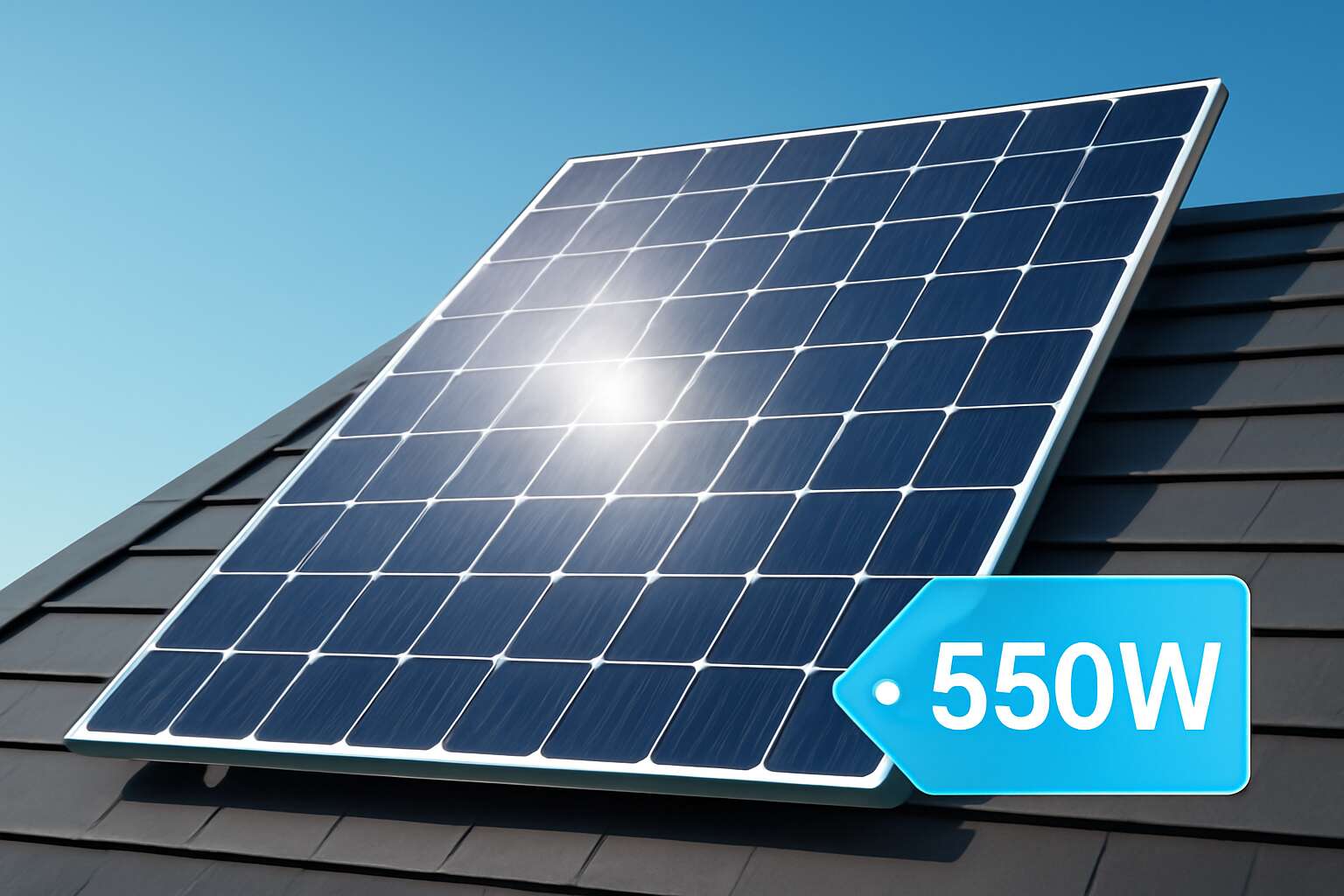
Pricing Landscape for five hundred fifty-watt solar panels
What the five hundred fifty-watt rating means for homes
South Africa’s rooftops are lighting up with solar as households chase price stability amid rolling power cuts. The solar panel 550w price is increasingly a practical consideration for families weighing upfront costs against years of lower bills. I’ve seen buyers weigh a single 550w module against larger strings, looking for clarity in a market where sunlight is abundant but prices still variable!
One 550w panel under standard test conditions can deliver up to 550 watts, translating to meaningful daily output when part of a well-designed system. In South Africa, the price you pay is shaped by panel quality, balance-of-system components, installation complexity, VAT, and import duties. Factors shaping solar panel 550w price include:
- Panel efficiency and warranty
- Inverters, mounting hardware, and wiring
- Roof type, configuration, and permitting costs
Main price drivers for five hundred fifty-watt panels
On South Africa’s sunlit rooftops, solar stories bloom as rooftop uptake rose 18% last year, turning daylight into price-stable energy. The solar panel 550w price has become a compass for households weighing upfronts against decades of savings!
- Panel quality and efficiency
- Balance-of-system components (inverters, mounting, wiring)
- Installation complexity and roof configuration
- VAT and import duties
- Permitting costs and roof type considerations
Beyond the glare of sunlit optimism, these drivers fuse into the final sticker shock and savings forecast, guiding buyers through a marketplace where variables shimmer like heat mirages.
Typical price ranges by brand and certification
Rooftops across South Africa glow with a growing chorus of silver frames; last year, rooftop solar uptake rose 18%, and daylight began translating into predictable bills. In this dusky market, the solar panel 550w price becomes a compass, guiding households through glimmering brands and quiet guarantees. The moment arrives when the numbers align with ambition, and the sun yields its stubborn, steady dividend.
Pricing within the five hundred fifty-watt realm ranges from budget to premium. Expect roughly R7,000–R9,500 for entry-level mono panels, R9,500–R12,500 for dependable mid-range modules, and R12,500–R16,000 for top-tier certified tech. The exact figure bends to certification, efficiency, and the arithmetic of the seller’s margin.
- Budget/entry-level: basic mono-crystal
- Mid-range: solid warranties, trusted efficiency
- Premium: high efficiency, extended warranties
Where to source five hundred fifty-watt panels and compare quotes
Across South Africa, the solar panel 550w price is a moving target, shadowed by certification and supply chains. As energy costs climb, the price swings with efficiency and demand, and with margins tucked into every batch. This landscape isn’t fixed; it shifts with brands, warranties, and the sun’s stubborn rhythm.
Where to source five hundred fifty-watt panels and compare quotes
- local solar installers and distributors
- approved retailers and manufacturer networks
- online marketplaces and catalogues from major brands
Prices still vary by certification and efficiency, but value comes from the package as a whole. When comparing the solar panel 550w price across vendors, watch for consistent warranties and certified performance.
What drives the price of five hundred fifty-watt panels
Panel efficiency and real-world performance impact on price
Sunlight writes a quiet ledger across South Africa’s roofs, and I see a five-hundred-fifty-watt panel as its bold line in the margin. The solar panel 550w price becomes more than a number; it is a measure of balance between power, durability, and the dream of a lower bill when the day is long and bright.
Panel efficiency defines how much sun we harvest from a footprint. Higher efficiency means more energy per square meter, a premium that shows up in materials, testing, and reliability—yet it translates to steadier output on hot days and in real-world SA climates.
Real-world performance tightens or relaxes price as shade, dust, and angle drift nudge efficiency. The sun rewards thoughtful design; I have learned that the result is a living, luminous independence that feels priceless as the meters tick down the bill.
Brand premiums and model lineups
Brand premiums run like quiet tolls along the roofline. The solar panel 550w price isn’t just about watts; it’s about the name stamped on the back. Premium brands deliver longer warranties, tougher frames, and cells built for SA’s heat and dust, but that durability comes at a steeper upfront cost.
Model lineups further tilt the scale. Flagship panels bundle advanced cell tech and better heat tolerance, while mid-tier lines offer solid performance with fewer frills. In South Africa, warranty networks and local service support can swing the total cost as much as the sticker itself.
- Brand premiums and reputation
- Model lineup features and technology
- Warranty coverage and local support networks
Certifications and warranty considerations
Certifications and warranties quietly steer the solar panel 550w price. In practice, panel makers push rigorous testing—IEC 61215, IEC 61730, and regional safety checks—before a model earns a place on SA roofs. That extra QA time adds a modest premium to the sticker, often 5% to 12% depending on the lab credentials and traceable supply chain.
Key certification and warranty considerations to watch:
- Certification scope and test standards (IEC 61215/61730, local safety listings)
- Product and performance warranty length and exclusions
- Warranty network and service coverage in SA that influence total cost
The interplay of tests, certifications, and the weight of a warranty creates a subtle tension that shapes the solar panel 550w price in the SA market, a balance of trust and price.
Inverter compatibility and balance-of-system costs
In the SA market, the solar panel 550w price often reflects more than wattage alone—it includes how well the system fits with the inverter, cabling, and mounting. Inverter compatibility, cable runs, and the long-tail costs of a compliant balance-of-system add a premium. When the components play nice, we see a smooth setup; when they don’t, I’ve watched prices climb as we chase fixes.
Consider these cost levers that quietly steer the overall figure:
- Inverter compatibility and DC-AC matching
- Balance-of-system components (racking, wiring, safety devices)
- Site-specific installation and labor, permitting, and QA checks
Shipping, handling, and regional duties
In South Africa, the solar panel 550w price isn’t just about wattage—it’s a story told by freight routes, port delays, and regional quirks. The sticker on the crate factors shipping, handling, and duties that land on a local invoice.
- Shipping distance from international suppliers and the choice of carrier
- Packaging, insurance, and handling requirements to protect fragile panels
- Regional duties, VAT, and import taxes under SA customs
- Local freight and last-mile delivery fees that appear on the invoice
These factors mingle with currency fluctuations, port efficiency, and the vagaries of supply chains, shaping those final numbers in ways that feel almost poetic.
Cost comparisons: five hundred fifty-watt vs other configurations
Pricing differences with adjacent wattage options
Within the solar panel landscape, the solar panel 550w price makes a dramatic entrance. For South African homes, this size often strikes a balance between space and steady daytime output, hinting at a practical compromise rather than a bold leap.
Compare adjacent wattage options to see how the numbers dance.
- 520W panels
- 540W panels
- 550W panels
- 570W panels
- 600W panels
Price per watt often trends downward as you move to higher-wattage configurations, but the total installed cost still hinges on inverter size, balance-of-system, and roof layout. Regional duties and shipping quirks can tilt the final figure.
Prices are a tapestry of value and performance; a larger unit may cost more upfront but unlocks easier scaling for bigger homes, while the right balance of components protects long-term performance.
Series versus parallel configurations and their pricing implications
Two-thirds of South African homeowners view mid-range panels as the sweet spot, balancing roof space with steady daytime output. The solar panel 550w price lands right in that middle ground, prompting brisk conversations among installers and homeowners alike. It’s not about chasing the biggest wattage, but about achieving reliable performance without overhauling roof layout or budget!
Series versus parallel wiring changes how price stacks up, even for the same 550-watt module. In a series chain, higher voltage with the same current can simplify inverter matching and wiring, potentially trimming balance-of-system costs. In a parallel setup, higher current calls for thicker cables and a more robust inverter—factors that nudge the price up.
- Series reduces conductor size and may lower BOS costs, but shading can affect string performance.
- Parallel preserves partial outputs under shading but can demand a larger inverter and heavier wiring, raising upfront costs.
DIY installation versus professional pricing
Two-thirds of SA homeowners chase the mid-range five hundred fifty-watt sweet spot where roof space and daytime output meet, a balance that fits most homes. When buyers search for solar panel 550w price, they’re weighing DIY costs against professional quotes and the security of a certified installation.
DIY installation can trim upfront outlay but may stretch timelines and invite missteps. In contrast, professional pricing bundles equipment, labor, testing, and a warranty-backed finish, smoothing long-term performance. In both paths, permits, grid-connection fees, and regional duties shape the final tally in South Africa’s market.
- DIY: lower upfront spend, but wiring mistakes and permit delays can arise.
- Professional: streamlined permits, tested wiring, and a warranty-backed system.
- Final cost depends on roof access, components, and energy goals.
Additional costs: taxes, shipping, and regional variance
Sunlight may be free, but the hardware isn’t—and here in SA, the solar panel 550w price sits neatly in the middle of the spectrum, offering respectable daytime output without swallowing a roof’s entire budget. That’s why many homeowners compare mid-size configurations against bigger systems and leaner setups, chasing a sweet spot that doesn’t bankrupt your coffee habit.
Beyond the sticker price, taxes, shipping, and regional duties shape the final tally more than you’d expect. Here are the culprits that can tilt the math in SA:
- Taxes, VAT, and import duties
- Shipping and handling to your city
- Regional incentives, subsidies, and grid-connection fees
Different configurations push BOS costs in ways you’ll feel on your monthly bill the moment you skim the quote. In practice, the final cost follows roof access, inverter compatibility, and the energy target you chase; the mid-range sweet spot still wins more often than not.
Maximizing value: strategies to secure the best price for five hundred fifty-watt panels
New versus refurbished options and warranty tradeoffs
Chasing the best deal on solar panel 550w price means more than finding the lowest sticker. In South Africa, value hides in warranties and how panels perform under load shedding. A seasoned installer once said, “Value is measured by longevity, not fleeting discounts”!
To maximize value without sacrificing reliability, I weigh these factors:
- Warranty scope and duration
- Refurbishment origin and testing records
- Compatibility with the rest of the system
New panels typically come with full manufacturer warranties and predictable degradation. Refurbished units may offer upfront savings, but warranty terms are often prorated or limited, shifting long-term value and total cost of ownership.
Seasonal discounts, promos, and timing of purchases
In rural South Africa, price tags for 550w panels can tilt the balance between a quiet night and a powerless dusk. A seasoned installer once said, “Value is measured by longevity, not fleeting discounts,” and I’ve carried that with me through every quote. Understanding solar panel 550w price helps balance upfront costs with long-term reliability.
- Seasonal price dynamics and promos that surface with market cycles
- Regional freight and duties that shape landed costs
- System compatibility to maximize real-world output without overbuilding
These considerations weave practical warmth into the bottom line, keeping power accessible when the sun is most generous.
Bundling with inverters and mounting hardware
“Value is measured by longevity, not fleeting discounts,” a seasoned installer likes to say — and that rings true when chasing the solar panel 550w price. In rural South Africa, bundling a package often trims total cost and simplifies maintenance.
Maximizing value means negotiating a bundled deal that includes the inverter and mounting hardware, aligning with real load and roof space, not just headline specs!
- Bundling with inverter and mounting hardware for price consolidation
- Bulk purchase discounts and coordinated shipments
- Integrated warranties that cover the full system
Finally, evaluate total costs and ensure the package fits the roof and load, keeping long-term reliability front and center.
Bulk purchases for residential versus commercial projects
Maximizing value with five hundred fifty-watt panels means thinking in terms of scale and fit rather than flashy discounts. The solar panel 550w price tends to bend downward when a bulk order meets coordinated shipments and integrated BOS. In rural South Africa, a well-timed bulk quote can align with roof space and load, reducing surprises during installation and service calls.
Consider these angles:
- Bulk purchases for residential projects can drive a lower per-panel price while simplifying logistics and warranty coverage.
- Bulk purchases for commercial projects unlock volume rebates and predictable delivery timelines, making budgeting easier.
- Bundled warranties and coordinated shipments lower risk by covering the full balance-of-system, reducing administrative headaches.
At the end, value is measured by how little drama you experience when sunlight becomes savings—and how well the package fits the roof and the load, not just the headline number.
How to obtain multiple quotes and ensure price transparency
Across South African rooftops, bulk orders shave as much as 15% off sticker prices when logistics align. When evaluating solar panel 550w price, look beyond the sticker to the total package—bulk discounts, bulk shipments, and balance-of-system savings influence the final bill and the speed of commissioning.
- Request an itemized bill of materials (BOM), delivery timelines, and balance-of-system components to compare on a like-for-like basis.
- Verify wattage, certifications, and warranty scope to avoid hidden premiums or future service costs.
- Ask for price-validity windows and any volume or shipping discounts tied to bulk orders.
- Clarify who covers freight, duties, and regional logistics for rural SA installations.
Ultimately, value is measured by how little drama you experience when sunlight becomes savings—and how well the package fits the roof and the load, not just the headline number.

0 Comments