Determining Your Refrigerator’s Energy Needs
Average Wattage of Household Refrigerators
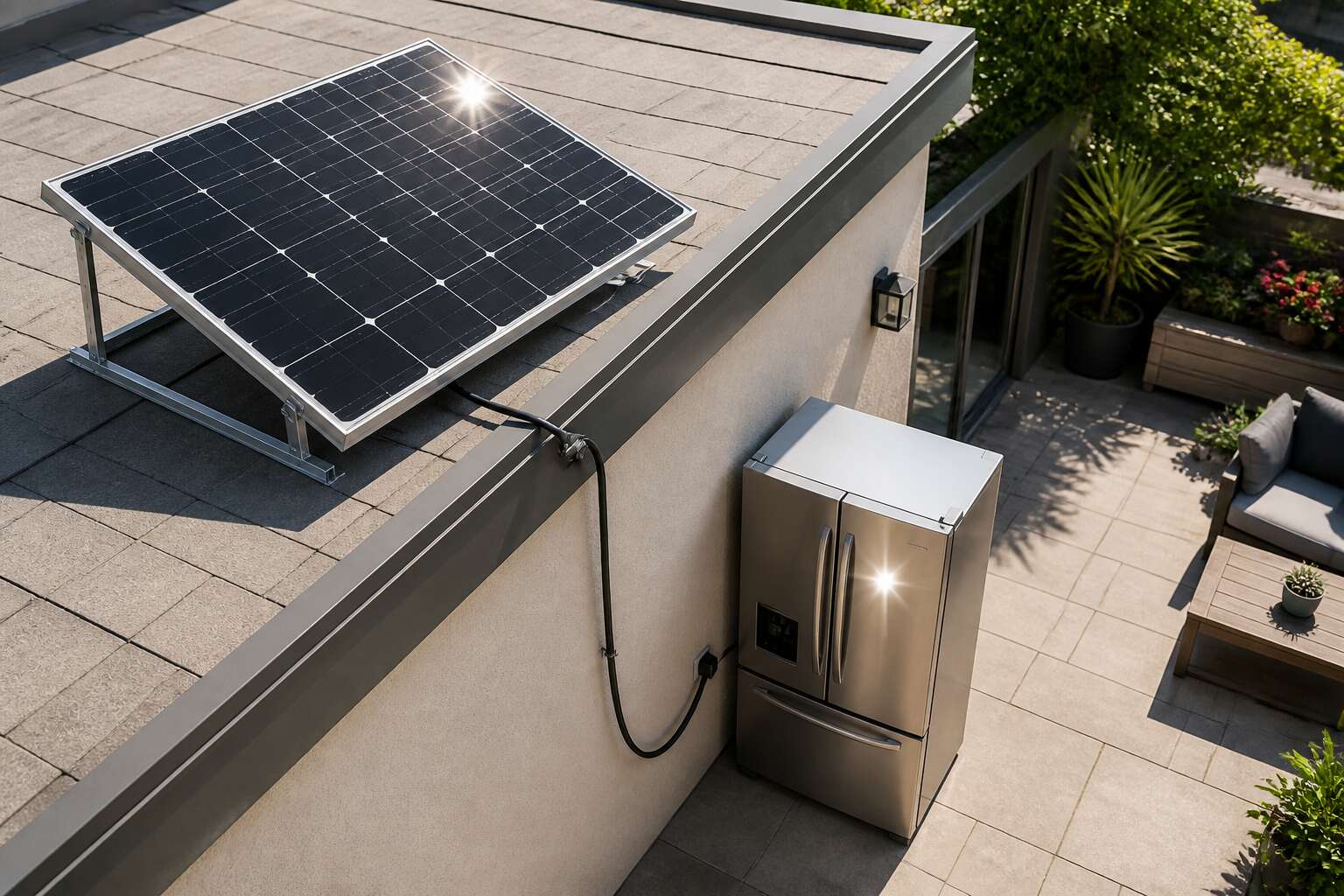
Keeping your milk cold and your leftovers safe isn’t a luxury in South Africa; it’s a daily negotiation with load-shedding. To step off that grid for good, you need a solar panel that can power a fridge. Most standard household fridges draw between 100 and 250 watts during their run cycle. The real calculation, however, isn’t that simple. The compressor kicks in with a surge of power that can be three times the running wattage.
This starting surge is the deciding factor. If your inverter and solar array can’t handle that initial spike, the system will trip and your food will thaw. You need to look at the energy label on your unit. A modern A++ rated fridge might only need 150 watts to run, but an older, battle-scarred model could demand far more.
To get an accurate picture, a quick audit of your specific appliance is necessary. Consider these points when checking your fridge:
– The ambient temperature of your kitchen; a hotter room forces the compressor to work harder.
– The age of the unit, as older models are notoriously inefficient.
– The frequency of door openings, which causes cold air to escape.
Once you have the running wattage, you must multiply it by the hours the compressor actually runs, which is usually about 8 to 12 hours per day, not 24. This gives you your daily watt-hour requirement. That base number determines the capacity of the battery bank and the panel wattage needed. A system sized for 600Wh a day is a safe starting point for an average family fridge. This daily figure is the bedrock for calculating the yield you need from your photovoltaic setup.
How to Calculate Daily Energy Consumption in kWh
Accounting for Startup Surge and Cycling Patterns
A refrigerator’s placid hum belies a temperamental heart. Its compressor, that stoic workhorse, demands a sudden, violent surge of electricity on startup, often three times its steady running draw. This inrush current lasts but a second, yet it dictates the true calibre of a solar panel that can power a fridge. Ignoring this momentary gluttony invites cloudy-day disappointment.
This brings us to the matter of cycling, the fridge’s quixotic rhythm. It does not labour continuously; instead, it switches on and off, its operation influenced by ambient temperature and how often the door swings open. The daily consumption you calculated earlier is an average, but your energy system must be robust enough for the peaks, not the mean.
– Ambient temperatures above 30°C increase run time.
– An overstuffed fridge retains cold better, reducing cycles.
– Frequent door openings create a longer, more demanding duty cycle.
These variables determine whether your system starts and stops gracefully or strains. The photovoltaic array’s size must respect these surges, or the inverter will cut out on overload. The consequence is a defrosted dinner, a fate no one desires. Thus, careful consideration of these dynamic phases is essential, as the static calculation alone will mislead you.
Essential Components for a Solar-Powered Fridge System
Solar Panels: The Primary Power Source
With loadshedding a persistent reality for millions of South African households, the question of appliance resilience has moved from convenience to necessity. The average home loses power for up to ten hours daily in severe stages, making a cold beer and a safe chicken breast feel like luxury items. The solution involves more than just purchasing the cheapest photovoltaic cell on the market. You need a complete system that matches your specific fridge’s appetite.
Choosing a solar panel that can power a fridge is often the first hurdle, but the panel is only one third of the equation. The other two critical pieces are the battery and the inverter. The battery stores the energy generated during peak sunlight hours, allowing you to keep food cold after dark. The inverter converts the DC current from the panel and battery into the AC current your fridge requires to run. Without these two components, your panel is just an expensive roof ornament. The cold chain depends on the harmony of this trio.
Beyond the core hardware, you will need a charge controller to protect the battery from overcharging. This device regulates the voltage and current coming from the panels. Furthermore, wiring and fuses are non-negotiable for safety, as they prevent electrical fires. A practical setup usually includes:
– A monocrystalline panel for higher efficiency in limited space.
– A deep-cycle lithium battery, preferred for its longevity over lead-acid options.
– A pure sine wave inverter to protect the fridge compressor.
– A solar charge controller, usually MPPT type for better performance.
The physical sizing of your array depends on your daily consumption figure, which we have already covered. A 300-watt panel might be sufficient for a small efficient fridge in sunny Gauteng, but a larger family unit in the Western Cape might require a 400-watt model. The panel must capture enough energy during the day to replenish the battery bank completely. This ensures the fridge cycles on and off as needed without the system draining to zero by morning, which would ruin your frozen goods and your week.
Charge Controllers and Their Role
In the dim hum of a South African evening, the charge controller performs its duty without fanfare. It stands between the raw energy of the sun and the delicate chemistry of your battery bank. Without it, the voltage from your panels would surge unchecked, boiling the electrolyte in lead-acid batteries or triggering protective shutdowns in lithium units. The controller reads the battery’s state and adjusts the flow accordingly, a process that keeps the system alive through the long night. Without this component, a solar panel that can power a fridge is merely a promise.
Two main types exist. In my experience, PWM controllers are cheaper but waste the excess voltage from your panels. MPPT controllers convert that excess into usable current, which matters when your fridge demands every watt. For a system where a solar panel that can power a fridge must also keep the battery charged for the morning, the MPPT type offers better long-term performance.
Battery Storage Solutions
Battery storage determines whether your fridge runs through the night. A solar panel that can power a fridge during daylight hours must also store enough energy for evening use. In South Africa, where load shedding remains a daily uncertainty, storage capacity decides your peace of mind.
The chemistry matters. Lead-acid batteries cost less initially but require ventilation and regular maintenance. Lithium iron phosphate units accept deeper discharges and last considerably longer. Your choice depends on daily consumption and how many overcast days you must survive without grid power.
Essential components complete the system:
– Deep cycle batteries rated for repeated discharge
– A fuse box or breaker protecting each circuit
– Cabling sized to minimise voltage drop
Every connection carries responsibility. A loose terminal or undersized wire will drain power before it reaches the refrigerator.
Inverters: Converting DC to AC
Inverter sizing is the quiet translator of your entire solar arrangement. Without it, the direct current from your panels and batteries remains a language your refrigerator cannot understand. This component converts stored DC energy into the alternating current that your fridge’s compressor demands. Selecting the wrong unit means your system either chokes under load or wastes precious stored power.
A pure sine wave inverter is non-negotiable. Modified sine wave models can cause motors to overheat and hum. Your compressor needs clean, consistent power. The unit should also handle the refrigerator’s starting surge. That initial draw can be three times the running wattage. Cheap inverters trip instantly under this pressure.
The physical installation carries equal weight.
- Mount the inverter in a dry, ventilated space.
- Keep the battery cables as short as practical.
- Match the inverter’s input voltage to your battery bank.
A solar panel that can power a fridge during the day relies on this conversion chain every hour. South African heat and grid instability add stress. The inverter works hardest when the sun disappears and the battery bank takes over. That evening transition is where inferior units fail. The right inverter becomes the steadfast heart of your off the grid kitchen.
Correctly Sizing Solar Panels and Battery Capacity
Step-by-Step Method to Calculate Required Solar Wattage
The grim reality of load shedding has many South Africans questioning if their refrigerator can survive another bout of darkness. It can, but only if you stop guessing and start calculating. Guessing leads to wasted capital or, worse, a fridge full of spoiled meat. The foundation of a reliable system hinges on understanding peak sun hours, not just the number of panels you can fit on your roof. A 300W panel in Cape Town during winter produces significantly less than the same panel in Upington during summer.
To determine the exact size of a solar panel that can power a fridge, you must reverse engineer your consumption. Take your fridge’s daily watt-hours, which we established earlier, and divide it by your location’s average peak sun hours. This gives you the raw wattage required. However, this number is theoretical. Your system loses efficiency through heat, cable resistance, and inverter conversion, so you must add a buffer of at least twenty percent to that figure.
The calculation is only half the battle. The other half is ensuring the battery bank can sustain the fridge through the night and overcast days. The battery capacity, measured in amp-hours, must match your daily load without dropping below fifty percent depth of discharge to protect the battery’s lifespan. When you size the battery, you are actually specifying how many hours of autonomy you desire.
Here is the core logic to apply when sizing your components:
– Calculate the fridge’s daily watt-hours from the nameplate rating.
– Divide that figure by peak sun hours to get the minimum solar array size.
– Multiply the solar array size by 1.2 to account for system losses.
– Select a battery capacity that can hold the fridge’s daily watt-hours without exceeding a fifty percent depth of discharge.
– Verify the inverter’s continuous power rating exceeds the fridge’s startup surge.
Keep in mind that the surge required to start the compressor is brutal on undersized inverters spends seconds fighting the locked rotor. This is why you need a system that breathes. You are essentially selecting a solar panel that can power a fridge and also replenish the energy you will use during the evening. Most people focus solely on the running wattage, but the immediate torque of the compressor start is what trips the system. Your battery must be able to deliver that punch instantly, and your panel must be able to refill that void during the limited daylight hours.
Selecting Battery Amp-Hours Based on Daily Draw
Your fridge’s daily consumption determines battery amp hours, not its wattage label. To select battery amp hours, compute the daily draw in watt hours and divide by system voltage. At 12V, a 1.2 kWh daily load consumes 100 amp hours. Because deep cycle batteries lose lifespan beyond fifty percent discharge, double that. You need a 200Ah battery. For the solar panel that can power a fridge, divide daily watt hours by peak sun hours, then add twenty percent. With five peak hours, you need 288W, so a 300W panel works.
- Daily watt hours divided by voltage gives raw amp hours.
- Multiply raw amp hours by two to protect battery lifespan.
- Divide daily watt hours by peak sun hours, then multiply by 1.2 for panel wattage.
Without this calculation, you risk overspending on battery capacity or undersizing your array.
Understanding Depth of Discharge for Longevity
South Africans lose more to poor battery habits than to load shedding itself. A battery cycled to 80% depth of discharge might last two years. Kept at 50%, the same battery can serve you for five!
Depth of discharge, or DoD, is the percentage of stored energy you use before recharging. Lead acid batteries punish deep draws. Lithium tolerates more, but even it prefers a buffer. Correctly sizing capacity means you rarely cross that threshold.
- Lead acid batteries lose lifespan beyond 50% discharge.
- Lithium batteries tolerate 80% but still prefer a buffer.
- Panel output must match daily draw, not peak wattage.
When you size the solar panel that can power a fridge, you are sizing the whole system. A solar panel that can power a fridge in theory may still fail if the battery is undersized. That shortens lifespan faster than any deep discharge. I have seen a 300W panel and 200Ah battery work flawlessly for years. The difference is the margin you build into both.
Factoring in Efficiency Losses and Weather Variability
Correctly sizing solar panels and battery capacity is where most systems quietly fail. The solar panel that can power a fridge during a bright Johannesburg afternoon might barely keep up on an overcast day in Cape Town. Efficiency losses from heat, cable resistance, and inverter conversion can eat 20% of your theoretical output before a single amp reaches the battery.
The battery bank demands the same attention. A system with a solar panel that can power a fridge but lacks reserve capacity will drag the battery into dangerous voltage territory on consecutive cloudy days. Panel derating factors matter. Most panels produce only 80% of their rated wattage under real conditions.
Here is what seasoned installers factor in:
1. Solar irradiance drops by half under thick cloud cover.
2. Battery charging efficiency sits around 85% for lithium and 75% for lead acid.
3. Inverter idle draw consumes energy even with no load.
4. Panel output degrades roughly 0.5% per year.
I have watched homeowners undersize their array by 30% because they calculated only for peak summer sun. Winter months bring shorter daylight hours and lower sun angles. The right solar panel that can power a fridge in summer may need a 40% larger array to deliver the same performance in winter. Battery capacity must follow the worst month, not the best one.
Sizing for real conditions prevents the silent death of components. A battery that cycles too deep repeatedly will lose capacity faster than any datasheet predicts. That means your solar panel that can power a fridge becomes useless when the storage side collapses. Build in headroom on both ends and the system breathes properly.
Example Sizing Calculation for a Typical Fridge
Oversizing is not waste, it is survival. A system designed for the equinox will falter by midwinter. Let us examine a concrete example. A typical fridge draws 150 watts and runs for about 8 hours daily. That translates to 1.2 kWh per day. Without factoring sun hours, this number is useless.
Take a standard 300W solar panel that can power a fridge under ideal lab conditions. In Johannesburg, you get roughly 5 peak sun hours in summer. This panel yields 1.5 kWh per day. That covers the fridge with a small margin. But winter drops you to 3.5 peak sun hours. The same solar panel that can power a fridge in December only produces 1.05 kWh in June. The fridge needs 1.2 kWh. You are already short.
For the battery:
1. The daily draw is 1.2 kWh, or 100 Ah at 12V.
2. Lithium batteries allow 80% depth of discharge.
3. This requires a 125 Ah lithium bank.
4. Lead acid needs 50% depth of discharge.
5. That requires a 200 Ah lead acid bank.
These figures assume perfect conditions. The inverter draws 10W idle. Add 20% for losses. Now the array needs 1.44 kWh daily, not 1.2 kWh. The 300W panel barely keeps up in summer. Winter demands a 400W array or a second panel to maintain the same fridge performance. Installing a solar panel that can power a fridge requires accounting for the worst month, not the average one.
Choosing the Right Solar Panel Type for the Job
Monocrystalline vs. Polycrystalline Panels
When selecting a solar panel that can power a fridge, the physical type of panel matters as much as the wattage. The two dominant choices on the South African market are monocrystalline and polycrystalline. The difference lies in the silicon structure, and this alters performance and price. Monocrystalline panels use a single, pure silicon crystal. This purity allows electrons to flow with less resistance, making them more efficient in converting sunlight to electricity. On a limited roof space, this is a significant advantage. Polycrystalline panels are made from melted silicon fragments, giving them that characteristic speckled blue look. They are slightly less efficient, meaning you need more surface area for the same output.
Your decision shapes the entire system. It affects the physical footprint on your roof, the strain on your wallet, and the yield on overcast Highveld days.
Here is a practical comparison for the local climate:
1. Monocrystalline panels perform better in low light and high heat, making them a reliable choice for the South African summer.
2. Polycrystalline panels carry a lower upfront cost, which helps when budgeting for a full solar kit with batteries.
3. Monocrystalline units typically come with a longer warranty due to their resistance to degradation.
4. Polycrystalline panels might require more roof surface, which is a deciding factor for townhouse owners.
For a dedicated solar panel that can power a fridge, efficiency often wins. But if you have abundant roof space and a tighter budget, the polycrystalline route remains functional. Every rand saved on the panel can be redirected toward a deeper cycle battery, which often provides better long-term value in our load-shedding environment. Measure your available space before you commit, because the physical dimensions will dictate your layout. The cost difference is real, but so is the space difference.
Portable vs. Fixed Installations
Choosing between a portable unit and a fixed array changes how you approach load shedding. A portable solar panel that can power a fridge offers flexibility for renters or households that move frequently. You can angle it toward the afternoon sun and pack it away when the weather turns.
Fixed installations deliver consistent yields but require a contractor, a roof inspection, and patience. In my view, the portability trade-off is worth exploring for most households. Consider these factors:
- Weight and handling matter if you move the panel daily.
- Security concerns grow with a fixed roof array.
- Mounting freedom protects your property from structural changes.
If you are a tenant, a portable solar panel that can power a fridge is often the only reasonable path. Your security deposit stays untouched, and the system moves with you when the lease ends.
Temperature Coefficient and Performance in Heat
I have seen too many people install a solar panel and expect it to perform perfectly under a South African summer sun. That is a mistake. The sun provides energy, but heat reduces panel output. When the temperature climbs past 30 degrees Celsius, most panels start to lose power. This is where the temperature coefficient becomes important. This number tells you exactly how much power your panel will shed as the afternoon heats up your roof.
The temperature coefficient is expressed as a percentage per degree Celsius. A typical panel sits around minus 0.4 percent per degree. For every degree above 25 degrees Celsius, the panel gives up a portion of its rated output. On a scorching January day, that can easily cost you 10 to 15 percent of your power. If you rely on a solar panel that can power a fridge, that lost output matters. A fridge is a heavy consumer of electricity. It cycles its compressor frequently. It does not care about your preference for sunshine.
Now, I am not saying you need to buy the most expensive panel available. But you should check the specification sheet. To find a panel that handles heat well, look for three things:
- Low absolute temperature coefficient value, ideally below minus 0.35 percent per degree.
- A high Pmax coefficient rating, which indicates better performance at elevated temperatures.
- Good thermal encapsulation, often found in panels with a solid aluminum frame and backsheet.
Those features translate into a few hundred rand more, but they help the panel continue producing when the air temperature is extreme. That is the difference between your beer staying cold and your fridge cycling off entirely.
Another factor to consider is the physical placement. You might mount the panel flat against a dark roof. That is a poor choice. It traps heat underneath. I have seen panels reach 70 degrees Celsius on the surface. At that point, the temperature coefficient is working against you. A simple air gap of five centimeters allows wind to cool the back of the module. This is not complicated. It is a straightforward engineering solution. Your solar panel that can power a fridge will operate at a respectable efficiency, even in the Lowveld heat.
I should also mention that some panels have a better high-temperature tolerance than others. You will see this listed as the Pmax coefficient, the maximum power temperature coefficient. Do not ignore it. A panel with a coefficient of minus 0.28 will outperform a cheap unit with minus 0.45 by a wide margin when the thermometer hits 40. Over the life of the system, that difference translates into real kilowatt-hours. And that is what keeps your milk from turning sour.
So, when you are shopping around, do not just focus on wattage. Ask for the temperature coefficient. In this climate, it is the most important specification you can check. Your fridge, your wallet, and your peace of mind will appreciate the attention to detail.
Installation Tips and Safety Considerations
Optimal Placement and Tilt Angle for Maximum Sunlight
Finding the right spot for your array is just as important as the equipment itself. A solar panel that can power a fridge will underperform if it sits in permanent shade for half the day. You are paying for every watt of capacity, so treat placement with the same seriousness you would give a new appliance. The goal is simple: keep the panels exposed to direct sunlight from late morning until mid afternoon.
In South Africa, the sun tracks lower across the sky during winter. That means your tilt angle needs to change with the seasons, or at least settle on a compromise. For a fixed installation, set the panels at a tilt roughly equal to your latitude. In Johannesburg, that is around 26 degrees. Cape Town does better closer to 34 degrees. A steeper angle in winter captures more of the weak midday sun, while a flatter angle in summer catches the higher arc. If you have a portable setup, adjust the angle monthly to chase the sun.
– Mount panels at least 30 cm above the roof surface to allow airflow and prevent heat buildup.
– Secure all cables with UV resistant clips or conduit to protect against sun damage and rodents.
– Use stainless steel fasteners in coastal regions to avoid corrosion from sea air.
Safety is not negotiable when you build a system with a solar panel that can power a fridge. You are dealing with direct current that can arc and start a fire. Always disconnect the panels from the charge controller before performing any maintenance. Cover the panels with an opaque cloth to stop voltage generation while you work. Do not stand on the glass surface of a panel; the cells crack easily and replacement costs hurt. Finally, check the mounting brackets every few months. A panel that loosens in a Cape storm is a hazard to everything below it.
Wiring Configurations: Series vs. Parallel
Wiring your solar panel that can power a fridge comes down to a choice between series and parallel configurations. Series wiring raises voltage, allowing thinner cables and lower loss over distance. Parallel wiring keeps voltage low while increasing current, which suits smaller systems with mixed shading.
For a single fridge setup, series is often simpler. But if your panels receive partial shade at different times of day, parallel keeps the whole array producing when one panel dips.
Safety matters at every connection point:
- Use MC4 connectors rated for outdoor exposure.
- Fuse each parallel string at the combiner box.
- Label every cable so future maintenance requires no guesswork.
Tighten every terminal twice. A loose connection creates resistance, and resistance creates heat. That heat can melt insulation and start a fire. Check wiring monthly, especially after high winds. A solar panel that can power a fridge delivers real current, so treat every joint with respect.
Protecting the System from Overcharging and Short Circuits
A single 12 volt fault can carry hundreds of amps before a fuse opens. That current turns copper to slag. For a solar
Roof-Mounted vs. Ground-Mounted Arrays
Choosing where to place your panels is as important as the panels themselves. A solar panel that can power a fridge needs consistent, unshaded sunlight for the better part of the day. Roof-mounted systems are the standard choice because they use otherwise dead space and keep the hardware out of reach. However, this convenience demands careful work at height. You must account for the structural integrity of your roof tiles or sheeting, and every penetration point needs a high-quality sealant to prevent leaks during the heavy summer rains.
A ground-mounted array offers easier access for cleaning, a crucial task in our dusty climate. It also allows you to orient the panels for the absolute best sun exposure. But this setup brings its own risks. You must trench cable runs to protect them from the elements and from garden tools. If you have children or pets, you should install a secure fence around the unit. Here are the specific safety focuses for each option:
– For Roofs: Prioritise fall protection and identify the exact position of rafters before drilling.
– For Ground: Ensure proper earthing to dissipate lightning strikes and manage the weight of the concrete base.
Ultimately, a ground system runs cooler and is easier to maintain, which slightly boosts performance. Yet, a professional roof installation is often less expensive because it requires fewer mounting materials. You must also consider your home insurance. Some policies have strict guidelines about roof penetrations. Whatever you choose, switching off the entire system during installation is non-negotiable. A mistake here can turn a simple job into a dangerous one, even when wiring a single unit for appliance use. And remember to keep the solar charge controller dry and shaded, as excessive heat can shorten its lifespan, directly impacting your ability to keep that fridge running reliably.
Navigating Local Permits and Electrical Codes
When installing a solar panel that can power a fridge, the permits require as much attention as the circuits. In South Africa, your municipality may demand an application before you bolt anything to the roof. Ignore this and your insurance might disappear entirely. You also need a Certificate of Compliance from a registered installer. This is not a suggestion; it is a legal requirement.
A solar panel that can power a fridge may be compact, but the direct current can still kill. Always isolate the entire array before tightening connections. Use DC-rated breakers and proper fusing. Please, never test a circuit with your tongue. This trick works only in cartoons.
Typical permit requirements include:
- Municipal by-laws.
- Inverter and panel certifications.
- An inspection after installation.
The electrician should sign off on the earthing and surge protection. A spark belongs at a braai, not in your DB board.
Deciding Between Professional Installation and DIY
A torque wrench costs less than a hospital visit. That is the first thing to understand about installing a solar panel that can power a fridge. The DC side can deliver a lethal shock, and the roof adds its own hazards. Wear fall protection. Use insulated tools. Verify polarity twice before connecting the battery bank.
Deciding between professional installation and DIY comes down to your comfort with heights and high current. A registered installer brings a CoC and liability insurance. DIY brings flexibility and savings.
- Mounting rails: never skip the washers.
- Cable glands: seal them against moisture.
- Earth leakage: test it before you energise anything.
The cheapest quote may hide the most risk. A solar panel that can power a fridge demands the same respect as a full array.
Cost Analysis and Financial Benefits
Upfront Equipment and Installation Expenditure
The initial outlay for a solar panel that can power a fridge often surprises first time buyers. In South Africa, a complete setup with a 200W panel, charge controller, battery, and inverter typically lands between R12,000 and R25,000. Installation adds another R2,000 to R5,000 unless you handle mounting yourself. I have seen quotes where homeowners saved 15% by securing their own equipment and hiring a certified electrician only for the wiring.
Consider the breakdown:
- Solar panel: R3,500 to R7,000
- Battery (100Ah): R4,000 to R8,000
- Inverter and controller: R3,000 to R6,000
These upfront figures feel heavy, yet they replace years of escalating utility bills. A solar panel that can power a fridge pays for itself within four to six years in most urban areas. That is the financial benefit worth weighing.
Long-Term Savings on Utility Bills
The upfront expenditure for a solar panel that can power a fridge is a specter that looms large for many homeowners. However, the true horror lies not in the initial purchase, but in the relentless tide of municipal tariffs that rise without mercy. When you compare the static cost of your solar array against the escalating price of grid electricity, the ledger begins to tilt in your favour with each passing month. The system becomes a fortress against inflation, a fixed price for a volatile commodity.
The Payback Period is the point where the accounting transforms from a financial burden into a quiet rebellion. In South Africa, where the sun is a reliable and brutal ally, most systems reclaim their cost within four to six years. After that, the energy generated is purely a credit to your household. The savings accumulate slowly, but they compound with the certainty of a creeping vine, eventually overtaking the total cost of the installation and then continuing to grow. The math is stark, but the implications are profound for your monthly budget.
Consider the secondary savings that often go unnoticed. By running your refrigerator on solar power during the day, you reduce the draw on the grid during peak hours. This not only lowers your usage, but in many municipalities, it also shields you from the higher tariff brackets that punish heavy consumption. Furthermore, the system acts as a bulwark against the ruinous costs of food spoilage during extended outages. When the grid fails, your inverter kicks in, and your groceries remain cold, saving you from the dreaded emergency trip to the supermarket.
– Protection: The system insulates you from future rate hikes that are announced with predictable regularity.
– Longevity: A quality battery, if properly maintained, can last up to a decade, providing years of free storage after the initial payback period.
– Property Value: A home equipped with a solar panel that can power a fridge and other essentials becomes a more attractive asset in a market plagued by energy insecurity.
The decision to purchase this equipment is not about a single moment of expenditure, but about the long-term stability of your household ledger. The money spent on the panel and battery is not gone; it is merely converted into a permanent asset that works for you daily. The silence of the system during a blackout is the only sound you need to hear to confirm that the initial investment was not a gamble, but a calculated move to secure your future against the unpredictable nature of the grid. The system pays for itself, and then it pays you back, year after year.
Available Rebates and Tax Incentives
The cost analysis of a solar panel that can power a fridge does not end at the payback period. South Africa offers several financial incentives that reduce the upfront burden. The Section 12B tax allowance allows businesses to claim accelerated depreciation on renewable energy equipment, effectively lowering taxable income. For households, the Section 6B rebate provides a direct reduction on personal income tax for the cost of new solar panels, up to R15,000 per person.
The application process requires an approved installer to issue a compliance certificate. Keep all invoices and records for SARS verification. Municipalities in some regions also offer rate-based incentives, though these vary widely and change frequently.
Consider the available rebates and tax incentives:
– Section 6B rebate: 25% of the cost of new solar panels, capped at R15,000 per individual.
– Section 12B allowance: Accelerated depreciation for businesses on renewable energy assets.
– Load relief programs: Certain municipalities provide reduced rates or credits for solar-connected homes.
These mechanisms can cut the effective cost of a solar panel that can power a fridge by thousands of rands. Pair them with the long-term savings already discussed, and the financial case becomes significantly stronger.
Estimating the Overall Payback Period
The payback period for a solar panel that can power a fridge is a shifting target, dependent on your electricity tariff and the system’s final cost. With South Africa’s escalating energy prices, the monthly savings are not static, they compound over time. A system costing R25,000 that offsets R800 per month in usage pays for itself in just over two and a half years, but that is under today’s rates.
Load-shedding complicates the arithmetic. Every hour the grid is down, your fridge is either idle, spoiling food, or running on a generator burning expensive fuel. A solar panel that can power a fridge removes that variable entirely. The true financial return is measured not just in rands saved, but in losses avoided. A single fridge full of groceries can represent thousands of rands lost in a single outage event.
To estimate your specific timeline, you must calculate your daily kWh draw. You need your Eskom or municipal tariff per kWh. You need the total outlay for panels, battery, inverter, and installation. The math is straightforward, but the inputs require a realistic assessment of your consumption patterns and the system’s real efficiency.
- Tariff % annual increase
- Daily fridge energy draw in kWh
- Total installed system cost
The faster electricity prices climb, the quicker the system pays itself off. The available rebates discussed earlier shave thousands off the initial capital, which shortens the duration of the period before you break even. Do not calculate based on summer output alone. Factor in the winter months when generation drops. This conservative approach ensures your payback estimate is grounded in reality. The system is protecting your food today, but once that break-even point passes, it becomes a revenue generator, turning sunlight into cold storage and cash in your pocket.


0 Comments