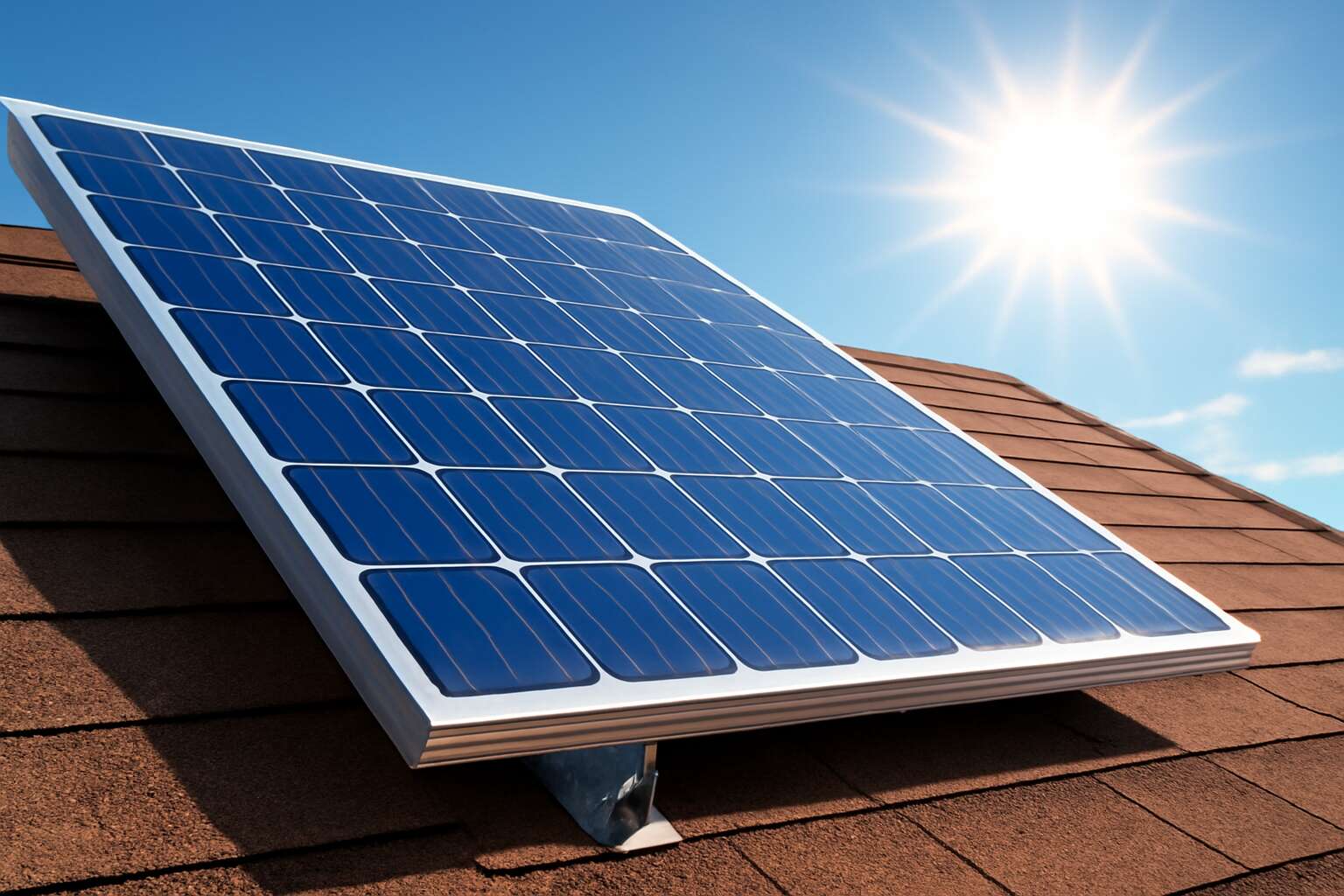
Core specifications and performance for high-wattage PV modules
Nominal power and module efficiency for a high-wattage PV panel
Across rural South Africa, sunlight is a steady neighbor and a stubborn ally. On farms that power with solar, bills can drop by up to 40%, turning dawn chores into predictable routines.
The core specifications emphasize power and efficiency. The nominal power sits in the high hundreds of watts, delivering robust performance as days lengthen. Module efficiency sits in the low-to-mid 20s.
Core performance details include resilience against heat and wind, a temperature coefficient that holds output steady, and a durable build designed for rural life. Consider how these panels respond to seasonal changes, dust, and occasional storms.
- Nominal power: 545 watt solar panel
- Module efficiency: low-to-mid-20s percent
- Rugged durability: tempered glass and frame
- Long-warranty: generous performance guarantee
In the South African countryside, this combination of performance and reliability translates to quiet, practical energy—and a future that feels within reach.
Physical dimensions, weight, and form factor
The 545 watt solar panel rises like a sentinel over South African fields, its silhouette promising more than shade—it promises steady sunshine in the dry season and a reliable partner for rural roofs. Its design translates size into dependable performance, pairing generous output with a footprint that fits both compact sheds and expansive arrays across the countryside.
- Dimensions (L x W x D): approximately 2,100 mm × 1,050 mm × 40 mm
- Weight: around 28 kg
- Frame and glass: tempered glass with an anodised aluminium frame
- Form factor: landscape orientation designed for standard mounting rails
In dusty winds and sudden storms, the rugged form holds its line, a durable companion that keeps the sun’s promise intact for farmers and installers alike in South Africa.
Electrical characteristics and connector types
In South Africa’s sun-drenched fields, a single 545 watt solar panel can deliver roughly 2.5 kWh on a clear day. It’s a statement about reliable energy. Here we focus on electrical behavior and connectors, not merely the size, so installers can pair the module with robust inverters and MPPT controllers with confidence.
- Vmp (voltage at max power): 38–40 V
- Voc (open-circuit): 46–50 V
- Imp (current at max power): 13–14 A
- Isc (short-circuit): 15–16 A
- Maximum system voltage: up to 1000 V DC
- Junction box: IP65 with MC4-compatible connectors
With MC4-compatible connectors and a rugged junction box, setup remains straightforward, and the temperature coefficient of around -0.4%/°C means you’ll see power taper predictably as SA heats up. This clarity in electrical behavior helps in planning and reliability.
Temperature coefficient and performance under diverse conditions
Core specifications for a high-wattage PV module are not just about size; they’re about dependable, everyday energy. The 545 watt solar panel is engineered for South Africa’s sun-soaked realities, where heat shapes output but predictably. Its temperature coefficient of around -0.4%/°C ensures power tapers in a controlled, manageable way, giving installers a confident basis for planning and long-term performance.
Under diverse conditions, performance stays within a predictable band. In dusty mornings, humid afternoons, or thin cloud cover, the panel responds with consistency, aided by a rugged enclosure and robust weather sealing. With a well-matched inverter and MPPT controller, this module can maximize harvest during peak sun, delivering steady daytime generation across seasons and strengthening energy resilience in local communities. It’s a quiet revolution!
Use cases and deployment scenarios
Residential deployment considerations for high-wattage panels
Rooftops hum with sunlight, and the 545 watt solar panel leads the charge toward energy independence. For South African homes chasing reliability and room to grow, this high-wattage panel fits neatly on most pitched roofs, carports, or compact arrays that share a single inverter. In peak sun, it turns bright days into steady power for daily life and weekend projects!
- Rooftop grid-tied installations for families
- Off-grid cabins and lodges in remote areas
- Hybrid systems with storage for load-shedding resilience
In home deployments, this high-wattage panel invites practical planning: enough roof area, sturdy mounting, and an inverter that can gracefully accept higher input. South Africa’s dust and gusty afternoons call for smart tilt and regular cleaning to keep performance at its peak. Local codes, wiring standards, and durable weatherproofing shape the setup, while hybrid storage options offer resilience when the grid falters.
Commercial and industrial application breakdown
South Africa enjoys roughly 2,500 hours of peak sun each year—a vast stage for business energy stories. The 545 watt solar panel becomes a modular ally for commercial and industrial deployments, enabling scalable rooftops, carport canopies, and ground arrays that grow as demand does, all while maintaining a slender footprint on your property.
- Warehouse rooftops with grid-tied layouts to cut daytime demand charges.
- Retail parks and shopping centers leveraging sheltered carports to harvest sun with shoppers nearby.
- Remote industrial facilities and mines that benefit from hybrid systems for reliability.
When paired with an appropriately sized inverter and storage strategy, the 545 watt solar panel helps convert sun strikes into steady power across seasons, supporting business continuity on blue-sky days and during outages alike.
Off-grid and remote power solutions with large modules
In off-grid and remote power scenarios, the 545 watt solar panel anchors dependable energy where the grid ends and the horizon begins. Large modules crown warehouse rooftops, shelter carports, or span field canopies, growing with demand while keeping footprint lean. The sun becomes a steady engine for remote workshops, mining camps, and eco-lodges, turning bright days into reliable power that travels from sky to system and sustains essential loads.
Representative deployments include:
- Remote mining camps and processing sites
- Rural healthcare clinics and water-pumping stations
- Telecommunications towers and field offices
When matched with an appropriately sized inverter and storage strategy, the 545 watt solar panel delivers resilience through seasons and outages with quiet certainty.
Battery storage integration and system optimization
In a country where power outages feel personal, the 545 watt solar panel is a quiet, punctual ally! Use cases include eco-lodges and safari camps, agricultural processing hubs with cold storage, and mobile health clinics serving remote communities.
- Eco-lodges and safari camps
- Agricultural processing facilities with cold storage
Battery storage integration starts with an appropriately sized inverter and a thoughtful storage plan. Pair Li-ion or solid-state batteries with a capable charge controller and reliable battery management to smooth day-to-day fluctuations and outages, delivering steady loads through South Africa’s seasonal shifts.
System optimization relies on smart monitoring, proper orientation, and modular expansion. Weather-aware controls, anti-shading measures, and routine checks keep performance steady and predictable, turning sunlight into reliable uptime for demanding environments.
Installation, mounting, and maintenance
Racking, mounting positions, and orientation best practices
South Africa basks in solar abundance, a fact that makes rooftops smile. A well-sited 545 watt solar panel can turn glare into dependable power, especially when the mounting respects the sun’s arc and the drama of seasonal storms.
Racking, mounting positions, and orientation are the quiet guardians of performance. In this climate, corrosion resistance and wind-load resilience are non-negotiable; north-facing configurations (in the Southern Hemisphere) with a prudent tilt keep the sun’s arc honest and the output generous.
- Wind-load resilience
- Shading avoidance
- Maintenance access
Maintenance remains a ritual of care—inspections of rails and connectors, and tidy cleaning when dust dares to accumulate. Accessibility and low-maintenance design yield the civility every SA installation deserves.
Wiring, inverters, and optimizer compatibility
Installation, mounting, and maintenance feel like a midnight vigil when the SA sun pours over corrugated roofs. The 545 watt solar panel rewards patient hands with steady shade-to-sun conversion, so heed the rails, screws, and clean electrical routes. Inverter compatibility and optimizer pairing ensure the chorus remains loud even as clouds gather.
- Wiring: robust DC cabling, weatherproof connectors, and tidy conduit routing that fade into the structure.
- Inverter compatibility: a spectrum of options that harmonize with high-wattage panels and grid demands.
- Optimizer compatibility: module-level optimization aligned with shading realities to keep performance intact.
Maintenance becomes a ritual of inspection—rails, clamps, and connectors; a gentle wipe of dust to keep the sun’s mercy honest. Accessible design and corrosion-resistant hardware are the quiet guardians of SA installations.
Safety, durability, and weather resilience
SA’s sun pours over corrugated roofs as installation becomes a midnight vigil, a quiet ceremony of alignments and careful torque. The 545 watt solar panel anchors safety with steadfast performance, turning glare into steady shade-to-sun conversion under South Africa’s broad sky.
Mounting and maintenance drift into ritual—rails, clamps, and weatherproof connectors that endure the veld’s dust and wind. A thoughtful design keeps electrical routes tidy, and accessible hardware wards off wear as seasons shift.
- Corrosion-resistant fasteners and frames
- Sealed, UV-resistant connectors
- Clean, unobstructed conduit routing
Safety and durability meet in weather resilience: blackout-thick frames braced for gusts, dust seals that keep you running, and maintenance that notices corrosion before it darkens a panel’s promise. For SA homes and businesses, resilience translates to steady energy year-round.
Maintenance schedules, cleaning, and lifespan monitoring
On a South African rooftop, the 545 watt solar panel finds its place amid the rhythm of corrugated metal and thirsty dust—a quiet sentinel under a wide sun. Installation becomes a careful ceremony: rails aligned, clamps snug, and the panel braced to meet gusts that travel from veld to home.
Maintenance schedules and cleaning form a soft rhythm in rural life. Gentle wipe-downs, periodic checks for corrosion, and tidy conduit routing keep performance steady. A well-cared-for panel ages with grace, its frame brightening the horizon as seasons turn and temperatures climb.
Lifespan monitoring ties daily output to long-term promise. When the 545 watt solar panel holds its shine and its data stay consistent with projections, confidence grows in both off-grid livelihoods and SA businesses that rely on steady energy year-round.
Efficiency factors, performance, and comparison
Comparative analysis with other high-output panels
Peak efficiency isn’t a buzzword—it’s a design philosophy! The 545 watt solar panel thrives under South Africa’s bright skies, turning abundant irradiance into reliable daily energy. I see it in action: smart cell wiring, a wide hotspot margin, and a low resistance path that keeps power losses in check.
- High fill factor and low series resistance
- Minimal shading impact due to robust bypass diodes
- Stable performance across a broad spectral response
Compared with other high-output panels in the same class, it often edges ahead on real-world yield in hot, dry climates thanks to its tempered frame and optimized temperature coefficient. In lab tests and field data, it sits comfortably among top-tier options, offering a pragmatic blend of peak rating and long-term reliability.
Impact of temperature, shading, and soiling on yield
The sun in South Africa is a stern test of any PV badge, and the 545 watt solar panel treats that challenge as a design puzzle, not a surrender. With bright irradiance in abundance, it translates heat and light into steady daily energy—a feat tempered by temperature, shading, and soiling realities. Its smart cell wiring and low-resistance paths help keep waste heat from turning into energy thieves.
Efficiency factors and performance hinge on a few variables that quietly decide the day’s yield:
- Temperature coefficient and heat tolerance, which govern voltage under SA’s blazing noons.
- Shading resilience and bypass diode design to prevent hotspots from draining overall output.
- Soiling, dust, and sand accumulation, along with rainfall patterns, that scrub or smudge the light that reaches the cells.
- Spectral response and how well the module handles the sun’s changing color throughout the day.
Compared with other high-output panels in the same class, this design often edges ahead in hot, dry climates thanks to a tempered frame and an optimized temperature coefficient. In both lab tests and field data, it sits comfortably among top-tier options, offering a pragmatic blend of peak rating and long-term reliability.
Real-world efficiency, degradation, and performance guarantees
South Africa’s sun is a stern critic, and this high-output panel treats that glare as a solvable puzzle. Real-world efficiency hinges on temperature coefficient and heat tolerance, shading resilience, and how dust or sand can smudge the light that reaches the cells. Smart wiring and low-resistance paths stop heat from turning energy into waste.
Three realities shape the actual yield:
- Real-world efficiency under hot, dry SA conditions.
- Degradation rate and long-term performance guarantees.
- Warranty coverage and service commitments across projects.
Compared with peers in the same class, the 545 watt solar panel edges ahead in heat-soaked climates thanks to a tempered frame and an optimized temperature coefficient. Lab tests and field data place it among top-tier options, delivering a pragmatic blend of peak rating and durable reliability. In projects across SA, that balance translates into steadier daily energy and happier CFOs.
Warranty implications and field performance data
The sun doesn’t negotiate, and SA’s heat listens. The 545 watt solar panel stands as a disciplined blade against the glare, delivering steadier yield when the day wears its fiercest cloak. In dusty, dry climes, it treats the sun as a solvable puzzle rather than a foe!
A 545 watt solar panel’s strengths reveal themselves in the chorus of efficiency factors. Efficiency factors ripple through every watt: temperature coefficient, heat tolerance, shading resilience, and even dust smudges. Warranty implications and service commitments matter as much as nominal power in a project’s ledger.
- Tempered frame boosts heat resilience
- Dust, sand, shading tolerance
- Comprehensive warranty coverage and proactive service
Field performance data across SA echo that patience pays: more consistent daily yields and predictable depreciation curves compared with peers in the same class. It remains a dependable workhorse for commercial and utility-scale ambitions.
Cost, financing, and sustainability considerations
Cost, pricing trends, and ROI calculations
South Africa’s sun is not a luxury; it’s a budget ally. The 545 watt solar panel reshapes rooftop economics, delivering more watts per module and trimming balance-of-system costs. With daytime tariffs climbing, the ROI math tightens quickly, making durability and longevity essential in planning for the long haul.
Financing options in SA span cash purchases, green loans, and PPA models. For businesses, leases align monthly energy savings with payments; for homes, bank-backed financing eases the upfront hurdle. These pathways accelerate payback, turning high-output hardware into a predictable operating expense rather than a guess.
- Cash purchase
- Bank loan or green finance
- PPA or lease
- Incentives and rebates
Sustainability considerations: when a 545 watt solar panel is paired with storage, the environmental dividend—lower emissions and reduced water use—grows with each kilowatt-hour.
Incentives, financing options, and tax credits
South Africa’s sun is a steady ally, and the 545 watt solar panel turns daylight into deliberate savings. This high-output module reshapes rooftop economics—more watts per roof, fewer balance-of-system hurdles—while daytime tariffs climb and the ROI tightens. Durability and longevity stop being afterthoughts and become the compass for a long-haul energy future.
- Cash purchase
- Bank loan or green finance
- PPA or lease
- Incentives and rebates
Pairing storage with the 545 watt solar panel multiplies the environmental dividend—each kilowatt-hour cleaner and wiser. Tax credits and depreciation options, alongside municipal rebates, can accelerate payback and tilt the economics toward a grounded, resilient energy future.
Warranty coverage, service, and replacement policies
Cost and financing for the 545 watt solar panel hinge on a longer arc of savings. While the upfront price is formidable, its high output reduces rooftop clutter and lowers balance-of-system costs, sharpening ROI as daytime tariffs climb and resilience becomes a daily asset.
Financing options include:
- Cash purchase
- Bank loan or green finance
- PPA or lease
- Incentives and rebates
Pairing storage with the 545 watt solar panel multiplies the environmental dividend—each kilowatt-hour cleaner and wiser. Stored energy smooths demand, cushions outages, and expands the value of daytime generation into evenings when the grid strains.
Warranty coverage, service, and replacement policies for this high-output module unfold like a careful map: robust guarantees for materials and workmanship, a nationwide service network, and clear terms for replacement when performance drifts.
- Warranty duration
- Coverage scope (materials, workmanship, exclusions)
- Labor and on-site response times
- Transferability and replacement terms
Environmental impact, recycling, and end-of-life options
South Africa’s sun is a resource you can measure in rand-saving days. A 545 watt solar panel turns bright daylight into real value, cutting daytime draw as tariffs climb. The upfront price is formidable, but the long arc of savings sharpens ROI!
Financing options include:
- Cash purchase
- Bank loan or green finance
- PPA or lease
- Incentives and rebates
Environmental impact and end-of-life options matter. South Africa’s recycling networks, take-back programs, and certified recyclers handle modules responsibly. When a panel reaches end of life, recycling preserves materials and reduces waste, supporting a circular energy economy.

0 Comments