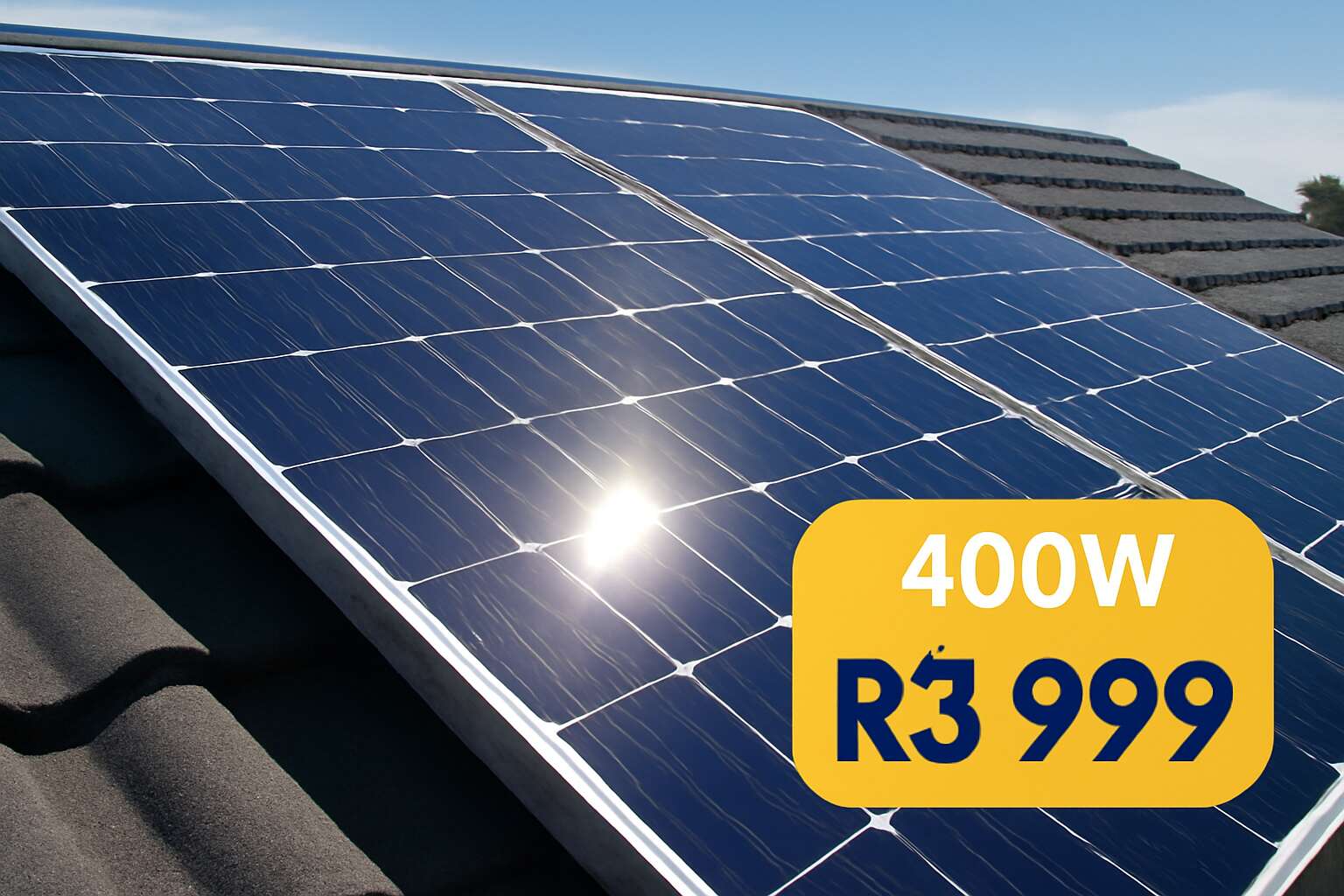
Overview of 400 watt solar panels price in South Africa
Current price range for 400 W solar panels in SA
Across South Africa, rooftop solar uptake has grown by more than 25% year over year, reshaping how households budget for energy. The choice of a 400 watt solar panel price south africa can influence not just upfront costs but long-term resilience, especially as utility tariffs climb and power cuts linger.
Current price range for 400 W solar panels in SA varies widely. Buyers commonly see prices from roughly R6,000 to R12,000 per panel, depending on brand, efficiency, warranty, and the supplier’s installation package. Factor in VAT and distribution, and the total cost can shift by several thousand rands.
- Brand and efficiency influence output per rand
- Warranty length and after-sales service add value
- Installation, mounting, and inverter compatibility affect total cost
Even with price variations, the numbers start to sing when you consider the long arc of savings on electricity and resilience.
Price differences by brand and model
Rooftops across South Africa glitter with possibility, and the 400 watt solar panel price south africa becomes a compass rather than a mere price tag. Brands and models sing at different frequencies, with efficiency, warranty, and installation packages shaping the final figure.
- Brand reputation and module efficiency
- Warranty length and after-sales service
- Installation scope and inverter compatibility
Ultimately, the numbers reveal a broader arc: long-term electricity savings and resilience that outlast the initial expenditure. In the South African market, thoughtful selection illuminates value beyond the sticker.
Cost per watt and typical total installation estimates
South Africa basks in nearly 2,000 hours of sun annually, a quiet promise many households lean on. The 400 watt solar panel price south africa isn’t just a number—it’s a doorway to steadier mornings and quieter evenings. When families weigh a single panel against a full kit, they’re choosing resilience, not just watts!
Cost per watt matters, yet it’s only part of the map. Think of these touchstones as you compare options:
- Efficiency and degradation rates
- Warranty and after-sales service
- Installation scope and inverter compatibility
From rooftop to inverter room, typical total installation estimates reflect the scale of the project and the shell of your roof. When assessing 400 watt solar panel price south africa across suppliers, value compounds over years of service and spare parts.
Taxes, shipping, and regional factors affecting price in SA
Across South Africa, the interplay of sun and currency shapes the true price of a 400 watt solar panel price south africa. The wattage is the beginning; taxes, shipping, and regional quirks write the rest of the tale.
VAT at 15% can lift sticker prices on imported panels, and import duties, handling fees, and local levies can add variances by supplier and batch.
Shipping routes from Durban or Cape Town, freight costs, and inland transport to towns or farms tilt the final tag. Regional delivery times and port congestion also cast a shadow on timelines.
- Tax considerations: VAT, import duties
- Shipping realities: freight costs, lead times
- Regional factors: urban vs rural delivery, local taxes
In the end, the price you pay is a story of sun, ship, and settlement—more than the panel’s nameplate.
Factors influencing 400 watt panel pricing in South Africa
Quality and efficiency ratings and their price impact
“Quality is the cheapest energy you’ll ever buy,” a wry SA observer likes to remind us. When evaluating the 400 watt solar panel price south africa, quality and efficiency ratings tilt the scales far beyond snappy brochures. A higher-efficiency cell means more usable watts under SA’s sun, a true boutique upgrade for rooftop resilience.
A handful of practical levers shape the price tag:
- Warranty length and after-sales support
- Cell technology and efficiency (mono vs poly)
- Panel coatings and corrosion resistance
- Brand premium and distribution reach
That combo—quality plus local conditions—explains why price clocks vary. Higher upfront costs can translate into steadier performance and fewer maintenance headaches, a win for long-term energy strategy.
Warranties, certifications, and after-sales support
Warranty length and robust after-sales policy act as the quiet negotiators in 400 watt solar panel price south africa. A longer warranty can translate into calmer maintenance costs and higher resale confidence, even when the initial bill at the meter looks unfriendly.
Effective certifications—think IEC 61215 and 61730, with SABS marks—signal quality and compatibility with SA conditions. Product warranties protect the panel; installation warranties cover workmanship; transferability matters when a property changes hands or a system is sold.
After-sales support matters just as much as the panel itself. A reliable service network, readily available spare parts, and responsive claim processes keep prices sane over the system’s lifetime.
- Warranty length and transferability
- Certification marks (IEC 61215/61730, SABS)
- Manufacturer’s service network and spare-parts availability
- Remote monitoring and quick claim processing
When weighing this investment, these elements tilt the balance toward long-term resilience rather than glossy brochures, especially under SA’s sun and storms.
Import duties, VAT, and local taxes
Prices in the solar market rarely tell the full story. The 400 watt solar panel price south africa isn’t just the sticker on the box; import duties, VAT, and local taxes quietly tug at the final bill. When equipment crosses borders and currencies wobble, the initial quote can look friendlier than the landed cost reveals. In a market where policy shifts ripple through the supply chain, buyers feel the effect long after the brochures have been read.
Key tax levers shaping cost include:
- Import duties and customs processing that apply to solar components
- Value-Added Tax (VAT) and how it’s applied to equipment and installation
- Local municipal levies and regional fees that vary by province
Viewed through this lens, the price becomes a mosaic of duties, taxes, shipping, and policy. In SA, the way the sun meets the economy shapes that final figure.
Supply chain dynamics and availability in SA
In South Africa, solar logistics move with the sun and the sea, and supply-chain quirks can tilt the math of 400 watt solar panel price south africa. Availability across regions often drives the sticker price as much as any factory quote, because shipments, stock levels, and local demand interact in real-time.
Shaping the market today are several forceful currents:
- Global tightness in PV cells, glass, and inverters can thread delays through the supply line.
- South Africa’s ports and inland distribution shape how quickly panels reach installers.
- Seasonal demand surges and provincial energy projects can swing stock levels and lead times.
For buyers, lead times and regional stock become part of the price narrative, tugging the 400 watt solar panel price south africa into a dynamic mosaic of sun, supply, and season!
Installation complexity and required accessories
Sunshine meets shipping in South Africa, and the 400 watt solar panel price south africa shifts with installation complexity as much as panel quality. An old-country installer once said, “If the roof isn’t ready, nothing else will matter,” and that wisdom guides every quote!
Installation complexity hinges on roof type, mounting options, and how far cables must travel. The required accessories often influence the final tag, especially when local trades and availability vary.
- Mounting rails and hardware compatible with SA roof profiles
- DC disconnects, fuses, and wiring suited for longer runs
- Inverter matching and monitoring equipment
Across rural lanes and city streets, transportation and service availability continue to color the price narrative, turning sun into a shared, human measure of value.
Cost of ownership and return on investment for 400 W panels in SA
Long-term savings and energy bill reduction
Across South Africa’s sun-scarred rooftops, ownership of a 400 W system is a quiet rebellion against rising tariffs. The 400 watt solar panel price south africa is only the opening line; the true poem is the payback that surfaces when daylight becomes currency. Over the years, maintenance whispers fade as panels persist, turning daylight into power and granting lamps a longer, steadier glow through long, bright days!
The long arc of savings reveals itself in several quiet wins:
- Lower monthly electricity bills as solar generation displaces grid purchases.
- Protection from tariff volatility and peak-demand charges that gouge wallets.
- Potential rebates or incentives that temper upfront costs and speed the break-even point.
Beyond the numbers, ROI becomes resilience—a rooftop resource that cushions homes against outages and price shocks, year after year.
Payback period and ROI calculations
Cost of ownership for a 400 W system in SA hinges on upfront price, installation, and ongoing maintenance, but the payback period often tightens into a five- to seven-year arc. Consider the 400 watt solar panel price south africa as the opening line; the real story is in the return when daylight becomes currency, turning monthly bills into smaller numbers and predictable costs into resilience.
- Energy usage patterns that match peak solar production
- Tariff volatility and grid charges shaping savings
- Inverter life, battery needs, and maintenance cycles
ROI calculations stay practical: longer sun hours and mindful energy use shorten the payback, while steady maintenance and reliable inverters protect the long-term upside. The payoff is more than dollars—it is a quieter, steadier household budget in a country where tariffs can shift with the weather.
Ongoing maintenance costs and part replacements
Consider the 400 watt solar panel price south africa, which sits on the surface, but lasting value comes from a system that ages gracefully and stays reliable. Ownership isn’t just dollars up front—it’s a discipline of upkeep that protects your return.
Ongoing maintenance costs are predictable: inverter checks, firmware updates, and periodic panel cleaning to sustain efficiency. Inverters typically last 10 to 15 years with planned replacements; batteries, if storage is used, require replacements every 5 to 7 years. I’ve seen downtime shrink when maintenance is disciplined.
To keep the promise, focus on these maintenance pillars:
- Inverter health checks and firmware updates
- Regular cleaning and inspection of mounting hardware
- Battery health monitoring and scheduled replacement (if storage is used)
- Wiring checks and protection devices inspection
A maintenance plan translates daylight into durable savings.
Financing options and payment plans available in South Africa
Sunlight is a tenacious business partner: it never reneges on a promise and rarely asks for a raise. The cost of ownership for a 400 W solar panel in SA hinges as much on financing as on hardware; the numbers bend when terms are generous and the system ages with dignity. The 400 watt solar panel price south africa is only part of the equation—the real ROI is shaped by how credit is structured, how long the panels endure, and how tariff regimes tilt the bill.
- Cash purchase with immediate bill relief
- Bank solar loans with fixed terms
- Leasing or Power Purchase Agreements tailored for homeowners
- Contractor or manufacturer-backed financing
Financing options available in South Africa offer a spectrum that makes solar more palatable than another morning commute. In every case, the algebra of return remains fiercely honest, ensuring daylight translates into durable savings rather than polite optimism.
Incentives, rebates, and grid connection policies
Sunlight is a stubborn partner in SA—The sun is SA’s cheapest power plant—and the cost of ownership for a 400 watt solar panel price south africa hinges on policy as much as hardware. That price becomes meaningful only when incentives and grid rules tilt the payoff in daylight’s favor.
Incentives and rebates vary by municipality, but many programs ease the upfront. VAT treatment and possible rebates reduce the hit, while grid-connection policies for embedded generation can turn daytime energy into durable savings.
- Embedded generation approval
- Net-metering or feed-in terms where available
Connecting to the grid is as much about intention as wiring. When policy aligns with patient financing, the payback becomes a conviction rather than a calculation.
Buying considerations: where to buy and how to compare in South Africa
Leading brands and models available locally
Power is personal now; as a SA installer notes, “the future is sun-powered.” The 400 watt solar panel price south africa serves as a starting reference, not a fixed decree—buyers seek panels that endure, a seller they trust, and local support that doesn’t vanish after installation.
- Brand reputation and track record in SA
- Warranty length and what it covers (modules, workmanship)
- Local stock and service network for rapid replacements
- Certifications and efficiency ratings
Leading brands and models available locally include Jinko, Canadian Solar, Trina Solar and Q Cells—all backed by regional distributors and SA-specific warranties. The landscape reveals that the differentiator is service continuity, not the sticker price alone.
How to compare quotes, warranties, and certifications
Buying a 400 watt solar panel price south africa isn’t just about the sticker—it’s about trust, stock, and service after sunset. I’ve seen families rely on SA-based distributors with local stock and a ready support network so replacements don’t linger.
When you request quotes, demand a clear breakdown and compare more than price: installation scope, panel efficiency, and what the warranty covers. Look for terms on modules, workmanship, and on-site service, plus regional certifications you can verify.
- Transparent cost breakdown and total installation estimates
- Warranty scope and a straightforward claim process
- Certifications and verified efficiency data
- Delivery timelines and local service options
With these markers, you’re choosing a path to dependable solar gains.
Choosing a South Africa–registered installer
In the shifting dusk of SA’s energy landscape, the 400 watt solar panel price south africa becomes a beacon for households seeking steady daylight against the night. The right choice glimmers when you align with local partners who keep stock, answer after hours, and stand behind their products with true service.
Where you buy matters: seek a South Africa–registered installer who can vouch for regional certifications, on-site support, and a transparent distributor network. A locally grounded seller often means quicker replacements and calmer evenings when the sun slips behind the veld.
To compare without chasing phantoms, let the quiet metrics—delivery timelines, warranty scope, and efficiency data—speak for themselves.
- Verification of certifications
- Clear cost breakdowns
- Regional service options
Shopping channels: online marketplaces vs local retailers
Across small towns and farmsteads, the 400 watt solar panel price south africa can feel like a ray of daylight in a long, testing dusk. When you cast your net for a dependable system, the right supplier is more than price—it’s local trust, after-hours support, and a promise to stand by the kit when the sunset steals the day.
Buying channels in SA span online marketplaces and brick-and-mortar outlets. Online marketplaces offer convenience and broad comparisons, but local retailers carry regional stock, on-site demos, and faster service in rural areas.
- Delivery timelines and after-sales support
- Warranty coverage and returns
- Regional stock and local service options
In the end, the purchase story is as important as the price tag. The SA energy landscape shifts daily, and a channel that fits your community’s rhythm makes the price feel fairer under the first stars.
After-sales support and warranty claims process in SA
Sunlight is a stubborn truth on South African farms, turning ordinary mornings into real possibilities. A seasoned installer once said, ‘We stand by our kits as surely as the sun climbs the ridge.’ That belief guides every purchase.
When weighing the 400 watt solar panel price south africa, look beyond the sticker. Online marketplaces offer breadth, while local retailers provide regional stock, on-site demos, and quicker service in rural settings.
After-sales support should feel steady. In SA, know the warranty claims process upfront—documentation, timelines, and the right contacts.
- Invoices and model numbers accessible
- Warranty scope and transferability
- Service reach and response times
Installation and best practices for 400 W panels in South Africa
System sizing and matching with inverters and storage options
Installing 400 W panels in South Africa begins with a practical map of sun and wind. Align arrays for peak output, allow airflow, and plan for shading. The 400 watt solar panel price south africa landscape helps shape a scalable, reliable system.
Key considerations for system sizing and matching with inverters and storage options include:
- System sizing reflects daily energy use and SA sun hours.
- Inverter matching provides headroom for growth.
- Storage options balance capacity, cost, and discharge needs.
In South Africa, design favors robust mounting, good airflow, and accessible local support for 400 W arrays.
Rooftop vs ground-mount considerations in SA climates
Installation of 400 W panels in South Africa unfolds like a nocturne of light. Rooftops offer crowded skies and shorter cable runs, while ground mounts lend the luxury of tilt and scale. The 400 watt solar panel price south africa is a factor, but mounting configuration often decides performance under SA’s heat and gusts.
Rooftop vs ground-mount considerations include:
- Rooftop: wind uplift, shading from chimneys, and easier cleaning access.
- Ground-mount: versatile tilt, simpler maintenance, and room for future growth.
- Hybrid mounting: blends sun exposure with shade tolerance and site flexibility.
Across SA climates, robust mounting, corrosion-resistant fittings, and accessible local support shape the long arc of a 400 W array. I hear the clink of hardware and the whisper of eaves as panels settle into their vigil, catching daylight even as evening approaches.
Wiring, inverters, and battery compatibility guidance
Across South Africa’s sun-drenched landscapes, getting the most from a 400 W panel means looking beyond the sticker price. Wiring, inverters, and battery compatibility shape daily performance as surely as the sun shapes the clouds. When you factor in the 400 watt solar panel price south africa, it’s clear that system harmony matters as much as module watts, especially in heat and gusts.
- Wiring: ensure appropriate insulation, protective devices, and clean runs.
- Inverters: align MPPT efficiency with peak daylight and panel voltage.
- Battery compatibility: harmonize chemistry, voltage, and storage goals.
In SA, choose corrosion-resistant fittings and plan for accessible maintenance access, so you don’t lose days to wind and heat. Pair panels with storage that matches your daily solar curve, keeping the system nimble for outages and load shedding, while local installers add the comfort of seasoned after-sales support.
Permits, grid connection, and safety standards in SA
South Africa basks in solar radiance that turns rooftops into quiet power stations. The journey from sun to socket is guided by more than sticker price—permits, grid connection, and safety standards choreograph every installation. When weighing the 400 watt solar panel price south africa, those rules shape the path as surely as the sun shapes the day, ensuring reliability from dawn to dusk.
Key considerations keep the system compliant and safe for years of service:
- Permits and zoning compliance with local authorities
- Grid connection, metering, and utility interconnection requirements
- Safety standards, certifications, and compliant wiring practices
Corrosion-resistant fittings and accessible maintenance areas align with SA standards, while local installers weave in after-sales support that suits South Africa’s weather and outages. The rhythm of permits, grid policies, and safety checks becomes a trusted cadence, not a complication, in the search for long-term energy resilience.
Maintenance, cleaning, and monitoring for optimal performance
Installation is just the start; 400 watt solar panel price south africa factors in more than kit costs. In practice, reliable performance hinges on proper mounting, wiring, and ongoing upkeep. South Africa’s sun is relentless, so you should expect panels to shed grime and heat efficiently. A proactive maintenance routine keeps output steady from dawn to dusk and helps you justify the investment to stakeholders!
- Regular cleaning with a soft brush and water to remove dust and pollen.
- Seasonal inspections of mounting hardware and wiring for corrosion or loose connections.
- Monitor inverter readings and energy production for anomalies and address shading issues.
Keep maintenance records and schedule professional checks annually, especially after severe weather.

0 Comments