Understanding Solar Panel-Only Systems
What Does Operating Without Battery Storage Mean
Eskom’s relentless load-shedding has forced a stark confrontation with our own dependency. The decision to install a system is often a psychological battle between the desire for total autonomy and the hard reality of a budget. Choosing a solar panel without battery price point is the first step in that negotiation, a choice that prioritises daylight hours and immediate savings over the existential security of a fully charged inverter at night.
This configuration fundamentally redefines the relationship between generation and consumption. You become a daytime producer, feeding power directly into your home’s circuits. The grid remains your safety net, a silent partner that steps in only when the sun retreats. For many households, this creates a rhythm that is both pragmatic and strangely liberating. You align your life with the sun’s arc, running the geyser and the washing machine during peak hours, not out of habit, but out of economic necessity.
– You significantly reduce your upfront capital expenditure.
– You shorten the payback period dramatically.
– You still rely on the grid for evening and night-time usage.
– You avoid the complexity and maintenance of battery chemistry.
However, this choice is not without its psychological friction. The absence of a battery means the persistent hum of the municipality’s supply is still part of your life after dark. There is a cognitive dissonance in watching the sun set, knowing your panels are going idle while your reliance on the grid returns. The true measure of this system is not just the potential financial return, but your acceptance of a hybrid existence, one where you are both a producer and a perpetual consumer.
How These Systems Generate and Use Power
South Africa receives over 2,500 hours of sunshine annually, yet most households treat it as background weather rather than a fuel source. The solar panel without battery price point matters because the system’s job is simple: generate during the day, use immediately, and hand the evening back to the grid. Panels produce direct current, the inverter converts it to alternating current, and appliances consume it in real time.
There is no storage step. A kettle boiled at midday runs on sunlight. The same kettle at 7pm runs on Eskom. I have watched this simple shift cut a third off a family’s monthly bill. The system does not smooth the transition. It changes your consumption pattern to match production.
- Generation happens only while the sun is above the horizon.
- No battery means no charge cycling and no replacement costs.
- Surplus power feeds back to the grid, depending on municipal regulations.
This arrangement makes the solar panel without battery price the most accessible entry point. You are not buying energy security after dark. You are buying a cheaper daytime tariff.
Benefits and Limitations of No Battery Backup
A solar panel without battery price reflects a system built for daylight hours. You pay for immediate production, not stored energy.
Benefits include a smaller upfront cost, fewer components, and zero battery maintenance. The system runs efficiently during peak sunlight, trimming your midday draw from the grid.
- Lower installation expense
- Simpler maintenance
- Faster payback
Limitations become obvious after sunset. No battery means no protection from loadshedding, no evening reserves, and no overnight operation. The grid remains your backup, which is acceptable for many households.
Key Cost Determinants
Equipment Costs: Panels, Inverters, and Racking
Most South African homeowners fixate on the panel count, yet the inverter often steers the final solar panel without battery price. Panels, typically monocrystalline or polycrystalline, account for around 40% of the total. Inverters, whether string or micro, add another 30%, and racking completes the sum. That combination shifts with roof type, tilt angle, and rail quality. A flat concrete roof demands more mounting hardware than a simple tile pitch, so labour and fittings climb accordingly.
Consider the tradeoffs:
– String inverters are cheaper but suffer if one panel shades.
– Microinverters cost more per watt but allow panel-level monitoring.
– Aluminium racking resists corrosion better than galvanised steel.
These variables mean the solar panel without battery price differs by thousands of rand, so a detailed quote beats any generic estimate.
Installation Labor and Permit Fees
Installation labour is where the solar panel without battery price escapes the spreadsheet. A certified installer in Johannesburg charges differently from one in Cape Town, and the gap reflects travel time, crew size, and local demand. Permit fees add another layer. Municipal approval for a rooftop array can take weeks, and some councils require structural engineer sign-off before they even open your file.
The paperwork alone nudges your final quote:
– Application fees vary by municipality
– Inspection fees may appear after installation
– Some areas demand electrical diagram approvals
Each of these items reshapes the solar panel without battery price in ways generic online calculators ignore. You are paying for expertise and compliance, not just bolts and cables. That distinction becomes obvious when a quote arrives with line items you never anticipated, which is exactly why a single detailed estimate beats three vague ones.
System Size Based on Energy Consumption
No two 5 kW systems cost the same, because system size is tailored to your specific daytime load. The solar panel without battery price shifts dramatically when you go from a modest 3 kW array to an 8 kW installation. Your energy consumption pattern sets that scale.
Most municipal statements show total kilowatt hours, not the hours they were consumed. To size correctly, you separate daytime usage from nighttime usage. This is the core exercise.
- List appliances that run while the sun is up
- Record their wattage and duration
- Sum the daily watt hours for a working figure
That figure determines the panel count, inverter capacity, and racking footprint. Each system component scales with it, and every upward adjustment increases the solar panel without battery price. Matching array size to real consumption prevents overpaying for unused capacity and avoids undersizing that leaves you on the grid during peak sunlight.
Geographic Location and Sunlight Availability
South Africa sits under one of the highest solar irradiation levels on the planet. Yet the solar panel without battery price on your quote depends heavily on which province you call home. A system in Upington delivers far more usable energy per panel than an identical setup in Cape Town, where winter cloud cover and maritime weather reduce yield. This geographic variance means installers must recalculate array sizing for your specific latitude and microclimate.
Consider the regional factors that shift the final figure:
– Average annual irradiance, which dictates how many panels you need
– Seasonal performance gaps between summer and winter production
– Municipal grid connection quality and local inverter requirements
Those variables create price differences of up to 15 percent for the same nominal capacity. The panel count is the hidden variable. A homeowner in the Karoo might achieve their daytime load with 10 panels, while someone in the Western Cape needs 12. Every additional panel, mounting rail, and cable run adds to the solar panel without battery price. Get your sunlight data first, then compare quotes.
Brand Premium and Efficiency Ratings
Two panels can look identical on paper. One costs 20 percent more. That gap is brand premium. Established manufacturers charge for reliability and warranty coverage. Their panels carry verified efficiency ratings. Those ratings determine how much power each square meter converts. A premium panel at 22 percent efficiency beats a budget panel at 18 percent. You need fewer premium panels for the same output. That lowers racking and labor costs. But the upfront solar panel without battery price still climbs. Here is the trade-off: pay more per panel or buy extra budget units.
– Higher efficiency shrinks your array footprint
– Premium brands offer longer product warranties
– Cheaper panels may degrade faster under South African UV exposure
Your decision affects the final quote. Efficiency ratings and brand trust are not marketing fluff. They are measurable cost drivers. The difference between a 21 percent and a 19 percent panel might seem minor, yet it shifts the total solar panel without battery price by several thousand rand. Do not ignore the spec sheet. Read the fine print on degradation rates and temperature coefficients. Those numbers tell you how long your system will hold its output. A cheaper panel that loses 0.8 percent per year will cost you more in the long run than a premium unit losing 0.4 percent.
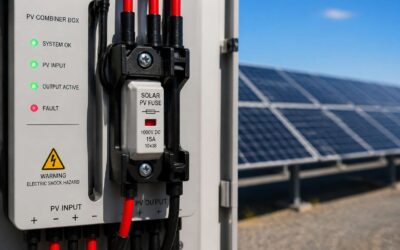
Additional Wiring and Safety Components
Copper cables, isolators, and surge protection rarely dominate a price conversation, yet they determine whether your system remains functional during a storm. The solar panel without battery price often ignores these components until the installer submits the final quote. Longer runs demand thicker DC cableand proper conduit. Skimping here causes voltage drop, heat, or fire risk.
South African weather complicates specification. Lightning-filled storms and unstable grid conditions make surge protectionand rapid shutdown devices essential. A proper earthing system prevents catastrophic failures. Key items to budget for:
- DC isolators and AC breakers
- Surge protection devices
- Earthing rods
- Combiner boxes
Each component adds a modest amount, but collectively they shift the final price by thousands of rand. Ignore themand you expose your system to avoidable risks. A safer installation costs less in anxiety alone.
Average Price Ranges and Market Data
National Average Price Per Watt
South Africa’s solar panel without battery price now hovers around R14 per watt on the national average. Market data from 2024 shows grid tied systems ranging from R12 to R18 per watt, depending on the province. The Western Cape and Gauteng see the sharpest competition among installers, which pulls prices toward the lower bound.
For a typical 5 kW setup, that means R70,000 to R90,000 before any rebates. Two years ago, the same system cost roughly 18% more. I have watched inverter prices soften considerably, and that has driven the entire bill down, even as panel efficiency improves.
Residential vs. Commercial Pricing Differences
When it comes to the solar panel without battery price, residential homeowners and commercial property owners seldom pay the same rates. A warehouse owner covering a massive roof can negotiate per-watt pricing that makes a suburban homeowner weep into their cappuccino. Market data from 2024 shows commercial installations often land 10% to 15% below residential quotes for identical equipment, simply because volume talks.
Consider typical figures from recent installer invoices:
- Residential 5 kW system: R14 per watt average
- Commercial 50 kW system: R11 to R12 per watt average
- Bulk purchasing and simpler logistics drive commercial savings
The solar panel without battery price for a business is a negotiation sport. For a homeowner, it is closer to a retail transaction. Both pay for the same sunshine, but only one gets the bulk discount.
State-by-State Variations and Influences
Across South Africa, the solar panel without battery price shifts with the province, not just the sun. In the Western Cape, where installers crowd the market, quotes often settle near R13 per watt. Up in Gauteng, a similar array might cost R14.50 because demand from businesses outpaces installation crews.
KwaZulu-Natal and the Eastern Cape sit somewhere between, influenced by transport costs and local permit delays. The Northern Cape offers the strongest irradiance, yet sparse installer competition nudges prices higher. These variations stem from grid strain, municipal bylaws, and logistics. A coastal home in Gqeberha pays differently than a Johannesburg townhouse.
- Western Cape: R12.50 to R13.50 per watt
- Gauteng: R13.50 to R14.50 per watt
- KZN and Eastern Cape: R13 to R14 per watt
For anyone comparing the solar panel without battery price, provincial data matters more than national averages. I have seen homeowners drive an hour to a neighbouring town for a quote that came in 9% lower. The market rewards patience and local knowledge.
Historical Price Trends and Future Outlook
Looking at the historical arc, the solar panel without battery price has fallen roughly 40% in five years. I watched a standard 5kW array drop from R90,000 in 2019 to R65,000 by 2023. Cheaper Chinese imports and a crowded installer market drove most of that decline.
- 2019: R18 per watt
- 2021: R15.50 per watt
- 2023: R13 per watt
- 2025 projection: R12 per watt
Load-shedding cycles pushed prices higher than global trends during 2022 and 2023. As Eskom stabilises the grid, the solar panel without battery price should settle into a steadier downward curve over the next two years. Manufacturing efficiency gains will likely offset any demand pressure from tariff hikes.
How to Obtain Reliable and Customized Quotes
I’ll not pretend the market is a simple spreadsheet. To get a true solar panel without battery price, you must have to compare three or four written quotes, not verbal estimates. Installers quote differently from different sites, so a sample size of one is statistically useless.
Average ranges in South Africa currently hover between R11 and R14 per watt for a no battery setup, depending on your province. But those numbers are not the actual story.
How to force honest quotes:
– Send the same system size, e.g., 5kW, to multiple installers.
– Ask for itemized panels, inverter, mounting, and installation.
– Request the quote in writing before you arrange a site visit.
– Confirm the inverter brand, not just output, because cheap inverters shift the numbers.
A surprisingly reliable way to benchmark is to ask for a local neighbourhood referral. One Cape Town installer quoted R12 per watt, while a competitor quoted R13.20 for identical hardware. The difference was labor margins. So I simply refuse any solar panel without battery price that is not quoted against a clear scope of work. Market data helps you spot the floorboards, but a customized quote tells you which house you can actually afford.
Comparing with Battery-Equipped Solar Systems
Upfront Cost Difference Between Configurations
In South Africa, the upfront cost difference between configurations is stark. A solar panel without battery price typically lands between R90,000 and R120,000 for a 5kW system. Add lithium-ion storage and you are suddenly looking at R200,000 or more. That gap explains why many homeowners start with a grid-tied array and add batteries later.
What drives the difference? Batteries require a hybrid inverter, a battery management system, and extra installation hours. You are also paying for the cells themselves, which remain the most expensive component in any solar setup. Without storage, you skip all of that. The inverter is simpler, the wiring is less complex, and the labour is quicker. A solar panel without battery price reflects those savings directly.
Consider what you are not buying:
- A hybrid or multi-mode inverter
- Battery management and monitoring hardware
- Extra isolation switches and cabling
Long-Term Savings and Payback Period Analysis
When you compare long term savings, the solar panel without battery price starts to look even better. Without a battery, your payback period typically shrinks to between 4 and 6 years in South Africa. Battery equipped systems stretch that to 8 or 10 years, often longer. The reason is simple. Batteries store energy you might not use, and they lose capacity over time. You are paying for that degradation. Here is what you avoid with a battery free setup:
– No battery replacement costs after 10 years.
– No surge pricing on hybrid inverters.
– No complex monitoring subscriptions.
The solar panel without battery price buys you a simpler system with fewer failure points. Your return on investment comes from direct grid offset. You skip the added interest or opportunity cost of financing a larger system. Payback is quicker, and the savings land in your pocket sooner. It is math that even a solar sceptic can appreciate.
Operational Flexibility and Energy Independence
Batteries promise a lifestyle of off-grid romance until you check the price of a second honeymoon. The solar panel without battery price buys you a practical arrangement, not a marriage to your energy supply. You keep the grid as your backup lover, always there when the sun clocks out, without paying a monthly retainer for a battery that sulks in the corner after a few cloudy days.
Flexibility comes from simplicity. A battery system demands you calculate cycles, monitor depth of discharge, and plan for replacement every 8 years. A grid-tied setup ignores these theatrics. Your energy independence is conditional, sure, but it is strategic. You rely on the grid when it suits you, and you tell Eskom to take a hike during peak sun hours. The solar panel without battery price creates a portfolio where the utility handles your evenings, and you handle their daytime revenue.
Even the operational rhythm differs. Battery owners police their consumption like dinner-party guests avoiding the last slice of cake. No battery means you run the washing machine when the sun shines, guilt free. That is the real independence, choosing your moment, not being chained to a chemistry experiment.
– You gain rooftop resilience without the hardware baggage.
– You avoid the silent tax of battery degradation.
The tradeoff is clear. A battery gives you nights, but it costs you weekends. The solar panel without battery price buys you a system that works with the sun, not against the shadow, and that is a kind of freedom you can measure in rands, not romanticism.
Maintenance and Replacement Expenses
Some estimates suggest the average lithium-ion battery bank lasts 10 years before significant capacity loss. Solar panels, by contrast, often operate effectively for 25 years or more. That difference defines the true cost of ownership, and it is why the solar panel without battery price looks so appealing once you factor in maintenance.
Battery systems demand consistent attention. Electrolyte levels, firmware updates, thermal management, and monitoring software all require oversight. Preventive maintenance contracts for batteries can run thousands of rands annually, costs that never appear in a grid-tied inverter’s ledger. Consider the typical battery-equipped system upkeep:
– Regular capacity tests to confirm the bank holds its rated charge.
– Replacement of failed cells, often at significant expense.
– System rebalancing to prevent premature degradation.
– Insurance premiums adjusted for high-value energy storage.
A grid-tied setup with no battery avoids these line items. No battery degradation, no replacement cycles, no chemical hazards. The inverter may need servicing eventually, but its lifespan aligns with your panels. When you compare the solar panel without battery price against a battery system’s full ownership costs, the gap widens with every passing year. You save on the initial installation, on ongoing maintenance, and on the eventual replacement of a storage unit that loses capacity quietly, year after year.
Choosing the Right Setup for Your Needs
When comparing a battery-backed installation to a direct grid-tied layout, the solar panel without battery price reflects a simpler architecture. You are paying for generation only, not storage. For many South African households, that distinction shapes the entire decision. A battery system introduces a second component with its own lifespan, its own efficiency losses, and its own behavioural constraints. The grid-tied route offers a predictable cost structure, while battery systems carry variables that are harder to forecast.
Choosing the right setup depends on how you value resilience versus simplicity. Load shedding has made backup power attractive, but the financial case for batteries weakens when you consider how rarely full capacity is actually used. The solar panel without battery price appeals to those who want to offset consumption during daylight hours without subsidising dormant storage. Once you compare the two configurations side by side, the cost per kilowatt-hour tells a different story depending on your usage patterns.
Strategies to Reduce Costs and Maximize Value
Federal and State Incentives, Tax Credits, and Rebates
The South African Revenue Service currently offers a tax rebate for homeowners who install solar panels. That rebate directly lowers the solar panel without battery price by a fixed percentage, often around 15% of the panel cost. Yet many people forget that local municipalities have their own incentives tucked away in rate and tariff structures. A quick check of your city’s website can reveal hidden savings.
Consider a few options that work without needing battery storage:
- Claim the SARS solar tax credit for the year of installation
- Check for municipal rates rebates on solar-equipped properties
- Sign up for net metering if your utility supports it in your area
- Ask about installer partnerships that bundle panel brands with inverter rebates
For businesses, the Section 12B allowance lets you deduct the full capital cost of renewable energy over three years. That depreciation significantly trims the effective solar panel without battery price on your books. When you stack these incentives with the electricity you avoid buying, the system essentially pays for itself years ahead of the quoted statement. Keep your compliance certificates intact for the tax claim, and always confirm your exact rebate amount before signing anything.
Selecting the Ideal Installer for Competitive Pricing
The gap between a fair and inflated quote for a residential solar panel without battery price often comes down to how an installer structures their bid. In South Africa, the same 5kW system can cost one homeowner R95,000 and another over R120,000. That margin is not component quality; it is administrative and scope discipline. I have seen contracts that hide critical items under vague line items like “miscellaneous” or “coordination fees.”
Reducing costs without sacrificing reliability often means gathering three itemised proposals that separate panels, inverters, mounting rails, wiring, labour, and permits. Inverter brands deserve attention because that component carries significant price variation. Slower months, particularly August, open opportunities for negotiated rates since installation teams actively seek work. Bundling grid compliance paperwork into a project gives an installer logical reason to adjust their margin, and the resulting solar panel without battery price becomes more manageable.
Selecting an installer should move beyond comparing totals. Fixed price contracts that commit to completion dates offer protection. Municipal approval track records demonstrate reliability. A seasoned company with robust after sales support prevents expensive surprises when an inverter ages, even if their upfront number is not the lowest. The ideal choice keeps the system generating month after month.
Financing Options, Leases, and Power Purchase Agreements
Financing reshapes what a solar panel without battery price means in monthly terms. I have watched homeowners choose a PPA simply to sidestep maintenance worries. A cash purchase gives immediate ownership, though a loan spreads the cost across years.
- Solar loans offer fixed repayments and full ownership.
- Leases eliminate upfront fees but lock you into long terms.
- PPAs charge per kilowatt-hour, often with annual escalators.
Leases and power purchase agreements move the burden to a third party, where you pay for generated power rather than equipment. In South Africa, these structures remain niche but are growing. Each option changes the payback curve, so the right choice depends on your cash flow. That cash flow could be the deciding factor!
Smart System Sizing and Improving Home Energy Efficiency
One careful homeowner trimmed their upfront cost by nearly a third through precise system sizing alone. Oversizing is the quiet killer of value. In South Africa, matching array output to your actual daytime load matters more than chasing maximum generation. Start by auditing your home’s energy profile.
Improving home energy efficiency multiplies every watt you produce. Swap old geyser elements, seal gaps, and shift heavy appliances to daylight hours. These actions shrink the required kilowatt capacity, directly lowering equipment and installation costs.
Consider these efficiency upgrades before requesting quotes:
- Replace incandescent bulbs with LED lighting.
- Insulate ceilings and hot water pipes.
- Install a timer for your pool pump.
Such adjustments can reduce the system size by two panels or more, making the solar panel without battery price far friendlier to your budget.
Performance Monitoring and Ongoing Optimization
A system that runs without batteries transforms how you think about every sunrise. In South Africa, where grid tariffs climb relentlessly, the daily gaming of your own consumption becomes a quiet obsession. Monitoring transforms this obsession into actionable insight.
Owners who track their production curves daily often discover that shifting a single high-draw appliance, like a kettle or iron, saves more electricity than adding another panel ever would. This is where the solar panel without battery price begins to pay for itself.
Consider these monitoring habits for maximum yield:
– Check your inverter’s display weekly for error codes
– Compare weekly production against your municipality’s weather forecast
– Clean panels after the highveld’s dry, dusty months
These small rituals reveal performance dips before they become expensive problems. A proactive adjustment to an angle or load schedule keeps your savings rate climbing.
Operational vigilance turns a static installation into a living asset. You stop buying power you can generate yourself. Optimisation, done consistently, means the upfront solar panel without battery price fades into a distant memory as your monthly expenses shrink. Your system becomes a partner in efficiency, not just a row of metal and glass.


0 Comments