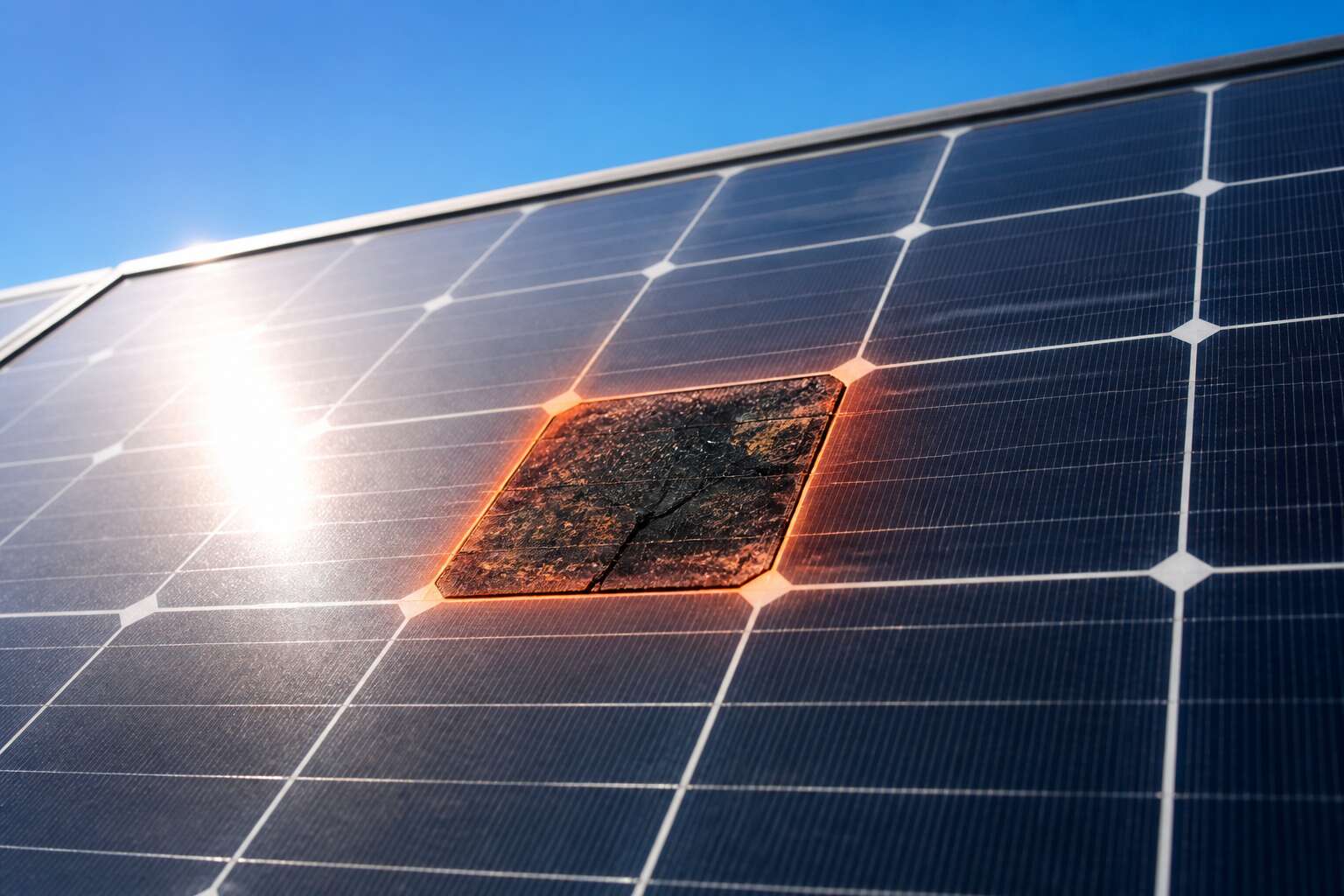
Causes of Hot Spots on Solar Panels
Partial Shading and Its Impact on PV Cells
That one rogue shadow, maybe from a passing cloud or a cheeky bird, can cause a dramatic drop in your system’s power output. Consider this: a single shaded cell in a 60-cell panel can slash the entire module’s production by over 30%. Most people believe the energy loss equals the shade size, but the math is far more punishing. The culprit is a phenomenon that turns your energy-producing equipment into a resistance-generating headache. When current is forced through a shaded, high-resistance cell, it doesn’t just pass through gracefully; it dissipates energy as heat, creating the infamous solar panel hot spots.
The impact of this localized heating is a serious problem that pretends to be a minor issue. When one cell is shaded, the other healthy cells in its series string continue to push current toward it. This creates an unfair burden, forcing the shaded cell to operate in reverse bias. Instead of generating power, it consumes it, turning itself into a resistor. The material’s internal resistance and the induced voltage drop cause the cell to heat up quickly and unevenly. Over a few minutes, that temperature can climb to over 150°C, which is not a good look for delicate silicon.
There is no one-size-fits-all source for this shading. In South Africa, the culprits are frequently found right at home or on the grid infrastructure. Common offenders include:
1. Overhanging branches from acacia or pine trees that seem to grow overnight.
2. Soaring daytime temperatures combined with poor ventilation causing dirt and grime to bake onto the surface.
3. Nearby buildings or water tanks casting sharp shadows during the golden hours.
4. Even a single dried leaf or a blob of bird droppings can act as the perfect storm for a hot spot.
The physical damage is often hidden until it is too late. The elevated temperatures stress the encapsulant, causing it to discolor or bubble, a process called delamination. The excessive heat degrades the cell’s solder connections and can crack the silicon wafer itself. The immediate result is a drop in voltage and efficiency for that row of cells. The long game is worse: permanent efficiency loss and a significantly shortened lifespan for the entire PV module. The hot spot does not stay contained; it creates a thermal cycle that fatigues the panel every single day, which leads to micro-cracks that expand over time. By the time you see a visible burn mark, the solar panel hot spots have already compromised the panel’s integrity severely.
Dirt, Debris, and Soiling Accumulation
In South Africa, the sun’s intensity works both for and against you. While it drives impressive yields, it also bakes airborne dust, pollen, and industrial fallout onto the glass surface. That grime layer might look harmless, but it creates uneven light absorption and traps heat! Localized temperature spikes follow, and those are the exact conditions that produce solar panel hot spots.
Common culprits include bird droppings, dried sap, or a crust of mineral dust from nearby mining activity. Each particle casts a micro-shadow, forcing affected cells to work harder and heat up faster. Over time, soiling accumulates into a stubborn film that routine cleaning often misses, especially on tilted rooftops or ground mounts with limited access.
Manufacturing Defects and Microcracks
But not every hot spot is born on the surface. Some are embedded long before panels leave the factory. Manufacturing defects, such as poor solder joints or flawed cell interconnects, create high resistance zones. These zones resist the flow of electricity, and that resistance converts power into heat. The heat concentrates in a small area, and solar panel hot spots begin to form.
Microcracks add another layer of danger. Tiny fractures, often from rough handling during transport or thermal cycling in South Africa’s harsh sun, disrupt the conductive pathways inside a cell. A cell with a microcrack still carries current, but it forces the cracked region to operate under stress. That stress multiplies the heating effect. Once the crack expands, the local temperature rises further, accelerating cell degradation and pushing the panel toward failure.
How Hot Spots Affect Solar Panel Performance
Reduced Power Output and Efficiency Losses
Losing electricity directly from your roof feels like a silent theft. A single hotspot on a panel can reduce power output by as much as 30% for that module, which is a painful loss for any household budget. This heat concentration forces the solar cells to work harder, increasing internal resistance and dragging down the entire system’s performance. During the peak afternoon sun in South Africa, this inefficiency is particularly cruel, as it undermines the very moments when your panels should be generating the most energy.
The efficiency losses extend beyond just the afternoon slump. When a solar panel hot spot persists, the affected cell becomes a liability, actively draining power from its healthier neighbours. This creates a complex tug-of-war within the panel, where the good cells are perpetually held back by the defective one. I have seen systems where a single damaged area compromises the daily yield by a significant margin, leaving owners with higher utility bills than they ever anticipated. Furthermore, the chronic heat exposure degrades the encapsulant material, accelerating the deterioration of the entire laminate. Over time, this leads to a permanent reduction in the system’s lifespan, not merely a temporary dip in production.
The physical consequences of these thermal anomalies are severe. Prolonged exposure to high temperatures can cause the solder joints to weaken and eventually fail, leading to open circuits. This damage cascades, creating a zone of isolation that renders a quarter of the panel useless. The glass above the hot spot can also experience stress fractures, though this is less common. Consider the direct impact on your investment:
– Accelerated cell degradation leads to a shorter operational life.
– Bypass diodes are forced to activate, which reduces the voltage output of the string.
– The risk of complete panel failure increases significantly over time.
– Overall system payback period extends because of reduced energy harvest.
These thermal stresses are not benign; they are a slow, relentless erosion of your solar asset. I have looked at thermal images of panels in the Free State and watched as the bright yellow spots indicate a tragedy unfolding on the roof. The performance of the whole array suffers, and the financial return on your installation diminishes every single day the condition is ignored.
Accelerated Degradation of PV Cells
Here is the chilling truth. Solar panel hot spots accelerate the irreversible decay of photovoltaic cells. The localised heat breaks down the silicon lattice, and the affected cell loses its capacity to hold voltage. This is not a temporary slump. The damage is permanent.
I have inspected systems in Durban where a single hot spot cut the panel’s lifespan by three years. The thermal stress cracks the wafer’s structure. The encapsulant yellows and hardens. The cell slowly detaches from its electrical circuit.
- Rated wattage declines faster than the manufacturer’s warranty assumes.
- The panel’s failure curve steepens with every passing season.
- The glass above the hot spot may eventually fracture.
Ignoring solar panel hot spots turns a manageable repair into a full replacement. The degradation accumulates quietly, and by the time the symptoms are visible, the damage has already spread deep into the cell structure.
Fire Hazards and Electrical Safety Risks
Solar panel hot spots do more than sap efficiency. They transform a photovoltaic module into a potential ignition source. When a cell overheats past 150 degrees Celsius, the surrounding ethylene vinyl acetate encapsulant begins to break down and release flammable gases. The backsheet, typically a polymer laminate, can melt and expose live conductors.
- Delamination exposes copper ribbons to moisture and corrosion.
- Arc faults can jump between compromised conductors.
- Molten solder can drip onto the roof surface.
An inspector I know in Johannesburg documented a roof fire that started from a single shaded cell. The DC disconnect was off, yet the circulating current through the hot spot sustained enough heat to char the mounting rail. Solar panel hot spots concentrate energy into a tiny area, and that energy has to go somewhere.
Impact on Inverter Performance and String Yield
Solar panel hot spots do not remain isolated problems. They ripple through the entire string. When a single cell overheats, its resistance climbs, and the bypass diode activates. That diode redirects current around the faulty cell, but also removes the cell’s contribution entirely. The string voltage drops, and the inverter’s maximum power point tracker adjusts its operating point. This adjustment often penalizes healthy panels in the same string. The inverter may cycle through voltage points, wasting energy and increasing component stress.
Yield data confirms the damage. A single hot spot reduces string output by a measurable margin, even when the rest of the array is immaculate.
- The inverter operates outside its optimal voltage window.
- Healthy panels underperform because they are held back by the compromised string.
In South Africa’s high irradiance environment, this effect is amplified. Solar panel hot spots force the inverter to work harder, run hotter, and age faster. One shaded cell becomes a systemic loss.
Shortened Lifespan of the Solar Module
A 2017 study found that a single hot spot can raise cell temperature by over 50°C. In South Africa’s summer, that pushes temperatures close to the module’s material limits. The ethylene-vinyl acetate encapsulant begins to yellow and lose its grip.
That is where the permanent damage starts. The thermal cycling from repeated hot spot formation causes microcracks at the cell’s solder bonds. These cracks grow with every temperature swing. The cell weakens. The projected 25-year lifespan shrinks to ten or fifteen years because of:
- Encapsulant delamination exposing the cell to moisture
- Solder bond fatigue that raises internal resistance
- Progressive cell fracture that expands the affected area
The damage is invisible for years. The module still produces power. The degradation curve has steepened. I have seen this in Johannesburg. Solar panel hot spots slowly bake the cell until it fails. A module with one hot spot is a module with a shortened future.
Identifying and Detecting Hot Spots
Visual Indicators and Signage of Damage
Your solar array is not going to file a complaint. You have to find the evidence yourself. A failed bypass diode or a cracked cell leaves a visual trace on the module surface. Look for darkened cells, brownish spots, or a scorched patch. These solar panel hot spots, once visible, often signal the last stage before cell failure.
Thermal imaging is definitive. A handheld IR camera reveals temperature deltas the naked eye misses. Before expensive gear, a simple visual inspection works:
- Yellowish or brown discoloration on the backsheet
- Bubbled encapsulant around a specific cell
- Localized glass cracks that follow a strange pattern
- Scorch marks near the junction box
Delamination exposes cells to oxygen and accelerates oxidation. Bypass diode failures create localized heating that chars the backsheet. Both are detectable long before failure. South African modules face intense UV exposure, and solar panel hot spots thrive under those conditions.
Thermal Imaging Cameras and Infrared Drone Inspections
A temperature differential of just a few degrees can signal distress in a PV cell. Thermal imaging cameras read that variance in real time, rendering solar panel hot spots as vivid anomalies on screen. In my years inspecting installations, I have seen panels pass visual checks while thermal scans revealed failing cells within seconds.
Infrared drone inspections extend this capability across entire arrays. A single flight captures thermographic data from hundreds of modules, revealing hotspots that ground level scans might miss. This proves vital in South Africa, where vast solar farms and intense UV exposure demand efficient detection methods. The drone’s footage enables technicians to pinpoint affected panels with accuracy.
Analyzing IV Curves and Performance Data
An IV curve trace is a diagnostic measurement that captures a module’s electrical output across varying voltage conditions. When solar panel hot spots form, the compromised cell behaves differently from its healthy neighbors, and this asymmetry appears as a distortion in the curve. I have seen curves with a flattened knee or a secondary step, both signatures of cells struggling under heat load.
Performance data from the inverter or monitoring system provides the historical context. By tracking voltage and current readings over weeks, a pattern emerges. A slow decline in the maximum power point, unrelated to weather, often accompanies the formation of solar panel hot spots. This data cannot pinpoint the exact cell, but it tells you which module deserves closer inspection.
- The fill factor, which drops as cell mismatch increases
- The slope of the curve in the constant current region
- The comparison between morning and afternoon traces on clear days
Interpreting these curves requires practice. Thermal imaging identifies the symptom. IV analysis identifies the electrical consequence. The two methods complement each other, and South African installers who use both gain a clearer picture of their arrays.
DIY Testing Methods vs. Professional Assessments
DIY testing often begins with a handheld infrared thermometer. You scan the front glass on a clear day, hoping to catch a warm patch. But solar panel hot spots frequently sit in the inner layers, invisible to surface readings. A smartphone thermal camera improves the picture, yet it still cannot tell you whether the cell is conducting normally under load.
Professional assessments go further. Electroluminescence imaging captures light emitted by healthy cells, making damaged areas appear dark. Reverse bias testing measures leakage current directly, which is the electrical signature of a developing hot spot. For a detailed diagnosis, technicians follow a structured process:
- Run electroluminescence imaging to reveal microcracks and inactive regions.
- Measure reverse bias leakage current for each cell individually.
- Combine those results with a physical inspection of the junction box.
That sequence separates a simple observation from a true cause. The difference matters because solar panel hot spots can worsen over months, and a professional report gives you the precise location and voltage impact.
Preventing Hot Spots in Photovoltaic Systems
Optimal Panel Placement and Shading Mitigation
South Africa averages more than 2,500 hours of sunshine per year, but that abundance means little when solar panel hot spots develop from avoidable obstructions. In my experience, the first line of defense is treating your roof like a surveyor would. Optimal placement means mapping the sun’s path across every season, not just summer. Shading mitigation starts with trimming overhanging branches before installation, because retrofitting later costs more.
- Measure shadow cast by nearby buildings at 9am and 3pm
- Check for seasonal growth of indigenous trees
- Consider the tilt angle relative to your latitude
Beyond that, pairing modules with power optimizers can reduce the sting of a single leaf. But placement remains king. I have seen systems in Johannesburg lose a third of their output simply because a chimney cast a moving shadow. Plan first, then install.
Regular Cleaning Schedules and Maintenance Routines
A single missed cleaning cycle can turn a sunny afternoon into a slow electrical burn. Dust settles, bird droppings harden, and the cells beneath start cooking. Solar panel hot spots do not announce themselves. They grow quietly, and by the time the lost yield is noticed, the damage is done.
Maintenance routines in South Africa often follow a monthly cadence. I inspect the glass for streaking and check for stubborn grime that rain cannot shift. Soft brushes and deionised water work better than harsh chemicals, which strip the anti reflective coating.
- Frame seals are checked for cracks every quarter.
- The underside of modules is inspected for rodent nesting.
- Mounting bolts are torque tested after high wind events.
Scheduling these checks around the solstice keeps a system ahead of the worst case. Roof access may require professional help. Solar panel hot spots appear where neglect coincides with heat.
Selecting High-Quality Panels with Bypass Diodes
The best time to prevent solar panel hot spots is before the panels are even on the roof. A module with robust bypass diodes can isolate compromised cells, forcing current to route around underperforming sections. This reduces heat concentration in the shaded or damaged area. Panels without quality diodes act like a garden hose with a kink; the flow builds up pressure, and the weakest point turns into a furnace.
Inspect the bypass diode specifications when comparing modules. A diode with a higher thermal tolerance manages stress better during localised heating events. Here is what separates durable components from those prone to failure:
– The diode casing must withstand sustained operating temperatures.
– The junction capacity should match the panel’s current output.
– The manufacturer’s warranty should explicitly cover diode failure.
Not all premium panels are created equal. Some brands cut costs on internals, relying on the brand name to sell the product. The cells may look identical, but the wiring and diode quality determine whether the panel shrugs off trouble or becomes a victim of it. South Africans face intense UV radiation and summer heat spikes, so the margin for error is slim. A panel with weak bypass diodes can quickly develop solar panel hot spots, leading to that charred, discoloured appearance on the backsheet. Pay attention to the bill of materials before signing the invoice. A few hundred rand saved now is insignificant compared to the cost of a string failure later. The wiring beneath the glass is the nervous system of the module; protect it accordingly.
Using Optimizers and Micro-inverters to Minimize Mismatch
Mismatch is the root cause of most solar panel hot spots. Optimizers and micro-inverters eliminate this by letting each panel operate at its own maximum power point. In South Africa, I have watched a single shaded branch cut a string’s output by half, then watch the backsheet blister within a month. That is the difference between prevention and repair!
Panel level electronics also reduce thermal stress. When one module fails, the rest remain unaffected. Here are the key parameters I check:
- Thermal rating above 75 degrees Celsius for the enclosure.
- Current capacity matched to the panel’s short circuit current.
- Voltage monitoring that alerts you to deviations.
These specifications matter because heat accumulation is not a visible failure until it becomes permanent damage.
Monitoring System Health with Smart Sensors
Solar panel hot spots develop quietly. By the time you see blistering, the cell is already compromised. Smart sensors change that. They measure temperature at module level and flag anomalies before they become permanent.
In South Africa, midday irradiance can push panels past 70 degrees Celsius. A sensor network tracks these thermal patterns continuously. It separates normal heat from dangerous localised heating.
- Thermocouples attached to the backsheet
- Infrared sensors positioned across the array
- Current and voltage data from each string
Each data stream feeds into a central monitor. Alerts arrive when a panel deviates from its baseline. This gives you time to clean, repair, or replace before a hot spot spreads.
Vegetation Management and Seasonal Checks
In South Africa, the seasons don’t just change the view. They change your array’s thermal behaviour. A jacaranda in full bloom looks lovely. It also dumps sticky flowers all over your modules, creating perfect conditions for solar panel hot spots.
Vegetation management isn’t landscaping vanity. It is thermal hygiene. Look at what grows near your panels, and what drops onto them. The list is simple: overhanging branches, creeping vines, and seed pods that gather in corners.
- Trim branches that cast shade before the spring growth spurt.
- Clear leaves from gutter lines and module edges each autumn.
- Cut back grass that reaches the lower row after summer rains.
Seasonal checks matter. Highveld summers bring fast growth. Autumn brings leaf fall. After a storm, inspect the array. A single branch can redirect current and cook a cell, and by the time you spot the blister, the damage is done.
Repair and Replacement Options for Damaged Panels
Evaluating When to Repair vs. Replace a Module
Every module carries a history of thermal and electrical stress. Deciding whether to repair or replace requires acknowledging what that history has done to the cells. Solar panel hot spots leave damage that extends beyond the visible scorch mark. The cells beneath have undergone thermal cycling that permanently degrades their electrical characteristics. Repair cannot restore those cells.
Replacement resets the performance baseline and removes uncertainty from the system. Repair makes sense only when the photovoltaic cells remain intact, such as with a failed junction box or damaged frame. These are component failures, not cell failures. The decision rests on the location of the failure:
- Repair: component-level faults with intact cells.
- Replace: cell-level damage from hot spots.
Bypass Diode Replacement and Panel Reconditioning
When a bypass diode fails, it stops protecting the cells from reverse bias. This failure creates conditions where solar panel hot spots can develop rapidly. Replacing a faulty bypass diode is a straightforward component fix. A technician opens the junction box, tests each diode, and swaps out the failed unit. This restores the protective circuit without touching the photovoltaic cells themselves.
Panel reconditioning is a more involved process. It addresses panels that have suffered minor thermal damage but still have functional cells. The process includes cleaning the backsheet, resealing edges, and testing each cell string under load. Reconditioning is not appropriate for panels with severe hot spot damage, since the underlying cells have already degraded. Consider these options based on the panel’s condition:
- Bypass diode replacement for panels with intact cells and a failed diode
- Panel reconditioning for panels with minor thermal stress but functional cells
Upgrading to Hot-Spot-Resistant Panel Technology
Once solar panel hot spots have caused visible cell discoloration or backsheet blistering, the economic calculation changes. Repairing individual cells is rarely practical, and a module that has experienced thermal runaway will continue to degrade. Replacement becomes the honest answer, especially when the panel is still within its first decade of service.
Upgrading to hot-spot-resistant panel technology offers a cleaner path forward. Modern modules use half-cut cells and optimized bypass layouts, which limit the energy concentration that feeds solar panel hot spots. These designs are not a cure for poor installation, but they build resilience into the system.
- Inspect the junction box for burn marks before deciding
- Compare replacement cost against remaining feed-in tariff earnings
- Confirm that mounting hardware accommodates the new panel dimensions
South African installers increasingly specify these panels for exposed rooftops. The upfront premium pays for itself through fewer failures and safer operation.



0 Comments