
NEPOWORX Port Elizabeth is a Training center establishment in Gqeberha, Eastern Cape, South Africa
NepoWorx Port Elizabeth: Focused Training Centre for Renewable Energy, Enterprise Development and Youth Empowerment
Situated within the portfolio of Nepoworx, the Port Elizabeth training centre in Gqeberha provides a specialised blend of renewable-energy education, enterprise development and youth programmes. The organisation frames its work around capacity building, skills development and linkages to opportunity, with a clear emphasis on practical, industry-aligned training that supports both individuals and small to medium enterprises (SMMEs). The centre’s content is designed to address unemployment, poverty and inequality by enabling participants to advance in the green energy sector while also equipping entrepreneurs to grow sustainable businesses.
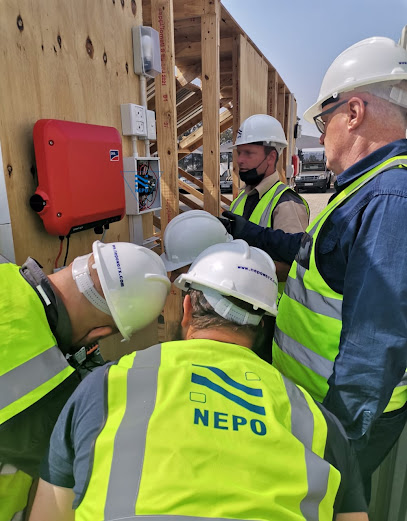
Primary offerings centre on Industry-Specific Training for solar technology, complemented by SMME and Youth Programmes. Within the solar track, trainees encounter a sequence of sector‑relevant courses such as Solar PV GreenCard training, Solar PV System Design, and Solar PV Operations & Maintenance. The programme catalogue also lists National Occupational Certificate recognition for Solar Photovoltaic Standalone Systems Installer (NQF Level 04) and Occupational Certificate for Solar PV Standalone System Mounter (NQF Level 04). These credentials help participants demonstrate competency to potential employers or clients and align with recognised industry standards.
Beyond technical training, Nepoworx emphasises an integrated approach to enterprise development. SMME programmes focus on capacity building through enterprise development (ED) and early-stage supplier development (SD), coupled with market access and networking. The aim is to empower entrepreneurs to build resilient businesses, access markets, improve governance and manage growth more effectively. A distinctive feature is the organisation’s emphasis on inclusivity—recognising the particular challenges faced by women and youth in business and combining personal development with practical business and technical training.
Youth programmes constitute another pillar of the training mix. These include a Youth Entrepreneurship Programme, Work Readiness Training, Digital Work Readiness, internships and work experience placements, as well as gender equality and social inclusion training. The intention is to prepare younger participants for meaningful employment or venture creation, while fostering inclusive participation in the economy. The portfolio suggests a holistic pathway from skills acquisition to practical opportunity and market exposure, aimed at expanding the pipeline of capable, job-ready energy sector professionals.
Several programme elements indicate a broader ecosystem approach. Partnerships and collaboration form part of the value proposition, with Nepoworx positioned as a conduit for industry linkages, mentorship and market access. The organisation notes activity in township communities through initiatives such as the Township Energy Fund, designed in collaboration with external partners to deliver solar energy solutions for local entrepreneurship. This fund aims to reduce overheads for township businesses and promote sustainable growth by integrating energy efficiency with enterprise development.
Evidence from client and participant feedback suggests a strong reputation for practical, high‑quality instruction. Public comments highlight capable presenters and trainers with extensive sector experience, detailed course content, and materials that support confidence and market readiness. Reviewers frequently commend the depth of knowledge, the relevance of examples, and the conducive training environment, reinforcing the centre’s perceived value as a hands-on learning hub for solar PV professionals and aspiring entrepreneurs alike.
- Main services offered: Solar PV training and certification; SMME and enterprise development; youth education and work-readiness programmes; market access and mentorship support; industry partnerships.
- Typical job types or industries addressed: Solar PV installers, system designers, operations and maintenance technicians, and roles within enterprise development and supplier development ecosystems.
- How requests usually work: Courses and sessions can be secured via an online sign‑up process described as “Sign Up for a Session” or “Secure Your Spot”, with programmes that include training, assessments and ongoing professional development.
Practical tips for prospective participants include reviewing the course progression from foundational solar training to more advanced design and maintenance credentials, and noting the wider ED/SD programmes that can support business growth alongside technical qualifications. The training centre is part of a broader network that emphasises accreditation and professional development, with CPD points available for engineers through recognised bodies. Participants may wish to plan for ongoing learning beyond a single course to build a coherent skills pathway and a viable professional profile in the renewable‑energy sector.
In summary, Nepoworx’s Port Elizabeth offering presents a structured pathway for individuals seeking solar expertise alongside practical business development programmes. The combination of industry-standard training, youth and SMME development, and active partnerships positions the centre as a practical hub for turning renewable-energy aspirations into concrete skills and enterprise outcomes within the Eastern Cape region.
Gqeberha
Eastern Cape
South Africa
Sorry, no records were found. Please adjust your search criteria and try again.
Sorry, unable to load the Maps API.
Training Centre Services in Gqeberha, Eastern Cape
Gqeberha, formerly known as Port Elizabeth, hosts a range of training centres that service individuals and organisations across the Eastern Cape. These centres are commonly utilised by employers seeking to upskill staff, job seekers pursuing practical qualifications, and communities aiming to improve workplace competence. The focus tends to be on practical, hands‑on learning that aligns with local industry needs and regional economic priorities.
Typical offerings encompass programmes in vocational trades, business administration, information technology, health and safety, and customer service. Many centres emphasise short courses and modular learning that allow learners to accrue credits incrementally while fitting study around work commitments. Some institutions provide foundational programmes, including essential numeracy and literacy support, to help participants progress to more advanced qualifications. In addition, sector‑specific training related to manufacturing, logistics, agriculture, and hospitality is commonly found, reflecting the diverse economy of the Eastern Cape.
Assessment in these centres generally combines practical demonstrations, project work, and written or online evaluations. The emphasis is on demonstrated competence and the ability to apply skills in real or simulated work environments. Where relevant, learners may undertake familiarisation with industry equipment, software platforms, or workplace processes under guided supervision. Certificates or statements of attainment are typically issued upon successful completion, with some courses allowing units to be recognised towards broader national or provincial qualification frameworks.
Practical considerations for prospective attendees include the availability of flexible learning formats. Part‑time options, weekend classes, and evening sessions are common to accommodate those balancing employment or family responsibilities. Some centres arrange part‑time apprenticeships or workplace‑based learning agreements in collaboration with local employers, enabling hands‑on experience alongside formal study. Accessibility is an important factor; many facilities are located in central districts or business hubs with public transport links, while some offer outreach programmes in nearby towns or townships to broaden reach.
Facilities within training centres are usually designed to mirror real‑world work settings. Classrooms equipped with audiovisual aids support theoretical instruction, while practical rooms or workshops provide space for demonstrations and skill practice. On‑site laboratories or computer suites enable learners to acquire digital literacy and software competencies relevant to contemporary workplaces. Health and safety standards are typically emphasised, with content covering risk assessment, emergency procedures, and compliance with relevant regulations.
For employers, training centre services offer a route to upskill staff, achieve compliance with industry requirements, and improve workforce productivity. Organisations may partner with centres to design customised programmes that align with specific operational needs and performance goals. Learners benefit from instruction that is attuned to local market demands, often with access to mentors or instructors who understand the regional business climate and regulatory landscape.
When selecting a training centre in Gqeberha, several practical considerations come into play. Timetables should be reviewed to ensure compatibility with work commitments, while the scope of programmes should be assessed against career aims or organisational objectives. The reputation of the centre can be gleaned from learner outcomes, accreditation where applicable, and employer partnerships. Learners may also inquire about support services such as guidance on funding options, career counselling, and recognition of prior learning, which can influence progression pathways.
Overall, training centre services in Gqeberha offer practical, locally relevant learning opportunities designed to enhance employability and workplace performance. By emphasising applied skills, flexible delivery, and real‑world preparation, these centres tend to support both individual advancement and business development within the Eastern Cape.