
Striking Energy is a Electronics manufacturer establishment in Blackheath, Western Cape, South Africa
Striking Energy: Infrared Heaters and Inverter‑Friendly Solutions for South Africa
Striking Energy operates as a locally manufactured electronics business specialised in infrared heating products and related components, servicing customers across South Africa from its Western Cape base in Blackheath. Since 2009, the company presents itself as a supplier of energy‑efficient, solar‑friendly heaters that deliver instantaneous warmth with a focus on low running costs and serviceability. The core offering combines residential, commercial and industrial heating with a portfolio of components and accessories for infrared systems.
The main services and product categories are framed around a comprehensive range of infrared heaters designed to suit diverse spaces. The portfolio includes home and living units that combine low glare with inverter compatibility to blend into contemporary interiors. Patio and outdoor heaters are built to withstand weather conditions while delivering reliable heat for hospitality spaces, entertainment areas and open spaces. For larger or more demanding environments, industrial and factory heaters provide heavy‑duty, economical warming for warehouses, assembly lines and workshops. A portable and freestanding line, branded as Ambienté Mobile, offers flexible heat that can be moved to suit changing needs.
In addition to the finished heaters, Striking Energy supplies infrared heating elements for various industries, emphasising the breadth of its in‑house capability. The company markets inverter‑friendly heat solutions, highlighting the intelligent power management features that help prevent inrush damage and maintain energy efficiency. The combination of carbon elements and Miro reflectors is promoted as delivering focused warmth with low electricity draw, a notable consideration for customers using solar or battery configurations.
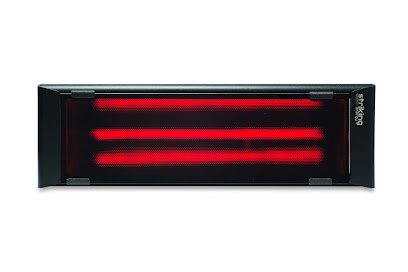
Designed with energy efficiency in mind, the Striking Energy range features several model lines tailored to different applications. The G5 Glow line is characterised by a glass front and a design that reduces glare, making it a stylish indoor or outdoor option. The G5 Gold range is positioned for larger, high‑demand spaces such as open patios, restaurants and large rooms, delivering rapid warmth. For heavy industrial usage, the G5 Ruby (often presented under a Ruby‑red branding) targets warehouses and workshops with robust performance. A slim, low‑glare option exists in the G5 Carbon line, suitable for compact interiors and where inverter compatibility is a priority. The Ambienté Mobile line offers portable heat solutions for flexible placement across spaces.
Customer experience is illuminated by several visitor reviews that emphasise reliability, build quality and service. Review snippets mention durable construction, fast delivery, and a willingness from staff to provide responsive support. One reviewer notes the longevity of a heater element and the unit’s continued usefulness after many years, while another highlights the ease of service and overall product quality. Across reviews, there is an appreciation for local manufacturing, practical engineering, and the reassurance provided by dependable aftersales assistance.
Typical projects and job types inferred from the site include installation and maintenance of home heating systems, outfitting commercial spaces such as restaurants or studios with suitable infrared heat, and supplying components for industrial heating needs. The company positions itself as a supplier that can cater to both turnkey heater installations and the provision of replacement elements, with a note on custom sizes available from its warehouse stock.
What requests usually involve, based on the information available, centres on selecting an appropriate heater range (home, patio, industrial or portable), assessing inverter or solar compatibility, and considering operating costs. The emphasis on solar‑friendly operation and energy efficiency suggests an approach that balances performance with cost management, particularly for customers already utilising solar or battery storage systems.
Practical tips for customers:
- Match the heater range to the space: use G5 Glow for lower glare in interiors or patios, G5 Gold for larger, high‑heat needs, and G5 Ruby for industrial environments.
- Consider inverter compatibility and solar integration to maximise energy efficiency and minimise running costs.
- Preserve serviceability by choosing units described as fully serviceable and supported by local stock of heating elements and components.
- Factor in the total cost of ownership, including potential maintenance needs and the availability of replacement parts from the local supplier.
- Explore the Ambienté Mobile option for flexible heat placement without permanent installation.
Geographic scope includes Blackheath and the wider Western Cape, with a focus on serving customers seeking reliable, locally manufactured infrared heating solutions. The mix of residential, commercial and industrial offerings indicates an ability to adapt to a range of heating requirements, backed by a legacy of South African manufacturing and a commitment to customer‑facing service.
Blackheath
Western Cape
South Africa
Sorry, no records were found. Please adjust your search criteria and try again.
Sorry, unable to load the Maps API.
Electronics Manufacturing Services in Blackheath, Western Cape
Situated in the Western Cape, Blackheath offers a practical hub for electronics manufacturers serving a range of industries, from consumer devices to industrial controls. The area benefits from proximity to coastal ports and regional logistics networks, enabling the movement of components and finished products to and from markets both locally and beyond. Companies in this locality typically provide a blend of design support, prototyping, and scalable production, tailored to the needs of small to mid‑size businesses seeking reliable manufacturing partnerships.
Typical services fall into several broad categories, each designed to complement the lifecycle of an electronic product. Initial engineering and design guidance help clients refine concepts, select suitable materials, and assess manufacturability. Circuit design, schematic capture, and PCB layout considerations are commonly paired with rapid prototyping capabilities so that researchers and product teams can test functionality before committing to full-scale production. In many cases, this stage involves evaluating signal integrity, thermal management, and compliance with relevant industry standards, without asserting specific certification programmes.
For manufacturing, the core offering usually encompasses assembly and testing. Surface mount technology (SMT) and through-hole assembly are standard methods, with the option for mixed‑technology assemblies as required by complex products. Post‑assembly testing ranges from in‑process checks to functional tests and final quality assurance. The aim is to verify that assembled units perform to specification and to identify any manufacturing variances early. Some facilities in the region also provide environmental and reliability testing to simulate real‑world operating conditions, though the extent of such testing varies by partner and project.
Additionally, contract electronics manufacturing services in Blackheath commonly cover supply chain coordination and materials management. This can include sourcing basic components, managing bill of materials (BOM) for production runs, and coordinating inventory to align with production schedules. While detailed supplier lists are not provided here, attention is typically given to material quality, traceability, and lead‑time management to minimise delays in delivery and to maintain cost control across batches.
Support services extend into product lifecycle management, including documentation, version control for hardware designs, and change management to accommodate design updates without disrupting production. Some organisations may offer complementary services such as enclosure design, cable harness fabrication, or simple testing fixtures to support quick iteration and repeatable results in manufacturing lines. The emphasis, however, remains on delivering consistent quality and dependable delivery timelines rather than pursuing large‑scale capital investment where it is unnecessary for the client’s market.
What customers can expect from electronics manufacturing in Blackheath is a practical, location‑based solution that values collaboration and predictable performance. Liaisons with the manufacturing partner typically begin with a project briefing, followed by a feasibility assessment, a defined production plan, and a timeline for milestones. Communication tends to be structured around regular updates, with emphasis on transparency regarding throughput, quality metrics, and any risks to delivery.
Practical considerations for engaging services in this region include understanding the regional supply chain ecosystem, potential lead times for components, and the suitability of local providers for specific product classes. There is usually an emphasis on flexible manufacturing capacity to accommodate small, frequent runs as well as larger batches, ensuring that clients can scale production in response to demand. Companies often balance speed with cost considerations, seeking partners who can adapt to evolving product requirements while maintaining consistent quality across units and batches.
Overall, electronics manufacturing services in Blackheath, Western Cape, present a pragmatic route for product developers and small manufacturers seeking to bring hardware concepts to market with reliable support, clear communication, and a focus on repeatable manufacturing outcomes.