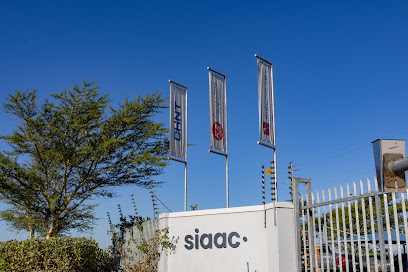
Siaac SA is a Solar energy company establishment in Crossroads, Western Cape, South Africa
Siaac SA: Commercial and Industrial Solar Solutions in South Africa
Siaac SA operates as a solutions-focused player in the commercial and industrial (C&I) solar sector, specialising in end-to-end energy projects across South Africa. Rooted in a practical, transparency-driven approach, the company positions itself as a partner capable of streamlining procurement, financing, and deployment for large-scale solar installations. The emphasis is on delivering customised, high-performance energy systems that support utility-scale ambitions as well as more compact C&I deployments.
Core services focus on creating integrated solar solutions that combine technology, engineering, and logistics. Siaac SA emphasises collaboration with EPCs (engineering, procurement and construction contractors), IPPs (independent power producers), and developers to accelerate the deployment of solar assets. This positioning reflects an emphasis on not only supplying equipment, but also architecting a cohesive project package that spans initial design concepts through to commissioning and ongoing optimisation.
Within the product and solution mix, Siaac SA highlights partnerships with leading brands and customised system design. The business speaks to hybrid energy applications, utility-scale ambitions, and the needs of large infrastructure installations, where reliability and long-term value are priorities. The company’s public materials also reference the deployment of next-generation AI-powered energy solutions and high-performance electrical components, underscoring a commitment to leveraging advanced technology in pursuit of efficiency and performance gains.
Customer experience, as reflected in visitor feedback, centres on a responsive, hands-on service culture. Review commentary highlights an emphasis on strong relationships, practical technical support, and a willingness to “go the extra mile” to resolve site-specific issues. Clients describe onboarding and procurement processes as well-organised, with dedicated account teams and skilled technical personnel guiding projects from order to commissioning. The testimonials also point to competitive pricing, practical advisory support, and reliable, long-term aftercare as strengths of the partnership.
Typical project teams for Siaac SA appear to combine sales, technical specialists, and project coordination professionals. This blend supports fast mobilisation and on-site execution while maintaining focus on the commercial realities of large solar ventures. Given the breadth of services and partner network referenced, the company aims to be a one-stop resource for customers seeking end-to-end solar capability, from design requests through to final handover and ongoing energy management.
In terms of project imagery and outcomes, examples cited in related material include a range of commercial installations such as 300 kW to 1 MW-scale systems and hybrid configurations. While specific site details are not exhaustively listed in public materials, the references to on-time delivery, smooth commissioning, and robust support indicate an operational posture geared toward dependable delivery in dynamic market conditions.
How requests typically work
- Initial inquiry and scope discussion: Clients articulate site realities, energy needs, and project objectives, with Siaac SA aligning on feasible technical and commercial paths.
- Technical review and design concept: A team evaluates site conditions and selects appropriate solar technology, storage, and energy management options.
- Proposal and financing options: End-to-end solutions include procurement, potential financing routes, and deployment plans tailored to the client’s budget and timeline.
- Engineering, procurement, and construction planning: Coordination with EPCs, IPPs, and partners to assemble equipment, logistics, and installation schedules.
- Commissioning and handover: The project moves through installation to operational readiness, with knowledge transfer and aftercare support.
- Ongoing optimisation and support: Post-commission services focus on performance monitoring, maintenance, and potential expansion or upgrades.
Practical tips for customers
- Engage early with a multidisciplinary team that includes technical and financial representatives to clarify constraints and objectives.
- Request a transparent bill of materials, schedule, and risk assessment to understand logistics and contingencies.
- Ask for real-world performance data, including AI-powered optimisation options and their expected impact on efficiency and uptime.
- Clarify aftercare arrangements, including maintenance response times, warranties, and support channels.
- Consider staged deployments or pilots for multi-site projects to validate performance before full-scale roll-out.
Logistics and accessibility
Public materials describe Siaac SA as part of a broader network serving South Africa, with an emphasis on cross-border collaboration across Africa. While specific hours of operation or local visit information for Crossroads in the Western Cape are not listed, the company’s client-centric approach and rapid deployment capabilities suggest accessibility to customers across the region through regional teams and partner networks.
For those evaluating large-scale solar or hybrid energy projects, Siaac SA presents itself as a connected, solution-driven partner capable of aligning sophisticated technology with practical project execution. The emphasis on end-to-end service, strategic partnerships, and a track record of delivering energetic, responsive support positions the firm as a notable player within South Africa’s evolving C&I solar landscape.
Crossroads
Western Cape
South Africa
Sorry, no records were found. Please adjust your search criteria and try again.
Sorry, unable to load the Maps API.
Solar Energy Services in Crossroads, Western Cape
In Crossroads, Western Cape, solar energy companies typically offer a range of services designed to help property owners harness sunshine for power, reduce electricity costs, and contribute to a more sustainable energy mix. These services cover initial assessment, system design, installation, and ongoing maintenance, with attention to local climate conditions and grid regulations unique to the region. Clients can expect a practical, staged approach that guides their decision from concept to operational performance.
Initial consultations focus on understanding the site’s solar potential and energy consumption patterns. Technicians may perform a basic site survey, review electrical infrastructure, and assess shading, roof orientation, and space available for panels and ancillary equipment. The goal is to determine whether a grid-tied system, a hybrid configuration, or an off-grid solution is most appropriate for the property’s needs and budget. In Crossroads, considerations often include the availability of a stable grid connection, the potential for electricity rebates or incentives, and the suitability of local mounting options for roofs or ground-mounted arrays.
Design and engineering services commonly follow the assessment. Solar energy professionals prepare a customised layout that specifies the number of panels, the type of inverter, battery storage (if included), and the wiring topology. The design aims to optimise energy capture during peak sun hours while ensuring safe operation and compatibility with existing electrical panels. Practical considerations such as wind loading, corrosion resistance to coastal air, and local electrical codes are addressed to help ensure long-term reliability.
Installation services encompass the physical mounting of photovoltaic modules, wiring, inverter installation, and connection to the building’s electrical system. In Crossroads, installers usually work with durably mounted panels, weatherproof conduit routes, and properly sized cabling to minimise losses. Testing steps may include insulation checks, system commissioning, and balancing of the array to achieve the expected performance. The process is typically scheduled to limit disruption to daily routines and may require coordination with local authorities for any necessary permit compliance.
After installation, ongoing maintenance and monitoring are often offered. Maintenance checks can include visual inspections of panels and mounting hardware, cleaning to remove dust or debris, and verification of inverter and battery health where applicable. Monitoring services may provide remote data on energy production and consumption, enabling the owner to identify trends, detect anomalies, and optimise settings over time. Routine servicing intervals help sustain performance and extend equipment life in the Western Cape’s varied climate.
Financial and practical considerations form an important part of the customer journey. Prospective buyers should consider total ownership costs, potential savings on electricity bills, and expected return on investment over the system’s lifespan. Warranties on panels, inverters, and batteries, as well as the availability of local support, are common discussion points. It is also prudent to evaluate maintenance obligations, potential retrofits, and the compatibility of the system with future changes in energy consumption or grid policies in South Africa.
Customers can anticipate a transparent, consultative process that explains how solar energy systems operate in real-world conditions. While specific offerings vary by provider, the core services revolve around assessing suitability, designing an efficient configuration, executing careful installation, and delivering reliable performance through ongoing maintenance and monitoring. In Crossroads, these practices are shaped by climate, regulatory framework, and the practical realities of residential, commercial, or light industrial installations—each tailored to deliver dependable solar power and greater energy resilience.