RunOnSolar is a Solar energy company establishment in Midrand, Gauteng, South Africa
Gauteng
South Africa
Sorry, no records were found. Please adjust your search criteria and try again.
Sorry, unable to load the Maps API.
Solar Energy Services in Midrand, Gauteng
In Midrand, Gauteng, solar energy providers typically offer end-to-end solutions for residential, commercial, and light industrial properties. The emphasis is on practical, reliable systems that maximise daytime energy generation while reducing dependence on the conventional grid. From initial site appraisal to ongoing maintenance, the focus is on delivering a customised approach that suits the local climate, roof profiles, and energy requirements.
Initial assessments usually begin with a site visit to evaluate roof orientation, shading from nearby structures, and the structural capacity of the building. Professionals commonly assess the property’s electricity usage patterns, peak demand periods, and the potential for partial or full battery storage. The goal is to determine an appropriate system size and configuration that aligns with the customer’s budget and energy goals, while ensuring compliance with local regulations and grid connection rules.
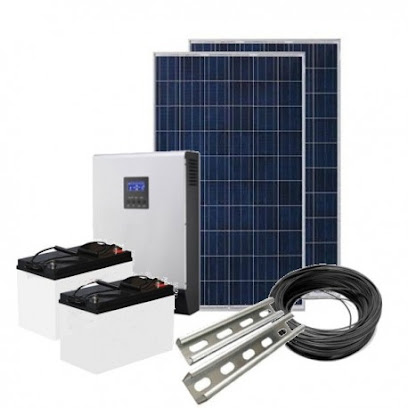
Design and engineering services are then undertaken to create a tailored solar solution. This typically includes selecting photovoltaic modules, inverters, mounting hardware, and, where applicable, energy storage systems. The design considers ease of maintenance, system accessibility, cable routing, and weather exposure. For Midrand properties, guidance on roof mounting and possible ground-mounted options is common, along with considerations for future expansion or changes in energy use.
Installation work encompasses several standard steps: securing the mounting framework, properly orienting and wiring PV modules, configuring inverters, and integrating any battery storage or smart metering components. The process prioritises safety, code compliance, and high-quality connections to minimise potential losses. In many cases, the installation team coordinates with the electrical distribution network operator to ensure a streamlined grid-tied connection or to plan for stand-alone operation where required.
Commissioning and performance testing follow installation. Systems are checked for correct voltage, current, and efficiency, with attention to safety clearances and protection devices. After commissioning, customers can expect a period of monitoring to confirm that predicted energy generation aligns with actual output. Warranties on both modules and inverters, along with service agreements for periodic inspections, are commonly offered to support long-term reliability.
Maintenance and after-sales support are important aspects of solar energy services in the Midrand area. Regular inspection of panels for dirt and debris, cleaning when needed, and checks of electrical connections help sustain performance. Battery storage systems, if included, require periodic health checks and potential firmware updates. Some providers may offer remote monitoring to detect anomalous performance, enabling prompt corrective actions without intrusive site visits.
Practical considerations for customers include roof suitability and space planning, as well as the structural integrity needed to support a solar array. Local weather patterns, with abundant daylight in Gauteng, favour solar generation, but seasonal shading and temperature effects should be accounted for in the design. Financing options, where available, can help spread the capital cost, while guidance on potential rebates, tariffs, or net metering arrangements helps set realistic payback expectations. A clear service agreement outlining response times, maintenance frequency, and included parts and labour provides reassurance for ongoing operation.
In summary, solar energy companies operating in Midrand typically deliver a comprehensive package from initial audit through to installation and ongoing care. The resulting systems aim to deliver reliable, clean electricity with flexible configurations that accommodate future growth, while addressing the practical realities of local building types, climate, and regulatory requirements.