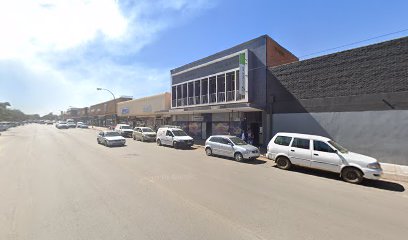
Nashua Lichtenburg is a Solar energy equipment supplier establishment in Lichtenburg, North West, South Africa
Lichtenburg
North West
South Africa
Sorry, no records were found. Please adjust your search criteria and try again.
Sorry, unable to load the Maps API.
Solar Energy Equipment Supplier Services in Lichtenburg, North West
In Lichtenburg, North West, solar energy equipment suppliers play a pivotal role in helping homes, farms, and small businesses transition to reliable, renewable power. The region’s climate, with ample sunshine for most of the year, supports a growing market for solar photovoltaic (PV) systems, battery storage solutions, and related components. Suppliers typically offer a mix of products and services designed to meet local energy needs, environmental goals, and budget considerations.
Customers can expect extensive product ranges that cover the main stages of a solar installation. This often includes PV modules (panels) designed for residential and commercial use, racking and mounting hardware suitable for a variety of rooftops, and inverters that convert direct current into usable alternating current. Many suppliers also stock energy storage options, such as lithium or lead-acid batteries, alongside charge controllers, cables, and monitoring hardware. The emphasis is on practical, durable equipment that can withstand regional weather conditions and operate efficiently for many years.
Beyond hardware, solar equipment suppliers in Lichtenburg typically offer advisory and planning support. This involves helping customers assess energy demand, space constraints, and possible improvements to energy efficiency before selecting equipment. Basic calculations, such as estimating annual energy production based on panel wattage and available roof area, often guide initial decisions. On larger projects, discussions may extend to system sizing, panel orientation, and the feasibility of hybrid arrangements that combine solar with existing grid supply or backup generators.
Site surveys are a common step in the service process. A representative may visit the property to inspect roof structure, shading, and mounting options, as well as to confirm electrical compatibility with the building’s distribution board. Accurate measurements and safety considerations underpin successful installations, with attention paid to weatherproofing, cable routing, and protective enclosures. The information gathered during surveys informs a tailor-made solution that aligns with the customer’s energy goals and budget.
Installation services often follow a structured sequence. After agreeing on components and design, the supplier or authorised installation partner schedules delivery of equipment and coordinates a time for installation. Qualified installers typically handle mounting, electrical connections, inverter configuration, and system commissioning. Post-installation tasks may include system testing, performance verification against expectations, and guidance on basic operation and maintenance. It is common for suppliers to provide initial training on monitoring dashboards and safety practices to ensure users can interpret data correctly and respond to alerts if present.
Maintenance and aftercare represent an important dimension of the offering. Routine inspections, cleaning of modules, and checks of electrical connections help maintain system efficiency. Some suppliers provide annual service plans or maintenance packages, offering priority support, fault diagnosis, and component replacement when required. In rural or peri-urban parts of the North West, response times and on-site support can be influenced by travel distances, weather, and the availability of skilled technicians.
Customers should consider practical factors when engaging solar equipment suppliers in Lichtenburg. Local climate patterns, grid connection rules, and building regulations can shape project design and permitting requirements. Warranty terms, product certifications, and the availability of spare parts are important considerations for long-term reliability. While general performance expectations are reasonable to outline, specifics such as exact yield figures or supplier names are best discussed with a local consultant who understands the regional landscape and regulatory environment.
- Product range: PV modules, inverters, mounting systems, batteries, charge controllers, and monitoring equipment.
- Consultation: energy assessment, system sizing, and design planning.
- Site surveys: evaluation of structure, shading, and electrical compatibility.
- Installation: safe, compliant mounting and electrical commissioning.
- Maintenance: routine checks, cleaning, and service plans.