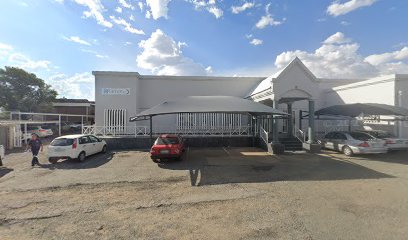
Moqhaka Solar Academy is a Solar energy equipment supplier establishment in Kroonstad, Free State, South Africa
Kroonstad
Free State
South Africa
Sorry, no records were found. Please adjust your search criteria and try again.
Sorry, unable to load the Maps API.
Solar energy equipment supplier services in Kroonstad, Free State
In Kroonstad, a town nestled in the Free State province of South Africa, solar energy equipment suppliers provide a range of services designed to support residential, commercial, and agricultural energy needs. The focus is on practical solutions that help clients reduce reliance on grid power, lower running costs, and increase energy security through reliable photovoltaic (PV) systems and related technology.
Typical services begin with a consultation to assess energy consumption, site conditions, and future scalability. Customers can expect guidance on suitable solar PV panels, inverters, mounting systems, and battery storage options. Suppliers often help determine the most cost-effective configuration for the location, taking into account climate, shade, roof structure, and space available for ground-mounted installations. The aim is to translate energy goals into a feasible system design that aligns with budgeting and maintenance expectations.
Product sourcing and product ranges form the core of what solar equipment suppliers provide. Local and regional inventories usually include polycrystalline and monocrystalline panels, string and microinverters, hybrid inverters, and battery storage solutions tailored to South Africa’s solar profile. In addition, mounting hardware, wiring, protective devices, and monitoring hardware are offered to support a complete installation. Where applicable, suppliers present a curated selection that balances performance with reliability, weather resistance, and the ability to withstand local environmental conditions.
Installation and project execution contexts vary. Some suppliers operate as sole providers, offering end-to-end services from design to commissioning, while others collaborate with accredited installers. Customers should expect a structured installation process that includes system design confirmation, equipment delivery, on-site mounting, electrical connections, and safety checks. Professional companies typically perform load assessments, electrical diagrams, and compliance checks to ensure adherence to local regulations and electrical standards. After installation, commissioning and performance testing confirm that the system operates as intended.
Maintenance and aftercare are key to long-term performance. Routine maintenance might involve panel cleaning, inspection of mounting hardware, wiring verification, and inverter updates where applicable. Suppliers commonly offer service packages that cover preventive maintenance visits, fault diagnostics, and guidance on optimising battery use. In some cases, remote monitoring solutions enable ongoing performance tracking, alerting owners to potential inefficiencies or faults. Clear guidance on how to interpret system data helps users manage energy generation relative to consumption.
Practical considerations for clients include understanding local energy policies and grid connections. In Kroonstad, as elsewhere in South Africa, the compatibility of a solar installation with grid-tied or off-grid configurations is a frequent topic. Sizing the system to meet peak demand, aligning battery storage with daily usage patterns, and planning for seasonal variations are important steps. Clients are advised to consider warranty terms, product lifespans, and the availability of parts and service locally. Accessibility, lead times for equipment, and the ability to source spare components quickly can influence supplier choice, particularly for remote locations or smaller towns within the Free State.
Operational transparency is another important factor. Prospective customers typically receive written estimates detailing equipment specifications, expected energy output, and installation timelines. They may also receive guidance on financing options, government incentives, or utility programmes that could support project viability. While suppliers in the region strive to present accurate information, figures such as exact performance curves or price lists are generally treated as indicative, with final quotes contingent on site assessments and chosen configurations.
- System design consultation and energy needs assessment
- Product sourcing for PV panels, inverters, batteries, and mounting hardware
- Installation supervision or turnkey installation services
- Commissioning, testing, and performance verification
- Maintenance, inspections, and remote monitoring options
- Advice on regulatory requirements, warranties, and aftercare