MENDAZ SOLAR is a Solar energy company establishment in Cape Town, Western Cape, South Africa
Mendaz Solar: Comprehensive Solar Solutions in Cape Town and the Western Cape
Located in Cape Town, Mendaz Solar is presented as a full-spectrum solar energy company specialising in end-to-end solar installations along with manufacturing, distribution, maintenance and electrical services. The organisation emphasises its Western Cape focus, with experience spanning residential, commercial and industrial sectors. The business highlights its long-standing presence, technical authority and commitment to compliant, performance-driven solar solutions designed to withstand South Africa’s conditions.
Key offerings begin with in-house manufacturing, enabling control over component quality and supply chain reliability. Local manufacturing covers solar street lights, combiner boxes, inverters and lithium battery solutions. This capability is positioned as supporting customised requirements for a range of projects, from homes to larger commercial ventures, while contributing to faster turnaround times and consistent quality control. In parallel, Mendaz Solar operates a distribution arm supplying solar panels, batteries (including refurbished options), inverter gear, street lighting, mounting structures, geysers, pumps and related accessories to installers, businesses and end users across South Africa.
The installation service is described as professional and safety-focused, applying design best practices and local regulatory compliance. Projects are stated to span residential systems, commercial and industrial installations, and larger solar plant assemblies, with tailoring to site conditions and energy needs. The company also offers solar heat pumps, backup power solutions, solar geysers and solar pumps, as well as solar-powered EV charging infrastructure where appropriate.
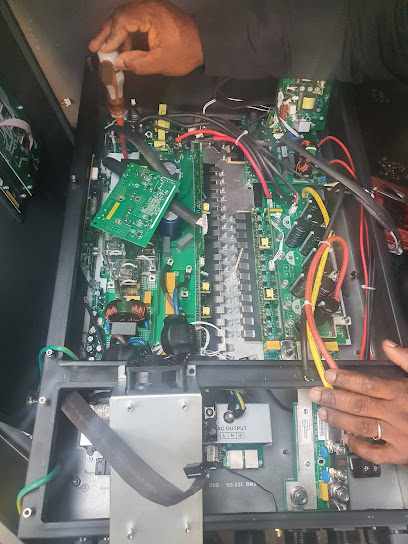
Maintenance features prominently in Mendaz Solar’s value proposition. Preventative and corrective maintenance plans are designed to sustain system performance over a 20–25 year lifespan, with services such as panel cleaning, performance checks, fault diagnosis, scheduled preventative maintenance and smart remote monitoring. A dedicated 24/7 Repair Clinic is highlighted, offering rapid diagnostics and repairs for urgent situations, including inverter repairs (on-site or workshop), battery diagnostics and emergency system recovery. Electrical services extend beyond solar installations, covering house wiring, repairs, LED lighting upgrades, new installations and Certificates of Compliance (CoC), as well as retrofit work and switchboard upgrades.
Customer experience is shaped by a transparent, technically grounded approach. The installation process follows a clearly defined sequence: initial consultation and energy assessment; system design and quotation; professional installation; testing and commissioning; and ongoing support and maintenance. The firm asserts compliance with national (SANS) and local (SSEG) standards, with CoCs and SSEG registrations as standard components of Western Cape installations. This emphasis on regulatory adherence appears to aim at minimising post-installation issues and fostering trust with clients and municipal authorities alike.
Reviews from clients underscore several practical aspects of Mendaz Solar’s service. Customers frequently cite prompt handling of SSEG registrations and municipal applications, streamlined processes, and amicable, responsive support. The 24/7 Repair Clinic is repeatedly referenced as a major convenience, reducing downtime and providing reassurance for critical systems. Several posts mention the availability of refurbished inverters and lithium batteries as cost-conscious options, highlighting Mendaz Solar’s willingness to offer affordable alternatives without compromising service quality. Technical competence and solid workmanship are recurring themes in customer feedback, with staff reported as friendly, professional and helpful in selecting suitable solutions.
Typical job types described in the provided materials include residential solar installations, commercial and industrial systems, backup power configurations, solar geysers and pumps, solar heat pumps, and even solar-related electrical work. The service scope also encompasses technical drawings and system design, remote technical support, and ongoing product compatibility reviews to assist with upgrades or system maintenance. The company’s presence in Camps Bay, Durbanville, Parklands, Rondebosch, Kenilworth, Tokai and surrounding areas indicates a broad Cape Town footprint and a readiness to handle coastal and urban environments.
Practical tips for customers based on the available information include: obtain a clear, itemised quotation that spells out component costs and labour with ROI implications; verify CoC and SSEG registration details for local compliance; consider the option of refurbished inverters or batteries if budget is a constraint, while ensuring warranties are understood; plan for regular maintenance and monitoring to sustain performance and longevity; and keep in mind the 24/7 Repair Clinic as a resource for urgent faults or component failures.
Overall, Mendaz Solar presents a holistic approach to solar energy in the Western Cape, integrating manufacturing, distribution, installation, maintenance, repairs and electrical services under one roof. The combination of regulatory compliance, a long track record of installations, and a customer-focused repair capability appears to deliver a durable and consultative experience for both homeowners and business clients seeking reliable solar energy solutions in Cape Town and beyond.
Cape Town
Western Cape
South Africa
Sorry, no records were found. Please adjust your search criteria and try again.
Sorry, unable to load the Maps API.
Solar Energy Services in Cape Town: What to Expect from a Western Cape Provider
Solar energy providers in Cape Town typically offer end-to-end services that guide customers from initial assessment through to ongoing system support. The process starts with a site evaluation to determine roof orientation, shading, and available space, alongside an estimate of expected energy production based on local solar irradiance. This initial review helps identify suitable system sizes and configurations, taking into account household or business energy patterns, peak demand, and any planned electrical upgrades.
Design and system types commonly available include grid-tied solutions that operate alongside the conventional electricity supply, off-grid arrangements with battery storage for continued operation during outages, and hybrid systems that combine elements of both. For many installations, a solar photovoltaic (PV) array is paired with a modern inverter and one or more batteries to store excess energy for use during evenings or cloudy days. In businesses with higher daytime electricity use, larger commercial-scale arrays and modular storage options may be proposed to optimise daytime generation and reduce peak demand charges.
Installation services cover mounting, electrical integration, and safety compliance. Panels are typically affixed to roof structures or mounted on ground frames, with cable routing carefully planned to minimise losses and protect against weather. Inverters convert the captured DC electricity into usable AC power, while comprehensive wiring ensures compatibility with the existing electrical system. Some projects also include optimised energy management hardware and software to prioritise critical loads and maximise self-consumption of produced energy.
Maintenance and aftercare form a regular part of the offering. Routine checks verify panel cleanliness, connection integrity, and inverter health, while system performance monitoring helps identify underperformance or faults. Inverter firmware updates, battery health assessments, and periodic professional inspections are commonly provided as part of an ongoing service package. Warranties on panels, inverters, and storage equipment are typically explained during the planning stage, with clear guidance on expected lifespans and replacement policies.
Financial considerations and procurement approaches vary, yet many customers in Cape Town explore options to finance solar projects. This can include upfront purchases, staged payments for larger installations, or lease and power purchase agreement arrangements. Providers often assist with project budgeting, estimating potential energy savings, and evaluating the return on investment under local electricity tariffs and incentives. While specific pricing is not guaranteed, practical recommendations focus on aligning system capacity with achievable energy reductions and reasonable payback periods.
Practical considerations in the Western Cape include climate resilience and longevity. Local installers usually assess roof durability, wind load, and the potential for hail or heavy weather exposure, ensuring that mounting systems are robust for coastal and urban environments. Electrical work follows safety protocols to minimise disruption to occupants and nearby neighbours, with attention to noise, dust, and the safe disposal of any old equipment. Customers commonly receive guidance on energy efficiency first—such as appliance choice and insulation improvements—to maximise the benefits of a solar upgrade.
Customer expectations are typically shaped by transparent communication about timelines, any required permits, and the handover of operation manuals. Post-install support may cover performance verification, assistance with grid interaction during outages, and advice on seasonal maintenance. Overall, solar energy services in Cape Town aim to provide a practical, reliable path to reduced electricity costs, greater energy independence, and enhanced resilience for homes and businesses across the Western Cape.