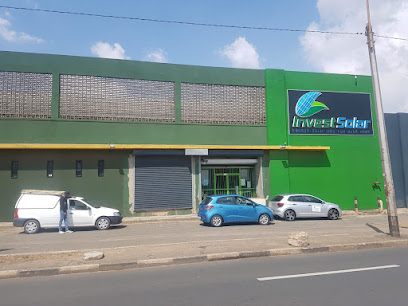
Invest Solar – Head Office is a Solar energy equipment supplier establishment in Johannesburg, Gauteng, South Africa
Johannesburg
Gauteng
South Africa
Sorry, no records were found. Please adjust your search criteria and try again.
Sorry, unable to load the Maps API.
Solar energy equipment supplier services in Johannesburg, Gauteng
In Johannesburg, Gauteng, solar energy equipment suppliers play a pivotal role in delivering sustainable power solutions to homes, businesses, and institutions. The service offering typically encompasses a full spectrum of products and support, from initial advice and system design through to installation, commissioning and ongoing maintenance. Customers can expect access to a range of solar photovoltaic (PV) components, balance-of-system parts, energy storage options, and related electrical hardware, all sourced to meet local codes and climate considerations.
Consultation and system design form the foundation of most engagements. Suppliers often provide on-site or remote assessments to determine electricity usage patterns, site conditions, and potential roof suitability or ground-mounted opportunities. This stage aims to establish an appropriate system size, panel orientation, shading analysis, and the integration of energy storage where it fits the user’s tariff structure and resilience requirements. In Johannesburg, where daytime solar yield is strong but grid reliability may vary, the emphasis tends to be on achieving a practical mix of generation capacity and storage to smooth consumption and reduce exposure to peak tariffs.
Product ranges typically include crystalline PV modules, inverters, mounting systems, charge controllers, batteries or other energy storage solutions, and monitoring hardware. Suppliers also stock peripherals such as cabling, disconnects, fuses, safety equipment, and protective housings. A key consideration for Johannesburg buyers is the climatic exposure, including heat and potential hail, which influences equipment selection and warranties. For many customers, the choice between grid-tied systems, off-grid configurations, or hybrid solutions is guided by local utility requirements, incentives, and the desired level of energy independence.
Installation and commissioning are major milestones in the customer journey. Trained technicians oversee the safe assembly and electrical connection of PV arrays, inverters, and storage units, ensuring compliance with South African electrical standards and municipal approvals where applicable. The process typically includes mounting or racking installation, wiring, protective earthing, performance testing, and a final commissioning sign-off. After installation, a handover often includes basic system operation guidance and documentation on warranties, maintenance schedules, and recommended inspections to preserve performance over time.
Maintenance and monitoring form an important ongoing service. Regular inspections help detect loose connections, corrosion, or degradation in performance. Monitoring platforms provide real-time or near-real-time visibility into energy production, consumption, and storage status, enabling informed operational decisions and preventative maintenance. Some suppliers may offer remote monitoring services or optional on-site visits to address alerts or performance anomalies. In a climate like Johannesburg’s, where heat can affect efficiency, attention to thermal management and equipment cleanability is frequently emphasised.
Practical considerations for prospective customers include understanding upfront costs, available financial incentives, and the expected return on investment. Locally, the suitability of a system depends on electricity usage patterns, roof or land availability, and the reliability of the grid. Access to qualified installation professionals, local after-sales support, and clear warranty terms are important factors. It is advisable to request detailed specifications, including the performance ratings of panels and inverters, the capacity of storage solutions, and the expected resilience under local weather conditions. Suppliers typically provide guidance on the most economical configurations for long-term savings while ensuring compliance with safety and regulatory standards.
Overall, solar equipment suppliers in Johannesburg offer a practical pathway to cleaner energy, combining expert assessment, product breadth, professional installation, and reliable upkeep. The resulting systems vary in complexity—from simple grid-tied setups to more comprehensive hybrid arrangements—yet share a common objective: to improve energy security, reduce dependence on the grid, and foster sustainable operation within Gauteng’s urban environment.