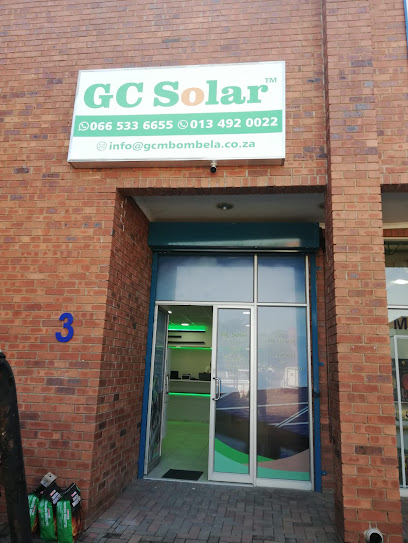
GC Solar Mbombela is a Solar energy company establishment in Mbombela, Mpumalanga, South Africa
GC Solar Mbombela: Summary of Services and Customer Experience
GC Solar, established in 2011, positions itself as a regional leader in the South African photovoltaic sector with a broad regional footprint and a strong emphasis on sustainability. The company describes its offering as more than just solar panels, supplying a complete range of solar project components to support homes, businesses, and larger installations. The emphasis in their material is on dependable stock, efficient logistics, and ongoing support, with a preference for trusted quality brands across product lines.
In terms of services, GC Solar presents a multifaceted approach to solar energy. Core activities include consulting and project guidance, which involves expert advice and customised support for projects of various scales. The company also highlights trusted product supply, sourcing high-quality components from global partners to ensure durability and reliable performance. Complementing supply, GC Solar offers training and knowledge sharing through interactive sessions designed to upskill teams and installers. Ongoing technical support is emphasised as a means to minimise downtime and maintain system reliability. Taken together, these elements describe a service model that blends advisory, procurement, education, and hands-on technical assistance.
GC Solar’s residential service offerings focus on enabling homeowners to switch to solar energy, with packages that typically feature solar PV modules, inverters, batteries, and energy management components. The materials describe a complete residential pathway—from expert consultation through professional installation and ongoing support—intended to lower energy bills, enhance energy independence, and potentially raise property value. The residential narrative also notes the availability of integrated systems, including options such as EV charging stations and hybrid inverters, aimed at delivering reliability in African conditions. Warranties and quality assurance are highlighted as part of the customer proposition.
On the commercial side, GC Solar markets scalable solar energy systems designed for business needs across Africa. The commercial product suite mentioned includes high-output PV modules, advanced inverter technology, and robust storage solutions, with installations configured for both grid-tied and off-grid scenarios. These offerings are framed as enabling cost reductions, reduced carbon footprints, and improved energy independence for facilities such as manufacturing plants, office complexes, farms, and retail centres. The company presents itself as a partner capable of managing design, supply, and after-sales support for commercial deployments, with a focus on ROI and minimal disruption to operations.
Projects and system types described in the materials include turnkey and modular solutions, with the ability to implement complete systems or individual components to meet project requirements. The content also signals that GC Solar maintains a supplier-neutral stance regarding technology, while still emphasising access to premium brands and flexible logistics to support timely site delivery and installation.
From a workforce and collaboration perspective, GC Solar operates an installer programme designed to expand its network of certified installers. The process is described as a straightforward three-step path: application, vetting, and approval, after which installers receive an identification number and are listed as approved on the company website. Benefits highlighted for partner installers include increased client opportunities, enhanced credibility, access to bulk purchase pricing, and financing options to support client projects. The programme also sets out prerequisites, such as active GC Solar accounts, qualified electricians, labour department registration, completion of PV Green Card Training, and installation standards aligned with GC Solar’s quality expectations.
Typical job types and service flows
- Residential installations for homes, with a focus on solar panels, inverters, batteries, and energy management, plus optional EV charging and hybrid systems.
- Commercial deployments for businesses, factories, offices, farms, and retail sites, featuring scalable configurations and options for storage and grid interaction.
- Turnkey solutions and modular component provision, including full package kits and the ability to tailor systems to project size.
- Consultation, design, supply, installation, and ongoing technical support as a continuous service loop.
- Installer partnerships with a formal onboarding process and ongoing performance expectations.
Practical tips for customers
- Obtain a detailed, written quotation that itemises products, warranties, installation costs, and any inclusions such as installation or delivery fees.
- Clarify pricing consistency if promotions are advertised to avoid discrepancies at confirmation or invoicing stages.
- Request a clear breakdown of components and brands to understand performance expectations and warranty coverage.
- Verify installer credentials and registrations as part of the installer programme requirements if engaging third-party personnel.
- Review service commitments, including timelines for delivery, installation, testing, and post-installation support or maintenance packages.
Hours and locations
The provider’s contact information lists multiple regional points and hours. The Midrand head office operates Monday to Friday, typically from 08:00 to 17:00. The Cape Town office reports similar weekday hours, with slightly earlier start times in some listings (around 07:30). A retail store is mentioned in Centurion with weekday hours generally from 07:00 to 16:00 and Saturday mornings. While specific Mbombela (Nelspruit) details are not explicitly stated in the supplied content, the company’s regional footprint and Mbombela categorisation imply service capability within Mpumalanga province and neighbouring areas.
GC Solar also notes active stores and training centres across South Africa, including Johannesburg, Cape Town, and regional growth into neighbouring countries, with an emphasis on rapid logistics to move orders from warehouse to site. Prospective customers can expect a blended model of product supply, project guidance, and hands-on support, reflecting the company’s stated aim to empower Southern Africa’s transition to clean energy.
Mbombela
Mpumalanga
South Africa
Sorry, no records were found. Please adjust your search criteria and try again.
Sorry, unable to load the Maps API.
Solar Energy Services in Mbombela, Mpumalanga
In Mbombela, Mpumalanga, solar energy companies provide a comprehensive range of services designed to maximise clean power generation while reducing electricity dependence. Projects typically begin with a site assessment to gauge sun exposure, shading, roof structure, and any planning considerations. This initial step informs the design of a tailored solar solution that aligns with daily energy needs and budgetary constraints.
Design and engineering are central to the offering. Experienced teams model potential energy yield based on local climate data, panel orientation, and system size. The resulting plan outlines the type and arrangement of photovoltaic (PV) panels, mounting methods for both pitched roofs and ground installations, and the choice of balance‑of‑system components such as inverters, cables, protection devices, and mounting hardware. In Mpumalanga, where high solar irradiance is common, designs often emphasise durability and ease of maintenance to withstand regional weather conditions.
Installation is executed by trained technicians who work to industry standards for electrical safety and structural integrity. Typical installations may include grid‑tied connections that feed into the existing electricity system, or off‑grid setups with battery storage to provide autonomy during outages. Hybrid arrangements, combining grid input with storage, are also common, enabling daytime generation to charge batteries for use after sunset. The process generally involves rooftop or ground‑mount mounting, electrical wiring routes, inverter placement, and on‑site commissioning to verify performance and safety.
Systems maintenance and monitoring form a regular part of the offering. Routine inspections aim to identify loose connections, corrosion, or shading issues that could reduce efficiency. Cleaning of panels, tightening of fixings, and firmware updates for inverters may be included as part of service plans. Many companies provide remote monitoring dashboards that track energy production, consumption patterns, and battery state‑of‑charge, enabling quick fault detection and performance optimisation without frequent site visits.
Water and air heating solutions sometimes enter the service mix, with solar thermal options designed to complement PV installations. These provide heat for domestic hot water or space heating, contributing to overall energy efficiency. Where appropriate, customers may receive guidance on integrating solar with existing systems, including compatibility with electrical panels and safety mechanisms required by local regulations.
Practical considerations in Mbombela include possible shading from nearby trees or structures, as well as seasonal variations in sun exposure. The selection of equipment often balances upfront cost with long‑term savings, including anticipated reductions in utility bills and potential increases in property value. Local installers typically assist with the administrative steps necessary for compliance, such as electrical permits and any required approvals from municipal authorities or utility operators. They also address maintenance schedules, warranty terms, and the expected lifespan of components like PV modules and inverters, emphasising the importance of qualified installers for safety and performance.
Customer experience in this market usually centres on clear communication about system capabilities, realistic yield expectations, and transparent timelines. While exact product names, prices, and supplier lists are not universally fixed, the emphasis remains on reliable equipment, appropriate system sizing, and professional support throughout the project lifecycle. In Mbombela, a well‑executed solar installation is viewed as a practical route to stabilising energy costs, increasing resilience, and supporting community access to sustainable power.