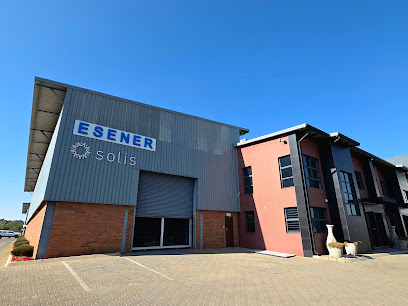
ESENER South Africa is a Solar energy company establishment in Noordwyk, Gauteng, South Africa
ESENER South Africa: Solar energy solutions for homes, businesses and industry
ESENER South Africa operates as a notable player in the renewable energy sector within Noordwyk, Gauteng, offering a range of energy storage and solar power components designed to support residential, commercial and industrial applications. The company presents itself as a manufacturer and distributor with a focus on reliable systems backed by responsive after-sales service. Its portfolio includes inverters, batteries and related solar hardware, with an emphasis on scalable solutions that can be adapted to different energy needs.
From the information available, the organisation highlights three core areas of activity. First, residential solar products are positioned to deliver quality at an attainable price, supporting households that aim to improve energy independence and reduce electricity costs in both rural and urban contexts. Second, commercial and industrial demands are addressed with high-voltage solutions intended for factories, warehouses, mining operations and agricultural enterprises. These products are framed as tools to stabilise energy costs, optimise operational efficiency and support sustainability goals. Third, ESENER presents itself as a supplier of essential solar components—particularly inverters and batteries—along with access to Tier-1 solar panels from well-known manufacturers, positioning the company as a turnkey source for solar deployments.
The company’s value proposition includes competitive pricing, practical expert advice, and a commitment to customer service. While specific pricing details are not disclosed in the public materials, the emphasis remains on making solar energy financially accessible while offering guidance to help customers select suitable equipment for their particular contexts. The service narrative also stresses ongoing support after purchase, suggesting a model that extends beyond initial installation to maintenance and troubleshooting as needed.
ESENER’s product range appears to cover both residential and commercial needs, with a focus on energy storage solutions. The residential line is described as providing premium quality at an affordable price, supporting energy independence and cost reduction for households. On the commercial side, high-voltage products are framed as enabling stabilisation of energy costs and improved efficiency in larger scale operations. The company also notes its role as an official distributor for specific inverter brands and as a manufacturer of its own ESENER and Growtech solar products, indicating a diversified supply chain and a degree of vertical integration.
Customer experiences shared by visitors reflect a strong emphasis on after-sales support and practical assistance. Several reviews commend timely service to resolve inverter and battery issues, with technicians or support staff addressing problems while customers waited in person. Positive anecdotes highlight responsiveness, repair turnaround times and the convenience of collecting repaired equipment. Such feedback suggests a service model that values rapid problem resolution and hands-on help for both residential and small-scale commercial customers.
However, there are also reviews that indicate service variability, particularly around equipment setting configurations and device parameter adjustments. Some customers report challenges with battery management systems (BMS) and parameter settings, noting that specific technical guidance is required to align devices with expected performance. In these instances, the insight from the reviews underscores the importance of expert configuration and clear communication between customers and the support team to resolve complex issues effectively.
Typical project types implied by the offerings include installing home solar systems with storage, upgrading or replacing inverter and battery components for residential use, and implementing high-voltage storage and power solutions for industrial facilities such as factories, mining sites and agricultural operations. The company’s online presence suggests a straightforward process for getting started: explore available products, consult solar experts for tailored recommendations, and proceed to installation and ongoing support as required. Requests are generally framed around product selection, system sizing, and after-sales service needs rather than product-specific marketing claims.
Practical tips for potential customers include assessing local electricity usage patterns to determine appropriate storage capacity, considering both the immediate cost benefits and the long-term reliability of equipment, and seeking clear guidance on BMS and inverter settings to avoid early faults. For those in Noordwyk and the wider Gauteng region, it is sensible to verify that the selected components are compatible with local grid requirements and that installation complies with relevant regulations. When planning a visit or service interaction, customers may benefit from contacting the support team ahead of time to confirm available technicians and approximate service times, given the emphasis on efficient after-sales assistance in customer feedback.
In summary, ESENER South Africa presents itself as a comprehensive source for solar energy equipment and energy storage solutions, with a stated focus on residential affordability, commercial scalability and responsive after-sales support. For customers in Noordwyk and surrounding Gauteng areas, the company appears to offer practical, experience-based guidance, a breadth of product options, and a service ethos aimed at sustaining performance post-installation.
Noordwyk
Gauteng
South Africa
Sorry, no records were found. Please adjust your search criteria and try again.
Sorry, unable to load the Maps API.
Solar energy services in Noordwyk, Gauteng
In Noordwyk, Gauteng, solar energy providers offer a range of services designed to help businesses and households reduce reliance on conventional electricity networks. Local companies typically focus on the assessment, design, installation and ongoing management of photovoltaic (PV) systems, along with options for energy storage and monitoring. The result is a customised solution that aims to maximise solar contribution while addressing practical considerations such as roof condition, shading, electrical capacity and regulatory compliance.
Site assessment forms the initial stage of a typical project. Technicians evaluate the available roof area, orientation, tilt, shading from trees or neighbouring structures, and the structure’s ability to bear the added load. They also review the property’s electrical distribution, including main supply details, consumption patterns, and possible interconnection points for grid-tied systems. This planning step helps determine feasible system size, component specification and estimated energy yield relative to demand.
Design and engineering follow the assessment, resulting in a customised PV layout. The design considers the choice between grid-tied, off-grid or hybrid configurations, contingent on the client’s goals and local regulations. Components commonly specified include solar modules, inverters, mounting hardware and cabling. Where storage is chosen, batteries and accompanying management systems are incorporated to smooth supply during periods of low sun or outages. System efficiency, expandability and safety features are weighed during this phase, alongside considerations for heat, ventilation and weather exposure typical to the Gauteng climate.
Installation is conducted by trained teams who prioritise quality and safety. Work usually proceeds with temporary disconnection of circuits as needed, followed by mounting of modules, wiring to inverters, and integration with the building’s electrical system. Quality control checks ensure electrical continuity, insulation integrity, and proper grounding. In many cases, installers will also carry out a test run to verify performance and identify any potential bottlenecks before handover.
Ongoing management encompasses maintenance, monitoring and fault diagnosis. Preventative maintenance commonly involves cleaning panels a couple of times a year, inspecting mounting hardware for corrosion or loosening, and verifying electrical connections. Monitoring systems provide real-time or near real-time data on energy production, consumption and system health, helping owners detect anomalies early. When issues arise, technicians typically perform diagnostics and repairs, sometimes under warranty terms or service agreements.
Practical considerations for Noordwyk reflect both climate and infrastructure realities. The Gauteng region experiences high solar irradiance, but urban settings may present shading challenges and architectural constraints. A primary consideration is electrical capacity; existing metres and distribution boards must accommodate the addition of PV energy generation, with possible upgrades or sub-metering considered where required. Local regulations may dictate permit processes, approvals for back-feeding into the grid and safe operation of embedded generation, which installers usually navigate on behalf of customers.
Financing and ownership models commonly accompany solar projects. Buyers may explore outright purchase, financing packages, or leasing arrangements, subject to credit assessments and terms. Reduced electricity expenditure over time, resilience during outages and potential increases in property value are often cited as advantages. It remains essential to review warranties for panels, inverters and batteries, understand expected lifespans, and clarify what is covered by service agreements, including response times for repairs and routine inspection cadences.
For organisations and households in Noordwyk, a professional solar energy provider offers end-to-end service—from initial feasibility to commissioning and ongoing stewardship. The outcome is a self-contained energy solution designed to align with specific load profiles, space constraints and budgetary considerations, while contributing to greater energy independence and environmental responsibility.