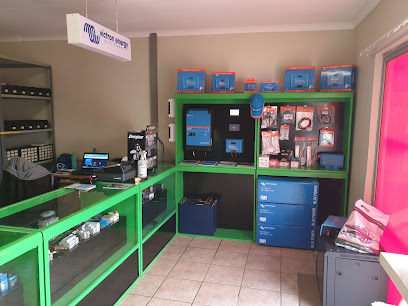
Elexco (Pty) Ltd is a Solar energy equipment supplier establishment in eMalahleni, Mpumalanga, South Africa
eMalahleni
Mpumalanga
South Africa
Sorry, no records were found. Please adjust your search criteria and try again.
Sorry, unable to load the Maps API.
Solar Energy Equipment Supplier Services in eMalahleni, Mpumalanga
In eMalahleni, Mpumalanga, solar energy equipment suppliers play a pivotal role in enabling businesses and homes to adopt sustainable power solutions. These providers typically offer a range of services designed to support the assessment, design, procurement, installation and ongoing maintenance of solar systems suitable for local climate, energy demands and grid conditions.
Customers can expect a consultative approach that begins with understanding site characteristics, including roof or ground mounting options, shading analysis, available space, and electrical infrastructure. Independent specialists commonly review current energy usage, demand patterns and budget constraints to propose scalable configurations. This initial guidance helps determine whether a grid-tied system, off-grid arrangement, or a hybrid solution with battery storage best meets practical needs in Mpumalanga's environment, where daytime solar resources are strong but demand profiles can vary.
Procurement is another central service. Solar equipment suppliers typically supply a range of components such as photovoltaic panels, inverters, mounting structures, charge controllers, batteries, wiring, and safety devices. Stock levels, product warranties, after-sales support and adherence to local electrical standards influence purchasing decisions. Where possible, suppliers arrange delivery and ensure that equipment chosen is compatible with the existing electrical installation and any relevant municipal or utility requirements.
Design and engineering support form a core aspect of the service offering. Specialists often prepare detailed system layouts, electrical diagrams and performance estimates. System sizing is guided by safety margins, anticipated lifespan, and planned future capacity. In Mpumalanga, where temperatures can be high and electrical networks may experience peak loading, equipment selection emphasises durability, efficiency, and suitability for frequent sunshine exposure. Sustainability considerations, such as optimising tilt angles and solar tracking options, may be discussed, subject to site constraints and budget.
Installation is typically carried out by qualified technicians who coordinate with electrical contractors and ensure compliance with relevant safety regulations. In addition to mounting panels and wiring, attention is given to proper grounding, inverter placement, and the integration with existing electrical services. Electrical inspections and quality checks are commonly conducted to verify performance, safety, and code compliance before the system is energised.
Maintenance and after-sales support are important elements of the service landscape. Routine maintenance may include cleaning of panels, checking connections, monitoring system performance, and testing battery health where storage is employed. Some suppliers offer remote monitoring solutions to track energy generation and consumption, identify faults promptly, and schedule maintenance visits as needed. Warranties on components such as panels and inverters provide reassurance against premature failures and performance degradation.
Practical considerations for customers in eMalahleni involve assessing local grid policies, potential feed-in arrangements, and the reliability of after-sales service. Financial aspects are addressed through guidance on total cost of ownership, available finance options, and potential incentives or tax considerations. Environmental conditions, including dust and high temperatures, influence maintenance routines and component longevity, underscoring the value of high-quality equipment and professional installation.
For businesses and households alike, the typical pathway through solar equipment supplier services centres on an informed switch from initial assessment to design, procurement and installation, followed by dependable maintenance. While specific offerings vary between providers, the overarching aim remains to deliver a custom-fit solar solution that improves energy resilience, reduces running costs and contributes to a more sustainable energy footprint in the Mpumalanga region.