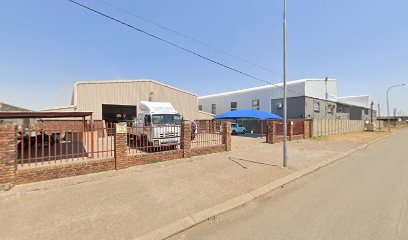
CTE is a Solar energy equipment supplier establishment in Sasolburg, Free State, South Africa
Sasolburg
Free State
South Africa
Sorry, no records were found. Please adjust your search criteria and try again.
Sorry, unable to load the Maps API.
Solar Energy Equipment Supplier Services in Sasolburg, Free State
In Sasolburg, a town in the Free State of South Africa, solar energy equipment suppliers provide a range of services designed to support residential, commercial, and industrial customers looking to adopt photovoltaic (PV) systems. The offerings typically cover initial assessment, system design, equipment provision, installation, commissioning, and ongoing maintenance. The emphasis is often on practical, locally focused solutions that account for the region’s climate, sunlight availability, and electrical infrastructure.
Before any system is specified, customers can expect a site assessment or load analysis. This involves evaluating current electricity use, peak demand, and available roof space or open land for mounting PV modules. Assessments also consider shading from nearby structures or trees, local weather patterns, and the orientation and tilt that maximise solar gain. For Sasolburg’s climate, this helps determine the size of the array, the number of panels, and the required balance of components such as inverters and mounting hardware. A well-constructed assessment informs the cost estimate and expected return on investment, while highlighting any constraints related to municipal or grid connection requirements.
Design and equipment selection form the next stage. Suppliers typically offer a range of PV modules, inverters, charge controllers, batteries for energy storage, and protective devices. In Sasolburg, where climate and daytime temperatures can affect battery performance, practical considerations include choosing battery technology and capacity appropriate for the intended application, whether for a basic off-grid setup or a more complex hybrid or grid-tied installation. In many cases, customers receive guidance on energy management, including potential load shifting and the use of energy-efficient appliances to optimise system performance and longevity.
Installation and commissioning are the core deliverables. Trained technicians handle mounting, electrical wiring, wiring protection, and safety compliance. Installation typically includes a roof or ground-mounted array, mounting rails, wiring routes, junction boxes, and a connection to a suitable inverter or battery system. Commissioning confirms that safety switches, protections, and monitoring devices function correctly, and that the system operates within design specifications. In Sasolburg, installers may also assist with obtaining permits or approvals required by local authorities or the utility framework, and with notifications to the relevant grid operator if a grid-connected system is involved.
Maintenance, warranty, and after-sales support are standard elements of the service mix. Regular inspection of panels for cleanliness and shading, checking connections, and monitoring performance to detect degradation are common practices. Many suppliers offer service plans that cover routine maintenance, component replacements, and system health checks. Warranties on PV modules, inverters, and batteries are important considerations, with terms varying by manufacturer and distributor. For customers in Sasolburg, access to local technical support and response times for service calls can be influential factors in choosing a supplier.
Practical considerations extend to transport and logistics, given Sasolburg’s location within the Free State. The availability of timely delivery of equipment, lead times for customised components, and the potential for on-site training or handover documentation are relevant. Financing options, seasonal promotions, and guidance on retrofitting existing electrical systems with solar components may also influence decision-making. Environmental considerations, such as efficient use of space, the need for proper ventilation for inverter equipment, and the management of heat-sensitive components, are routinely addressed to ensure longevity and performance.
In summary, solar energy equipment supplier services in Sasolburg revolve around a structured process: a thorough site and energy assessment, tailored design and equipment selection, careful installation and commissioning, and ongoing maintenance and support. The focus remains on delivering reliable, locally appropriate solar solutions that align with customer objectives, while navigating any regional regulatory and grid-related considerations. The result is a practical pathway for households and businesses in the Free State to realise sustainable energy generation and potential savings over time.