CIVIC SOLAR is a Solar energy company establishment in Emfuleni Local Municipality, Gauteng, South Africa
CIVIC SOLAR – Solar energy solutions in Vanderbijlpark, Gauteng
Operating within the Emfuleni Local Municipality in Gauteng, CIVIC SOLAR presents itself as a provider of solar energy equipment and services aimed at enhancing energy efficiency. The company highlights a customer-focused approach, emphasising useful information, guides, tutorials, and a support framework designed to assist clients through a self-help style alongside direct assistance. The online presence stresses “empowering change” with a mission to deliver exceptional service and a solar energy experience rooted in customer satisfaction.
Key offerings appear to revolve around solar energy equipment and related services, with a stated emphasis on meeting customer needs by starting with what the customer wants and delivering practical solar energy resources. The organisation positions itself as a hub for information and resources, alongside practical assistance, rather than solely a product seller. The site also mentions ongoing engagement with a solar community, suggesting activities such as guides, tutorials, and an emphasis on knowledge sharing to help clients make informed choices.
In terms of customer workflow, CIVIC SOLAR presents a structure that centres on user support and accessible information. The helpdesk section indicates the ability to submit tickets for customer care, which implies a formalised process for handling service or product concerns. A dedicated contact page lists a physical address in Vanderbijlpark and a telephone number for initial outreach, signalling a straightforward method for customers to initiate dialogue about installations, products, or support needs. The online shop suggests a retail facet to the business, potentially offering solar equipment and accessories for purchase.
The business also presents itself with a track record on its website, referencing notable figures such as many projects deployed, a strong online member base, and customer retention metrics. While these figures are presented prominently, they are not corroborated within the accessible content, and the emphasis remains on the customer experience and the availability of resources to guide choices in solar energy solutions.
Typical services and job types
- Solar equipment provision and installation planning, supported by guides and tutorials for customer education.
- Customer support and post-sale assistance via a helpdesk system, including ticket submission for issues or questions.
- On-site or remote customer engagement to discuss energy efficiency improvements and solar energy setups.
- Resource centre and online content aimed at helping customers understand solar energy concepts and equipment options.
How requests usually work
Access to CIVIC SOLAR’s services typically begins with information gathering and customer education, guided by the website’s emphasis on understanding what the customer wants. Prospective clients can reach out via the contact page or helpdesk to initiate conversations, request information, or open a support ticket. The presence of an online shop indicates that customers may also begin the process by selecting equipment or components online, followed by a consultation or installation planning stage. The advertised approach stresses a user-friendly experience designed to empower customers with practical solar energy resources.
Customer experience and practical tips
Customer feedback available in visitor reviews is mixed. A review from a customer who purchased an inverter reported a prolonged post-purchase service experience, with the unit failing after several months and ongoing repair delays noted. While this reflects a negative experience in that particular case, it is not representative of all customer interactions. Another review highlights a positive aspect of installation work, describing “perfection” in the solar installation and an excellent display room, suggesting that on the showroom and installation fronts, quality can be observed and appreciated by clients.
Practical tips for potential customers include:
- Visit the display area or showroom (if available) to inspect equipment and discuss options with knowledgeable staff before making a purchase.
- Document any concerns or performance issues in detail when lodging a support ticket to facilitate efficient handling by the helpdesk.
- Clarify warranty coverage, service turnaround times, and after-sales support for the specific equipment being considered, especially if a critical device is involved.
- Prepare a basic outline of energy needs (typical loads, critical devices, and expected usage) to guide installation planning and equipment selection.
- Ask about installation timelines, required permits, and the process for any necessary site assessments to avoid delays.
Hours and area served
As per available information, CIVIC SOLAR operates out of Vanderbijlpark, with the service area including the Emfuleni Local Municipality in Gauteng. Specific business hours are not listed on the public pages accessed, so prospective customers may wish to contact the company directly via the provided phone number or contact form to confirm opening times and best times to visit the showroom or arrange visits.
Location and contact
Address: Prime Business Park, 6 Rabie Street, Vanderbijlpark, 1900, South Africa.
Phone: +27 016 110 0471.
Emfuleni Local Municipality
Gauteng
South Africa
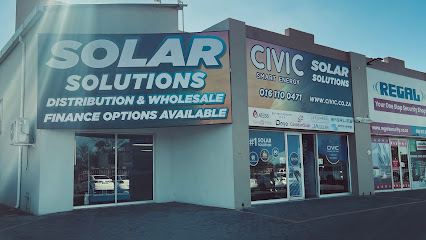
Sorry, no records were found. Please adjust your search criteria and try again.
Sorry, unable to load the Maps API.
Solar Energy Services in Emfuleni Local Municipality, Gauteng
In the Emfuleni Local Municipality, located within Gauteng Province, solar energy providers offer a range of services designed to help businesses and households optimise power usage, reduce reliance on the grid, and lower long-term energy costs. Local conditions, including climate, electrical infrastructure, and regulatory considerations, shape the scope of practical solutions available to customers in this region.
Providers typically begin with a comprehensive assessment to determine energy needs, roof suitability, and potential savings. This initial analysis considers daily electricity consumption patterns, peak demand timing, and the available roof or ground space for photovoltaic (PV) installations. From there, engineers and skilled technicians outline an appropriate mix of components, such as PV panels, mounting systems, inverters, charge controllers, and, if relevant, energy storage solutions. The emphasis is on delivering a system that is robust, scalable, and well-matched to local weather conditions and daytime sun exposure.
One core service is the design and installation of grid-tied solar PV systems. These systems feed electricity into the building and can, in many cases, enable periodic exports to the utility network, depending on local regulations and metering arrangements. For commercial clients, the installation often focuses on high-efficiency modules, optimised wiring, and rapid return-on-investment scenarios. Homeowners may receive guidance on how to integrate solar generation with existing electrical panels, protect sensitive equipment, and manage electricity use with intelligent controls.
Another prevalent offering is solar-powered backup and off-grid solutions. In areas of fluctuating grid reliability or where uninterrupted power is critical, providers may install battery storage to store daytime solar energy for use at night or during outages. The level of storage depends on load considerations, desired sovereignty from the grid, and the ability to manage charging and discharging cycles in a way that preserves battery life and performance. For smaller properties, hybrid approaches combine grid access with storage to smooth demand and provide resilience without excessive upfront cost.
Maintenance and performance monitoring constitute ongoing services that accompany most solar energy projects. Regular inspections, cleaning of panels, electrical testing, and inverter diagnostics help maintain efficiency and extend system life. Remote monitoring platforms or periodic on-site checks may be employed to confirm energy production aligns with projections, while addressing any derating or shading issues caused by nearby growth or construction activity.
Practical considerations for customers in Emfuleni include local grid connection requirements, the suitability of mounting surfaces, and compliance with safety standards. Electrical permits, as well as adherence to national and municipal regulations, are commonly navigated by experienced providers to ensure installations meet legal and safety obligations. Inverter placement, cable routing, and weatherproofing are typical topics discussed to minimise losses and maximise performance. Noise, heat generation, and aesthetic integration with existing structures are also weighed in planning discussions.
Designs often prioritise robustness against local weather patterns, including sun intensity, temperature fluctuations, and potential wind loads. Materials and equipment choices reflect not only efficiency and cost but also ease of maintenance and local availability of compatible components. Customers can expect transparent explanations of expected energy savings, potential subsidies or incentives where applicable, and clear timelines for permitting, installation, and handover. Without committing to any particular vendor or platform, the approach remains centred on delivering dependable, custom-tailored solar energy solutions that align with the practical realities of Emfuleni’s urban and semi-urban environments.
- Site assessment and load analysis
- PV system design and installation (grid-tied, off-grid, or hybrid)
- Battery storage and backup solutions
- System maintenance and performance monitoring
- Compliance with electrical and safety standards