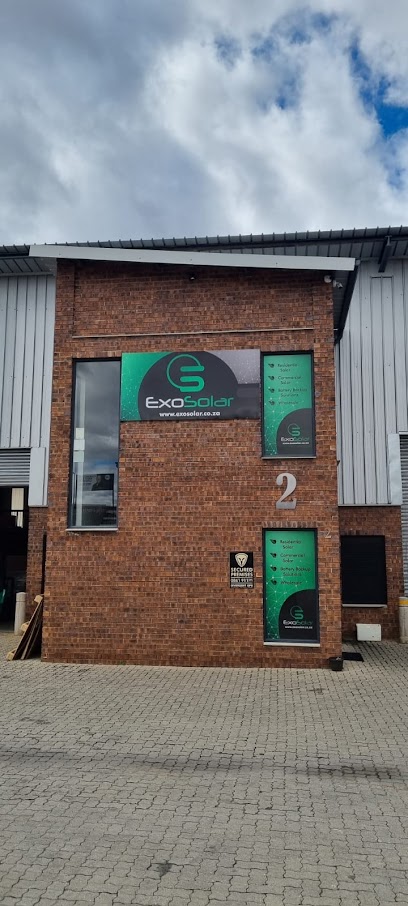
Exosolar is a Solar energy company establishment in Mbombela, Mpumalanga, South Africa
Exosolar: Solar energy solutions for homes and businesses in Mbombela
Exosolar operates as a comprehensive solar energy partner serving residential, commercial, and industrial clients in Mpumalanga, including Mbombela. Positioned as an independent solar EPC (engineering, procurement and construction) provider, the company emphasises long‑term energy security through customised solar systems backed by battery storage, turnkey project management, and ongoing maintenance. The breadth of services is designed to cover the full lifecycle of a solar installation—from initial energy analysis and design to construction, activation and ongoing support.
In the residential sector, Exosolar offers tailored solar power systems designed to meet the specific energy needs of South African households. The focus is on reliable load‑shedding resilience, cost savings over time, and the potential to improve home value with a move towards green energy. Residential offerings emphasise safety, compliance and battery back‑up to keep essential devices powered during outages.
For commercial customers, Exosolar provides turnkey solar systems that span energy needs analysis, engineering design and regulatory approvals through to construction and long‑term system management. The service suite highlights the potential for significant operational savings, steady energy costs, and a strengthened sustainability profile, which can enhance business reputation with eco‑conscious customers and partners. The commercial practice includes professional energy audits and full EPCM (engineering, procurement, construction and management) capabilities to support larger, more complex installations such as factories, warehouses and other industrial facilities. A notable offering is containerised energy storage and turnkey container units designed for remote or off‑grid applications, aiming to shorten installation times and simplify deployment.
Exosolar also markets specialised equipment and components essential to solar systems. Its batteries feature premium LiFePO4 cells with warranties up to 12 years and substantial cycle life, while inverters are positioned as critical components capable of performing in South Africa’s load‑shedding environment. The product range includes solar panels with long‑term performance warranties, plus mounting solutions for various roof types, carports and ground mounts. A range of portable power options is available for lighter, on‑the‑go energy needs.
The company notes additional business‑oriented options such as rent‑to‑own solar arrangements, and power purchase agreements, offering flexible paths to ownership or usage of solar assets. Monitoring and maintenance services are highlighted as a key part of sustaining year‑round performance, including cleaning and safe operation of solar systems and generators, with a focus on hassle‑free upkeep.
Typical projects and customer experience
Client feedback across multiple projects points to a consistently professional, thorough and hands‑on approach. Review highlights include:
- Professionalism and swift delivery: Installations completed efficiently, often within two days, with prompt follow‑up services.
- Meticulous workmanship and quality control: On‑site supervision and careful attention to detail, ensuring installations meet high safety and quality standards.
- Clear communication and ongoing support: Continuous dialogue from the earliest stages through aftercare, with approachable supervisors explaining processes and addressing questions.
- Neat, tidy installation with reliable performance: Teams described as neat and tidy on site, delivering systems that function well in practice and withstand routine loadshedding.
- Strong customer satisfaction and referrals: Multiple reviewers emphasise trustworthiness, integrity and a high level of service, with several commenting that Exosolar would be their preferred choice for future projects or developments.
Visitor experiences also point to a sense of partnership, where the owners and staff engage directly with clients, offering consumer guidance in accessible terms and delivering customised solutions that align with project scale—from single homes to development partnerships for larger communities.
<h2 Practical tips for customers
- Begin with a thorough energy assessment: A detailed energy audit helps tailor a system to actual consumption and anticipated load patterns, improving long‑term return on investment.
- Consider redundancy and backup needs: Pairing solar with reliable battery storage improves resilience during outages and reduces dependence on the grid.
- Plan for maintenance and monitoring: Regular checks and professional cleaning help sustain efficiency and safety; ensure maintenance schedules are discussed during initial design.
- Evaluate ownership options: Rent‑to‑own arrangements and Power Purchase Agreements can provide flexible routes to access solar without upfront costs, subject to terms and financial considerations.
- Check local expertise and compliance: Ensure the installation team understands local building codes, electrical standards and insurance requirements to avoid regulatory hurdles later.
- Inquire about after‑sales support: A solid post‑installation plan, including access to supervisors and responsive service, contributes to a smoother, longer‑lasting system performance.
<h2 What to expect during a site visit
Requests typically begin with an energy needs discussion, followed by a design and engineering phase, regulatory reviews where required, and a construction period that includes onsite supervision. Ongoing monitoring and maintenance services are offered to sustain system performance over time. The Mbombela region and broader Mpumalanga area are served, with projects spanning residential and commercial contexts.
Mbombela
Mpumalanga
South Africa
Sorry, no records were found. Please adjust your search criteria and try again.
Sorry, unable to load the Maps API.
Solar Energy Services in Mbombela, Mpumalanga
Solar energy providers in Mbombela offer a range of services designed to unlock the benefits of clean, reliable power in a region known for strong sun and occasional grid pressure. Local customers typically engage firms for assessments, design, installation, and ongoing support aimed at reducing electricity costs and improving energy resilience. A considered approach to project planning acknowledges Mpumalanga’s climate, housing types, and regulatory environment, ensuring that systems are capable of delivering steady performance throughout the year.
Assessments and design work form the foundation of a successful solar installation. An initial energy review examines household or commercial electricity usage, peak demand, and existing electrical infrastructure. This enables engineers to determine suitable system sizes, optimise array orientation, and identify required equipment such as inverters, mounting solutions, and wiring. In Mpumalanga, sun exposure is generally high, so professionals frequently model potential yields to match consumption patterns, with attention given to shading, roof structure, and available space for solar panels.
Installation services cover the physical deployment of solar photovoltaic (PV) systems. Experienced teams typically handle all aspects, including structural mounting, electrical connections, and integration with existing distribution boards. For off-grid or hybrid configurations, battery storage is commonly included to provide power during outages or at times of low sunlight. The installation process emphasises safety, compliance with electrical standards, and careful routing to minimise disruption to daily activities. In addition, some projects incorporate solar water heating or thermodynamic systems as a complementary source of hot water and space heating, where appropriate.
Maintenance and monitoring are key components of sustained performance. Routine inspections check for damage, loose fittings, and degradation of panels or batteries. System monitoring may be provided through remote data dashboards or periodic site visits, allowing operators to verify energy generation, consumption patterns, and storage efficiency. Preventative maintenance can help extend equipment life and protect investment, while prompt fault finding minimises downtime.
Grid-tied, off-grid, and hybrid configurations represent common service paths. Grid-tied installations feed solar power back into the local network, which can reduce energy purchases and may benefit from feed-in compensation, depending on prevailing policies. Off-grid systems operate independently of the grid, typically using battery storage and backup generation to maintain essential loads during outages. Hybrid solutions blend these approaches, enabling continued operation when mains power is unreliable. Each option requires careful sizing, electrical design, and compliance with local regulations and standards.
Practical considerations for clients in Mbombela include the region’s climate and roof conditions, which influence panel selection and mounting methods. Local suppliers and service providers may advise on corrosion resistance, cable management, and weatherproof enclosures suitable for Mpumalanga’s conditions. The installation process often considers power quality, surge protection, and the capacity of inverters to handle load profiles, particularly in commercial contexts with variable energy demands. Finally, project timelines and budgeting reflect not only equipment costs but also site preparation, permits, grid connection steps, and any required authorisations from municipal or electrical authorities.
A typical project journey moves from site assessment to design approval, followed by installation, commissioning, and ongoing maintenance. Clients can expect clear communication about scope, timelines, and expected energy savings, with professionals elucidating the practical trade-offs between system size, storage needs, and the chosen technology. By focusing on local irradiation, infrastructure compatibility, and practical maintenance, solar energy services in Mbombela help residents and businesses pursue more sustainable energy, greater resilience, and improved control over electricity costs.