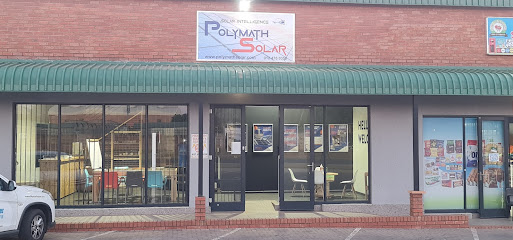
Polymath Solar (Pty) LTD is a Solar energy company establishment in Pretoria, Gauteng, South Africa
Polymath Solar (Pty) Ltd – Solar energy solutions in Pretoria, Gauteng
Polymath Solar (Pty) Ltd presents itself as a business-focused solar energy company that goes beyond supplying photovoltaic panels by integrating solar, storage, and intelligent control systems. Positioning its offering as a strategic asset, the firm emphasises the financial and operational benefits of cash‑positive solar with storage from the first month, underpinned by its Solar Intelligence technology. The core proposition centres on ensuring clients utilise the cheapest and most reliable energy source available, with automation guiding energy use in real time.
At the heart of Polymath Solar’s approach is the Solar Intelligence platform, which combines solar generation, battery storage, and real-time tariff optimisation. This enables a structured path from grid reliance to energy independence, with phases designed to reduce operational risk, stabilise energy costs, and enhance property value. The company highlights the value of data-driven design and advanced control technology to deliver predictable performance and long‑term resilience.
The firm emphasises measurable value through documented analyses, including a Cost Benefit Analysis that features real Levelised Cost of Energy (LCoE), Net Present Value (NPV), Internal Rate of Return (IRR), and Simple Payback Period. These metrics are presented as tools to demonstrate the financial robustness of solar investments and to support prudent decision‑making for business owners considering solar or backup power systems.
Polymath Solar promotes a holistic capability set that covers engineering design, procurement, and construction (EPC) for large and challenging renewable energy projects, as well as advisory services. The company notes a formal process incorporating a detailed energy and power analysis of properties, examination of local tariff structures, and thorough consultations to understand load profiles and business outcomes. The portfolio showcases experience with high-profile installations and collaborations with electrical and engineering partners on complex projects.
In terms of credentials and credibility, the organisation is described as a SAPVIA Accredited PV Greencard installer. The CEO is noted as a qualified trainer at the Green Solar Academy, involved in training new solar installers for PV Greencard examinations. This emphasis on accreditation and training aligns with a commitment to industry standards and skilled workmanship.
Polymath Solar reports a substantial project track record, including installations for government, healthcare, and manufacturing sectors. Notable examples mentioned include work for SA Parliament, major hospitals, and automotive-related facilities. The firm also lists several large‑scale commercial and industrial installations, such as grid-tied and hybrid systems, accompanied by storage solutions. These project references illustrate the company’s capability to deliver turnkey solar energy solutions across diverse operating environments.
Financing is positioned as a practical option for clients, with partnerships with leading banks and third‑party financiers to provide asset financing or conventional loans. Typical payback periods are described as ranging from two to eight years, subject to the chosen solution and available incentives. The firm also references depreciation opportunities under tax provisions, noting the 2023 SARS tax incentive change while highlighting continued options for first-year depreciation under applicable tax sections. This framing suggests a focus on helping customers maximise financial benefits from solar investments.
Customer experience, as reflected in visitor reviews, conveys a narrative of professionalism, technical competence, and reliable after‑sales support. Review snippets praise knowledgeable staff, thorough project delivery, close monitoring, responsive service, and after-hours assistance when needed. The comments convey confidence in installation quality, ongoing support, and a positive overall experience, reinforcing the firm’s claim of sustained customer care beyond installation.
Typical services offered include energy and power analysis, tariff structure reviews, customised solar and storage design, grid‑tied, diesel hybrid, and battery energy storage system (BESS) installations, and ongoing monitoring and support. The company presents itself as capable of delivering both standard and bespoke projects, with an emphasis on achieving energy cost reductions, improved reliability, and enhanced asset value through a structured, data‑driven approach.
Practical tips for customers include commissioning a detailed energy and power assessment to establish load profiles and tariff exposure, exploring the Solar Savings Calculator to estimate potential savings, and requesting a formal cost–benefit analysis to understand LCoE, NPV, and IRR. When planning installations, it is prudent to consider the full lifecycle of the system—from design through to monitoring—to ensure performance targets are met and values sustained over time. As projects range from small commercial offices to large healthcare facilities, a staged approach—starting with a grid‑dependent solution and advancing towards greater autonomy—can align with both budget cycles and operational needs.
Polymath Solar serves clients in Pretoria and the Gauteng region, with a portfolio that demonstrates versatility across sectors. The combination of advanced technology, accredited credentials, and a track record of successful installations supports a clear narrative of professional, data‑driven solar engineering aimed at delivering predictable, long‑term energy cost savings.
Pretoria
Gauteng
South Africa
Sorry, no records were found. Please adjust your search criteria and try again.
Sorry, unable to load the Maps API.
Solar Energy Services in Pretoria, Gauteng
Across Pretoria and the Gauteng region, solar energy companies offer a range of services designed to help businesses and households capture the sun’s power efficiently and reliably. The services typically begin with a professional assessment of site conditions, including roof orientation, shading, electrical capacity, and energy consumption patterns. This initial step informs a customised approach to system design, ensuring that the proposed installation aligns with present needs while allowing for future growth.
A core offering is system design and engineering. Solar specialists evaluate the building’s electrical infrastructure, determine the appropriate array size, and plan the layout of photovoltaic modules, inverters, and mounting hardware. In Pretoria, where financial and energy considerations are prominent, these plans often emphasise cost-effectiveness, durability, and compatibility with local grid regulations. The design stage also considers potential battery storage options to maximise self-consumption and resilience during outages.
Installation follows design approval and is typically conducted by trained technicians who ensure adherence to electrical safety standards and building codes. Work may include roof penetration or mounting on flat structures, wiring to an electrical distribution board, and integration with any existing solar or backup systems. The installation process is coordinated to minimise disruption, with attention paid to cable management, weatherproofing, and system testing before commissioning.
Maintenance and monitoring are important elements of ongoing service. Routine inspections, cleaning of modules, and monitoring of performance relative to expected output help identify issues such as shading changes, soiling, or equipment degradation. In Pretoria, where weather conditions can be variable, proactive maintenance supports sustained efficiency. Some companies offer remote monitoring, enabling customers to view energy generation, usage patterns, and battery status through online portals or mobile apps.
Battery storage and energy management are frequently part of the portfolio for clients seeking greater resilience or higher self-consumption. Storage solutions enable power use during cloudy days or periods of grid instability. Providers guide customers through selecting appropriate storage capacity, inverter compatibility, and charge-discharge strategies that suit daily load profiles and demand charges in the local market.
Grid-tied and hybrid systems are common configurations. Grid-tied installations feed electricity back to the local network when generation exceeds demand, subject to grid connection agreements and metering arrangements. Hybrid systems combine solar generation with battery storage, offering a level of autonomy during outages and the ability to optimise daytime energy use. For businesses facing load shedding and tariffs, such configurations can deliver meaningful savings and reliability enhancements.
Practical considerations for Pretoria clients include understanding local permitting, electrical registration requirements, and any region-specific incentives or rebates. It is prudent to discuss warranty terms, service guarantees, and planned maintenance schedules to ensure long-term performance. Suppliers typically provide guidance on component warranties for modules, inverters, and battery systems, along with recommended replacement timelines and safe handling practices.
In summary, solar energy services in Pretoria encompass assessment, design, installation, and ongoing maintenance, with a focus on efficiency, resilience, and regulatory compliance. Customers can expect a customised approach that reflects site conditions, energy needs, and the specific advantages offered by solar technology in Gauteng’s climate. The resulting systems aim to deliver dependable solar generation, reduced utility costs, and enhanced energy security for both commercial and residential applications.
- Site assessment and energy modelling
- System design and engineering for residential, commercial, and light industrial applications
- Roof and ground-mounted installation services
- Grid-tied, hybrid, and battery-backed configurations
- Performance monitoring and routine maintenance
- Battery storage selection and integration guidance
- Compliance with local regulations and grid connection requirements