SomeWatt Solar is a Solar energy company establishment in Muizenberg, Western Cape, South Africa
SomeWatt Solar: Solar Energy Solutions in Muizenberg, Western Cape
SomeWatt Solar operates as a Cape Town-based solar energy solutions company delivering tailored photovoltaic (PV) and battery backup systems. Serving customers across the Western Cape—including Cape Town and its surrounds such as Muizenberg—the business emphasises turning roofs into reliable, renewable power sources. The company markets itself as a specialist provider of solar energy solutions at competitive prices, designed to help homeowners and commercial clients reduce electricity costs, mitigate load shedding, and promote green energy adoption.
The core offering spans both residential and commercial sectors. For homes, SomeWatt Solar designs and installs solar systems aimed at lowering monthly energy bills, providing backup during outages, and increasing property value. Residential packages are described as customisable to accommodate a range of needs—from small hybrid configurations to full off-grid solutions. In the commercial arena, the company positions itself as a provider of larger, grid-tied or hybrid systems suitable for factories, warehouses, offices, farms, and retail or logistics spaces. The emphasis is on energy security, continuity of operations, and long-term cost savings.
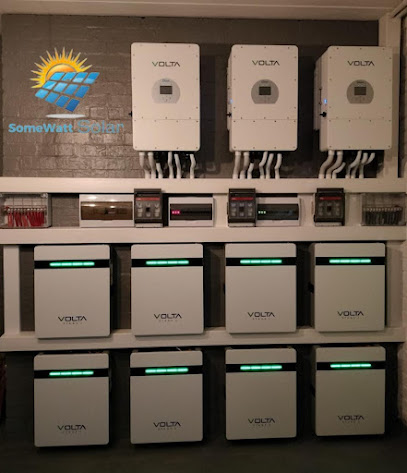
In terms of technology, the company highlights its use of well-known inverter and battery brands. Inverters include Deye and hybrid options, with batteries from Dyness and Volta. On the PV side, JA/Canadian/Jinko modules are noted for high efficiency and robust performance. The system designs commonly pair solar arrays with lithium-ion storage and monitoring solutions to track production and consumption in real time. A focus on quality components and local servicing underpins the brand proposition.
SomeWatt Solar offers financing as part of its service mix, acknowledging that payment plans can help clients access solar more readily. This aligns with the broader message of affordability and value, positioning the company as a practical route to energy independence rather than a premium-only solution.
How requests and projects typically unfold
- Assessment and quotation: A thorough on-site assessment helps determine the appropriate solar configuration based on historical electricity use and site constraints. Site inspections are presented with a professional plan and a quote tailored to the specific environment.
- System planning: Detailed system designs are prepared, outlining the components and configuration required to meet the client’s energy needs and budget.
- Installation and verification: The installation process completes with commissioning, compliance checks, and documentation such as certificates of compliance (COC) and any necessary municipal registrations (where applicable).
- Monitoring and ongoing support: Real-time monitoring is highlighted for some packages, enabling clients to track production and consumption, with post-installation support to optimise performance.
Typical job types and industries
Residential projects are commonly framed around home energy reliability, load-shedding resilience, and long-term savings. For commercial clients, projects target energy-intensive operations, with offerings designed to stabilise utility costs and ensure business continuity. Industries highlighted include manufacturing, warehousing and logistics, retail and office spaces, and agricultural operations such as farms requiring pumps and cold storage. The portfolio positions SomeWatt Solar as capable of handling both small-scale home systems and larger, multi-inverter commercial installations.
Customer experience and feedback
Customer reviews frequently commend professional conduct, thorough site inspections, personalised quotations, and hands-on project management led by the company owner. Reported experiences describe prompt initial engagement, clear pricing, careful component selection, neat and tidy installations, and strong aftersales follow-up. Clients also highlight significant savings in electricity usage and the reliability of systems during outages, with several reviewers noting ongoing support and willingness to discuss upgrades or future optimisations.
Practical tips for customers
- Obtain a site assessment to capture accurate load profiles, enabling a properly sized system and realistic savings estimates.
- Clarify whether the package includes online monitoring and what level of post-installation support is provided.
- Ask about municipal registration and SSEG (small-scale embedded generation) compliance where applicable.
- Consider hybrid or off-grid options if load shedding is frequent or if grid reliability is a long-term concern.
- Compare component brands (inverters, batteries, and panels) recommended by the installer to ensure compatibility and warranty coverage.
Location and service area
SomeWatt Solar targets customers in the Western Cape, with a focus on Cape Town and surrounding towns. The Muizenberg area is part of the broader service region, highlighting a local presence and capability to address coastal conditions and roof configurations commonly found in the region.
For prospective clients seeking clarity on system size, expected savings, and financing options, SomeWatt Solar presents itself as a capable partner for both residential and commercial solar projects, backed by a track record of practical installations and positive client feedback.
Muizenberg
Western Cape
South Africa
Sorry, no records were found. Please adjust your search criteria and try again.
Sorry, unable to load the Maps API.
Solar Energy Services for Muizenberg Homes and Businesses
In Muizenberg, a coastal suburb of the Western Cape, solar energy providers typically offer a range of services designed to maximise renewable power capture while ensuring compliance with local regulations. Clients often seek practical solutions for reducing electricity costs, increasing energy resilience, and contributing to a greener grid. Service offerings are usually tailored to rooftop installations on residential properties, small commercial premises, and multi‑unit developments common in coastal towns and surrounding neighbourhoods.
Initial assessments usually begin with a site survey and energy review. A solar professional assesses roof orientation, shading from nearby trees or structures, roof condition, and the available roof area to determine the most effective array layout. The analysis also considers the energy consumption patterns of the household or business, guiding decisions about system size, inverter type, and whether to pursue grid‑tied, off‑grid, or hybrid configurations. In Muizenberg’s climate, a well‑designed system can harvest abundant sunlight for most of the year, though occasional high wind and sea spray are considered in equipment selection and mounting methods.
Design and engineering services cover the configuration of photovoltaic (PV) arrays, choice of mounting systems, and electrical integration. Installers typically prepare a comprehensive plan that details wiring, conduit routing, safety measures, and compliance with local electrical codes. For coastal properties, attention is given to corrosion protection and weatherproofing. Where required, engineers assist with permit applications to the municipality and aid in coordinating with the utility for grid connection, metering, and any applicable incentives or net‑metering arrangements.
Installation work commonly includes the mounting of PV modules on rooftops, inverters that convert DC to usable AC power, and a monitoring system to track performance. Additional equipment may involve optimised battery storage, charge controllers, and energy management software. In Muizenberg, some installations incorporate storage to smooth supply during evening hours or outages, a practical feature in areas where feed‑in tariffs or grid reliability vary. The installation process emphasises correct electrical routing, protective devices, and clean integration with existing electrical panels, while weather considerations and local building standards inform the sequencing and safety checks of the project.
Maintenance and aftercare are regular parts of service, aimed at sustaining efficiency and safety. Routine tasks include cleaning panels to remove salt spray and grime, inspecting mounting hardware for corrosion, checking electrical connections, and monitoring system output. Servicing plans may offer remote monitoring to detect performance anomalies and schedule preventative maintenance. In coastal settings, proactive upkeep can help extend the hardware lifespan and maintain optimal energy production across seasons.
- Residential rooftop solar installations designed to offset daytime electricity use.
- Small to mid‑sized commercial systems for shops, offices, and hospitality venues.
- Battery storage solutions to provide power security during outages or peak rate periods.
- Grid‑tied configurations with net metering opportunities where available.
- Hybrid setups that combine solar, storage, and backup generators for continuity.
- Maintenance plans and remote monitoring to ensure dependable performance.
Customers in Muizenberg can expect a practical, consultative approach that explains the financial and technical implications of different options. Transparent timelines, clear payment schedules, and realistic performance expectations help buyers make informed decisions. Practical considerations include the impact of local weather patterns, potential refurbishment or roof repairs, and the importance of selecting equipment with suitable warranties and corrosion resistance for coastal environments. Although specific product names or supplier lists are not stated, the general aim remains to deliver safe, efficient solar power solutions that align with regional requirements and the preferences of property owners in the Western Cape.