
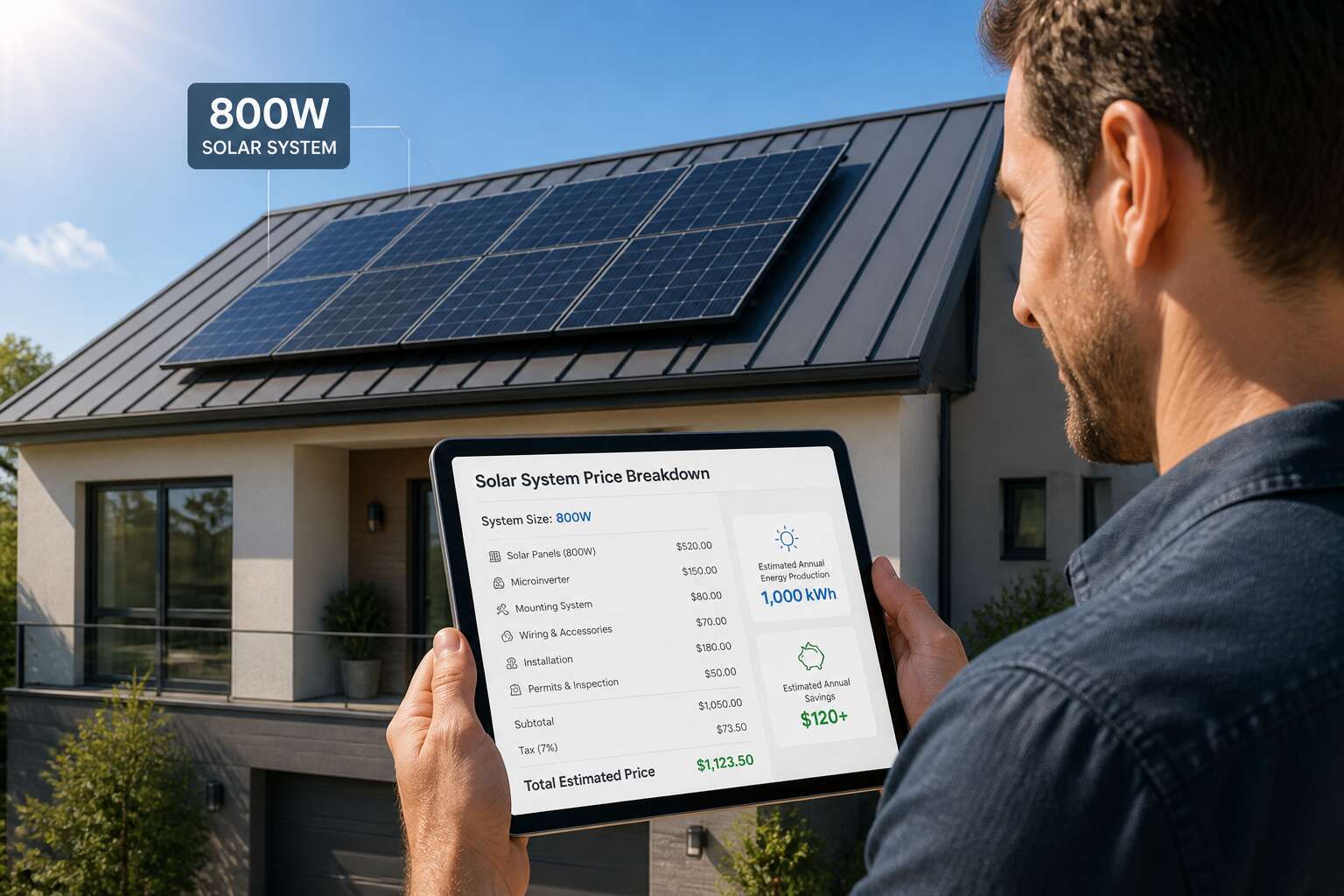
Key Drivers of High-Capacity Panel Pricing
A single manufacturing anomaly can shift the 800w solar panel price by nearly a fifth. In South Africa, that variance often comes from wafer size and cell layering. Larger wafers reduce assembly steps, yet the specialised equipment to produce them still costs a premium.
The logistics chain adds another layer. Import duties and freight insurance for high-capacity modules create regional price bands. Consider these drivers:
- Polysilicon purity levels, which dictate conversion efficiency
- Glass thickness and anti-reflective coatings for harsh UV
- Certification costs for local grid compliance
The 800w solar panel price also reflects testing cycles. I have seen quotes differ by 12% solely for hail-impact ratings. That is not marketing. It is physics, measured in controlled chambers.
Price Ranges for 800W-Class Solar Modules
In South Africa, the 800w solar panel price typically stretches from R4,500 to R9,000 per module. That is a wide spread, but the gap reflects real differences in cell technology and build quality.
I have seen budget options hover near the lower end, while premium monocrystalline panels command the top of that range. For a single unit, the cost per watt usually lands between R5.60 and R11.25. Bulk buyers often negotiate better rates, but the numbers still shift with exchange rates and import duties.
- Entry level panels: R4,500 to R6,000
- Mid range modules: R6,000 to R7,500
- Premium options: R7,500 to R9,000
These figures come from recent supplier quotes across Gauteng and the Western Cape. Stock levels and shipping costs change frequently, so the numbers keep moving.
What Is Included in a Total Installation Quote?
An installation quote for an 800w solar panel price can feel opaque, but it shouldn’t. I always tell clients to scrutinise every line item because the real cost hides beneath the panels. Inverters, mounting hardware, and labour often dwarf the panels themselves. A reputable South African installer will itemise each component, including site-specific challenges like roof pitch or shading. The quote should break down as follows:
– Equipment costs, including the panels and inverter
– Balance of system parts, cabling and protection devices
– Installation labour and any structural adjustments
– Compliance certificates and municipal paperwork
Without these line items, you are comparing apples to oranges. The cheapest 800w solar panel price might omit critical safety gear, leaving you with a system that fails inspection or, worse, underperforms. That transparency is what turns a price into an investment. Demand it before signing, every time.
Government Rebates, Tax Credits, and Long-Term Savings
Electricity tariffs in South Africa keep rising, and the 800w solar panel price is only one part of your total investment. Government rebates and tax credits can slash your upfront costs substantially. For individuals, the SARS tax credit offers a rebate on solar installations, reducing your taxable income. Businesses can claim an accelerated depreciation allowance, which improves the overall return.
Beyond these initial incentives, long-term savings accumulate quickly. Your monthly electricity bill shrinks, and with Eskom’s escalating tariffs, that relief grows over time. Consider the financial benefits:
- Reduced grid reliance during peak hours
- Protection from future price hikes
- Increased property value from solar assets
These factors transform your upfront outlay into a strategic investment rather than a mere expense.
Practical Strategies to Lower Your Cost per Watt
Have you ever stopped to calculate what each watt truly costs you? The 800w solar panel price often looks intimidating until you break it down. I learned this while helping a friend in Johannesburg size his system. We focused on lowering the cost per watt instead of chasing the cheapest quote.
- Match the panel voltage to your inverter’s optimal range. Mismatched systems waste up to 8% of output.
- Clean the panels at least twice a year. Dust in the Highveld can slash efficiency quickly.
- Buy during seasonal sales cycles, typically after winter demand fades.
These steps lower your effective spend. Once you master them, the total price becomes a starting point, not a final burden. You pay for performance, and that makes every rand work harder.

0 Comments