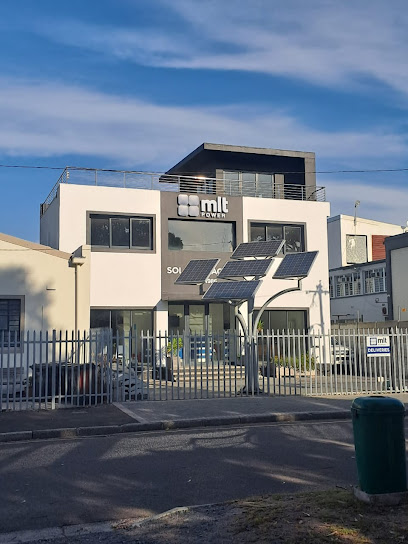
MLT Power Pty Ltd is a Solar energy company establishment in Cape Town, Western Cape, South Africa
Cape Town
Western Cape
South Africa
Sorry, no records were found. Please adjust your search criteria and try again.
Sorry, unable to load the Maps API.
Solar Energy Services in Cape Town, Western Cape
<pIn Cape Town and the broader Western Cape, solar energy companies provide a range of services designed to harness the region’s abundant sunshine while addressing energy reliability and cost considerations. These services are typically tailored to residential, commercial, and light industrial customers, with emphasis on practical, local conditions such as climate, grid interaction, and water management. The aim is to deliver clean power, reduce dependence on conventional electricity, and support more sustainable energy strategies over the long term.
<pA common starting point involves site assessment and load analysis. Trained professionals visit a property to evaluate roof orientation, shading, structural integrity, and electrical infrastructure. This assessment helps determine appropriate system size, panel types, and potential optimisations. Considerations include the available space for photovoltaic (PV) modules, the potential for battery storage, and the capacity of the electrical distribution board to receive solar generation. The outcome is a customised plan that aligns energy needs with feasible equipment and installation timelines.
<pInstallation services cover the physical mounting of PV panels, inverters, and ancillary components. Panels are typically positioned to maximise sun exposure while minimising shading from nearby structures or trees. Inverters convert direct current from panels into usable alternating current for the property, while electrical protection devices, wiring, and monitoring equipment are integrated to ensure safety and efficiency. Drafted schedules consider weather patterns common to the Western Cape, aiming to minimise disruption and meet any local permitting requirements.
<pBeyond installation, many companies offer aftercare that includes monitoring systems, performance reporting, and maintenance plans. Monitoring allows real-time insight into energy production, consumption, and potential faults. Maintenance may involve cleaning panels, inspecting wiring, checking mounting hardware, and testing inverters. Some service packages also cover seasonal adjustments or optimisation recommendations to adapt to changing usage patterns or tariff structures. Where storage is involved, battery management systems help regulate charge cycles, preserve battery life, and optimise self-consumption of solar power.
- Grid-tied systems: These arrangements feed excess electricity back into the public grid and draw power when needed, subject to local regulations and tariff structures.
- Hybrid systems: Combining solar generation with battery storage to improve energy resilience and self-consumption, especially during peak demand or outages.
- Off-grid considerations: In more remote or shaded locations, some projects may explore standalone systems with independent storage and backup power.
- Electrical safety and compliance: System design and installation follow general safety practices and local electrical codes to reduce risk and ensure reliable operation.
Customers can expect practical guidance on costs, payback periods, and potential incentives, though exact figures and available programmes vary over time and by supplier. Solar energy providers commonly discuss financing options, tax considerations, and maintenance charges to help plan expenditures without committing to specific terms here. Emphasis is placed on durability, weather resistance, and the ability of a system to withstand the coastal environment found around Cape Town, including high humidity and occasional corrosive exposure from sea air.
One notable aspect of service delivery is the emphasis on project management from initial enquiry to handover. Clients receive clear timelines, equipment specifications, and installation milestones. After installation, attention turns to commissioning, system testing, and ensuring compatibility with existing electrical infrastructure. Providers also offer guidance on best practices for energy use, such as timing high-demand activities to align with peak solar production and monitoring data interpreted in a practical, non-technical manner.
Overall, solar energy companies in Cape Town and the Western Cape aim to deliver reliable, efficient, and locally informed solar power solutions. The focus remains on practical implementation, ongoing support, and adapting to the region’s climate, grid rules, and market conditions to help customers realise sustainable energy benefits.