Overview of solar-powered water pumps
Definition and core components
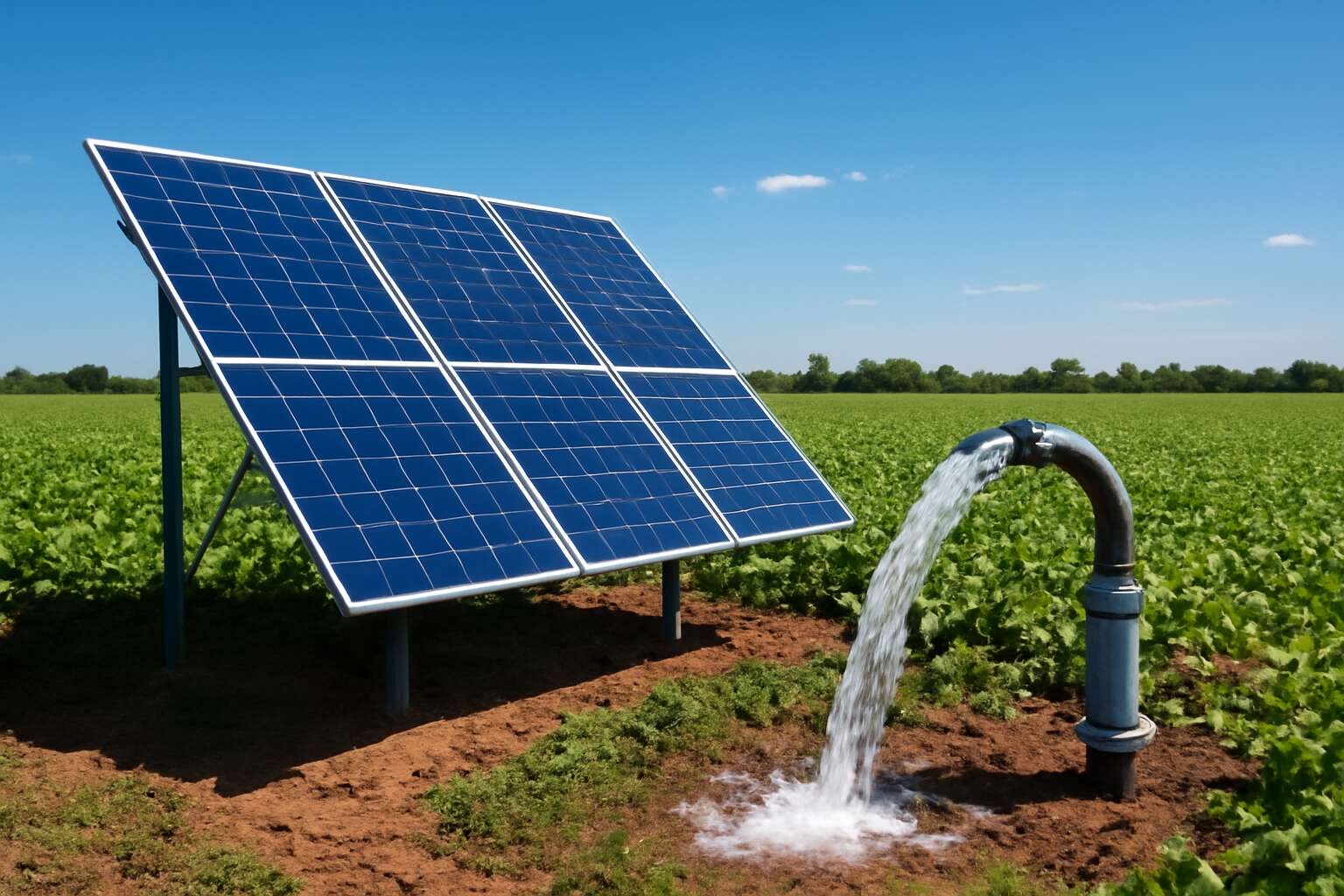
South Africa basks in roughly 2,500 hours of sunshine annually, turning solar dreams into practical realities. A solar panel water pump harnesses that daylight to move water without a noisy diesel or grid tie. It’s a straightforward idea with modern hardware: sunlight powers a pump for irrigation, livestock troughs, or boreholes, quietly and reliably—even in remote townships and farms where grid access is spotty!
Definition and core components: A solar panel water pump is a system where PV panels convert sunlight into electricity to drive a pump. Core components include:
- Photovoltaic panels
- DC pump suitable for solar power
- Charge controller or MPPT
- Battery storage (optional)
- Piping, fittings, and mounting hardware
How solar energy drives water pumping
South Africa enjoys roughly 2,500 hours of sunshine each year, turning daylight into practical farming power. A solar panel water pump puts that sun to work, moving water from boreholes or tanks to fields and troughs without noise or fossil fuel dependence. Remote sites, drought-prone communities, and smallholder farms benefit most from a system that aligns with the country’s daylight rhythm.
- Irrigation for fields and gardens
- Livestock troughs and remote water storage
- Borehole supply on farms and rural estates
Powered by daylight, it runs during sun hours with storage optional for night-time use, cutting fuel costs and noise while offering steady water delivery for critical farming tasks.
Key benefits for off-grid users
Sunlight fuels hope on South Africa’s farms, where about 2,500 hours of sunshine each year translate into harvest-ready potential. A solar panel water pump puts that sun to work, drawing water from boreholes or tanks to fields and troughs with quiet reliability and zero fossil-fuel noise.
Off-grid users find a partner that respects the daylight rhythm. It runs during sun hours, often with storage options for night-time needs, offering steady delivery without fuel costs or engine hum. In drought-prone regions and remote estates, this technology steadies irrigation, livestock water, and emergency reserves.
- Low maintenance with few moving parts
- Scalable setup for small plots to larger holdings
- Silent operation that protects farm life and nearby communities
Limitations and when to consider alternatives
On South Africa’s sun-soaked farms, where the country averages about 2,500 hours of sunshine a year, a solar panel water pump carries the day’s promise in its quiet hum! The system thrives in clear skies, yet its rhythm follows the weather as surely as the rising sun, turning daylight into steady irrigation and livestock water.
- Weather-dependent output: sunny days drive strong performance, cloudy days slow it.
- Limited flow and head: deeper boreholes or longer piping reduce pressure.
- Higher upfront cost and ongoing dust-driven maintenance in arid regions of SA.
- Storage needs: without batteries or tanks, nighttime watering becomes a challenge.
When reliability matters more than independence, alternatives come into view: grid-tied or hybrid solar-diesel setups can keep irrigation steady through overcast spells and drought-prone seasons alike.
Types and configurations of solar-powered water pumps
Submersible vs surface pump designs
In South Africa, a solar panel water pump can cut energy costs by 60% under skies, turning a borehole into a reliable lifeline. The beauty lies in simplicity: a pump that runs when the sun shines and a system that follows the land’s rhythm!
Submersible designs dive below the water line, thriving in boreholes and tanks. They push water with compact, sealed motors and resist air locks. Surface pumps sit above ground, centrifugal and easier to service, ideal for larger tanks. Depth and lift drive the choice.
Configurations that pair with solar power vary, each with its own poetry of efficiency:
- Direct-coupled to the solar array for simple, maintenance-light operation (no battery).
- MPPT controller with battery storage to smooth output.
- Hybrid setups with storage tanks for steady delivery during low sun.
From bore to dam, thoughtful matching of pump type and solar configuration writes a quieter, resilient energy story for South Africa’s water needs.
Direct current vs alternating current pumps
Across South Africa’s sun-burnished plains, a solar panel water pump can cut daytime energy bills by up to 60%, turning a borehole into a steadfast lifeline!
Direct-current designs pull power straight from the panel, delivering compact, efficient systems with minimal maintenance and fewer failure points.
Alternating-current setups rely on an inverter, enabling standard pumps for larger tanks, though with slight conversion losses and more components to service.
- Direct coupling to the panel for battery-free operation
- Battery storage with MPPT control to smooth output
- Hybrid arrangements with storage for dawn-to-dusk delivery
In each configuration, the sun dictates water delivery, a quiet, resilient cadence for South Africa’s growing needs.
Integrated solar pump kits vs modular setups
Sunlight in South Africa isn’t just bright—it’s a budget you can spend wisely. A solar panel water pump converts daytime rays into dependable pumping with minimal fuss. Integrated solar pump kits offer an all-in-one solution: a pre-wired bundle, a factory-tested controller, and a compact footprint that fits tight spaces.
- Plug-and-play installation
- Reduced wiring and fewer failure points
- Built-in protections against dry-run and overheating
Modular setups split the system into panels, pump, controller, and optional battery—letting you scale as water demand grows. For larger tanks or remote sites, a solar panel water pump approach lets you swap in a bigger pump or mix different panel configurations without replacing everything.
- Scalability
- Flexibility to upgrade
- Site-tailored optimization
Materials, durability, and environmental suitability
Types and configurations of solar-powered pumps hinge on materials that endure SA’s sun. Submersible and surface units share core guts, but stainless steel, UV-stable plastics, and ceramic bearings determine durability in dusty, hot climates. Environmental suitability means corrosion resistance, dust ingress protection, and resilience in coastal humidity or inland dryness. A robust solar panel water pump keeps water flowing when the sun shines and the demand is urgent.
- Stainless steel impellers and housings
- UV-stable plastics for seals and casings
- Ceramic bearings for long life in dusty sites
Materials to prioritise include resistance to heat, harsh dust, and moisture, with coatings and seals tailored to South Africa’s varied environments.
Technical specifications and performance metrics
Flow rate, head, and pump capacity
Sunlight isn’t just for tanning—it’s a power source with teeth. In the South African landscape, it converts bright days into dependable irrigation energy, trimming running costs and noise. That’s the beauty of a solar panel water pump. When you tune for Flow rate, head, and pump capacity, you unlock the sweet spot between speed and water pressure.
- Flow rate: 120–4,000 L/hour
- Head: up to 40 m
- Pump capacity: 0.25–1.0 kW
These metrics matter: they map how your system handles water demand under varying sun. A well-specified setup keeps pressure steady and cavitation at bay, ensuring reliable supply when the sun peak hits.
Solar array sizing and wattage calculations
Technical specifications lay the map for a solar panel water pump. You’ll feel the difference when flow rate, head, and efficiency line up with real irrigation needs, especially under South Africa’s sun-burnished days where performance translates to dependable water delivery.
Solar array sizing and wattage calculations translate daylight into duty cycle. Manufacturers’ curves link panel output, pump draw, and irradiance, ensuring the unit runs near its best efficiency point when the sun sits highest. In practice, this means steady pressure and predictable flow.
Bottom line: expect performance data—voltage, current, and overall efficiency—to tell you how the system behaves at peak sun versus overcast intervals. Trust those metrics to choose a setup that keeps your pumps humming without surprises.
Battery use: with vs without storage
Across South Africa, the daylit horizon delivers about 5 kWh/m² of sun each day—a statistic that makes a solar panel water pump feel almost supernatural, patient as a veld ghost. Battery storage turns that glow into a steady rhythm, delivering water when the sun slips behind the koppies. Without storage, the pump dances to the sun’s timetable, delivering pressure only in bright hours and thinning at dusk.
- With storage: Night-time resilience and dawn pumping
- With storage: Consistent pressure regardless of passing clouds
- Without storage: Lower upfront cost and lighter footprint
- Without storage: Simpler maintenance and fewer cycles
Either path remains part of a larger solar panel water pump system that speaks in voltage, current, and efficiency—the true performance metrics that reveal how the system behaves as daylight waxes and wanes.
Efficiency, wear, and maintenance impact
Technical specifications map the DNA of a solar panel water pump—efficiency, pressure range, and temperature drift. In practice, a well-matched unit converts sunlight into a steady flow with minimal losses, keeping performance steady as the day warms and cools. A robust design drinks in the sun and returns water with quiet confidence.
Wear and maintenance shape reliability. Bearings and impellers wear in predictable rhythms; seals and gaskets resist grit, and cable insulation endures South African sun and dust. Regular checks reduce downtime and extend life.
- Efficiency: pump curves and energy optimization
- Durability: corrosion-resistant materials and rugged housings
- Maintenance impact: lubrication, seal replacement, and inspection cadence
Installation, operation, and maintenance
Site assessment and water source checks
Sun irrigation reshapes farming economics in rural South Africa! A seasoned farmer once said, “the sun pays the bill.” Installation starts with a clean plan for a solar panel water pump, aligning panels to the sun, protecting cables, and pairing components for steady first light.
Operation hinges on gentle, predictable flow rather than brute force. With reliable control, water rises when sun is high and pauses at dusk. I emphasize site assessment and water source checks—confirming dependable supply and matching the pump’s head to the source to avoid strain.
Maintenance is about rhythm and resilience: keep panels clean, inspect seals for South Africa’s dusty days, and monitor bearings and connectors for wear. A quiet, well‑cared-for system keeps the light in the tank and the rhythm of the field intact.
Electrical safety and proper wiring
“The sun pays the bill,” a seasoned farmer likes to say, and installation is where that promise begins. A solar panel water pump project starts with a clean plan—align panels to the sun, ensure cables are protected, and choose rugged, SA-proven components. Secure mounts, weatherproof junctions, and a simple, logical layout so the system breathes with the light rather than fighting it.
I’ve seen how, when the sun climbs, water rises smoothly; as dusk nears, it settles, preserving energy and protecting the source. A well‑matched pump, controller, and piping keep irrigation consistent without noise or drama.
Maintenance and electrical safety go hand in hand. Inspect seals against dust, protect cables from heat, and keep connectors clean and dry. Grounding, surge protection, and proper wiring reduce risk and extend life, letting the field keep its rhythm even on windy SA days.
- Weatherproof wiring and enclosures
Installation steps and sun alignment
The sun doesn’t bargain; it delivers—or it withholds. Installation begins with a patient plan: align the array to the sun’s arc, secure rugged mounts, and route cables in weatherproof conduits. The solar panel water pump sits on a stable plinth, where piping enjoys minimal head loss and nothing shudders in the wind.
Operation unfolds like a patient vigil: when daylight feeds the panels, water rises with quiet certainty. Keep glass and seals clean; test the civilities of the joints seasonally, and let the system breathe without forcing performance.
- Position and tilt to capture peak solar energy at the season’s crest.
- Connect pump, controller, and piping with dry, corrosion-resistant fittings.
- Run a test, observe flow, and dial valves for smooth harmony.
Maintenance is ritual as weather shifts; dust enclosures, check grounding, and keep conduits dry so the field keeps its rhythm even on windy SA days.
Maintenance routines and fault diagnosis
Installing a solar panel water pump is a quiet negotiation with light. A solid foundation, measured mounting, and clean routing forge the system’s backbone. When the hardware is arranged with intention, the heart of the setup beats with steady promise.
Operation unfolds as a steady vigil. Daylight feeds the panels, and water follows the sun’s patience with dependable calm. Monitor readings softly, note any drift in flow, and respect the system’s need for a dry, breathable environment.
Maintenance and fault diagnosis are ongoing narratives—routine checks, subtle signs, and informed interpretation.
- Low or fluctuating flow despite sun.
- Controller or display shows fault codes.
- Visible leaks, corrosion, or moisture in conduits.
- Panel shading or soiling reduces voltage.
Addressing these cues early preserves performance.
Applications, markets, and ROI considerations
Irrigation and livestock water applications
Sun-bred farming is no luxury; it’s ROI in boots and dust. I’ve learned that ‘If the sun can light a city, it should water a field,’ and a veteran farmer might laugh. In South Africa’s drought-prone belts, a solar panel water pump keeps wells buzzing when the grid balks and the taps threaten to run dry.
- Irrigation and crop sustenance during dry spells for vegetables, fruit, and grains
- Livestock watering across remote rangeland and game-farm corridors
- Support for smallholder farms and community plots improving food security
Markets span commercial agribusiness, conservation estates, and rural co-ops, all hungry for reliable water without fossil-fuel lash. ROI depends on sun hours, borehole reliability, and maintenance routines; in many SA regions, households and farms see a favorable payback within a few seasons.
Rainwater harvesting and reservoir boosting
In drought-prone SA, farms report up to 40% fewer water interruptions when rainwater harvesting pairs with a solar panel water pump. It powers thirsty fields and distant herds with steady, quiet force. Rainwater harvesting and reservoir boosting turn scarce rainfall into usable water for stock and crops, especially when the sun shines brightest. Reliable pumping keeps drip lines alive and wells energized, even as grid reliability wobbles.
Markets respond to consistency: commercial growers seeking dependable yields, conservation estates protecting habitats, and rural co-ops delivering for community plots. The appeal is clear—water security without fossil fuels, with maintenance whispers kept to a minimum.
- On-farm irrigation for crops
- Remote livestock watering
- Community food security plots
ROI hinges on sun hours, borehole reliability, and upkeep. Rainwater harvesting and reservoir boosting blunt drought risk and reduce operating costs, often delivering payback within a few seasons when sized to demand.
Industrial and commercial use cases
Across drought-prone SA farms, water reliability can decide a season. A solar panel water pump powers on-farm irrigation, remote livestock troughs, and even industrial outlets where mains power is scarce. It thrives under bright sun, delivering steady, quiet flow that keeps vines, pastures, and stock moving through peak heat.
Markets prize steadiness: commercial growers seeking predictable yields, conservation estates protecting habitats, and rural co-ops delivering for community plots. Buyers value low maintenance and clean, fossil-free operation that lowers operating costs while boosting resilience during load shedding and grid outages.
ROI hinges on sun hours, borehole reliability, and upkeep. When sized to demand and installed with sound electrical practices, rainwater harvesting and reservoir boosting ecosystems illustrate how sun-powered pumping reduces costs and risk, often delivering a favorable payback across several seasons as demand scales.
Seasonal performance and climate considerations
Applications: In drought-prone SA farms, a solar panel water pump becomes a lifeline for on-field irrigation, remote livestock troughs, and small processing stations where mains power folds in the heat. It drinks the sun and delivers a steady, whispering flow that keeps vines healthy and pastures lush.
- Peak sun hours drive dependable flow and irrigation windows
- Winter shade and lower sun hours reduce output
- SA heat tests seals; choose corrosion-resistant materials
- Outages? Solar panels pair with storage for resilience
Markets: Commercial growers seeking predictable yields, conservation estates protecting habitat, and rural co-ops prize steadiness and quiet operation. The unit offers low maintenance, fossil-free performance that reduces operating costs during outages.
ROI considerations and seasonal performance: ROI hinges on sun hours, borehole reliability, and upkeep. When demand aligns with steady maintenance, rainwater harvesting and reservoir boosting reveal a favorable payback across seasons as loads grow.
Costs, incentives, and ROI
In drought-prone SA farms, a solar panel water pump becomes a lifeline for on-field irrigation, remote livestock troughs, and small processing stations where mains power folds in the heat. It drinks the sun and delivers a steady, whispering flow that keeps vines healthy and pastures lush.
Markets across the spectrum—commercial growers chasing reliable yields, conservation estates guarding habitat, and rural co-ops seeking steadiness—welcome its quiet, fossil-free performance and low maintenance, especially when outages strike.
- Costs to anticipate: equipment, installation, and regular servicing.
- Incentives: rebates and tax relief available for solar projects in SA.
- ROI drivers: sun hours, borehole reliability, and storage strategy.
ROI considerations hinge on sun hours, water source reliability, and upkeep. When demand aligns with steady maintenance, the system pays back as loads grow and outages recede.

0 Comments